

Agentic AI in Voice Bots: Reactive vs Proactive Agents Explained
Insights / Agentic AI in Voice Bots: Reactive vs Proactive Agents Explained

Remember the days of stiff voice bots—“Press 1 for support, Press 2 for billing”? Those systems were little more than digital answering machines. They waited, listened, followed instructions, and went silent.
Agentic voice AI is an AI system that conducts spoken conversations, understands intent, takes autonomous actions in connected systems, and resolves interactions end-to-end — without scripts or constant human oversight.
Agentic AI voice bots are starting to feel more human—understanding context, adapting to what we say, and sometimes even helping us before we ask. Agentic voice AI and agentic AI voice assistants are redefining how businesses build intelligent conversational experiences.
The shift is clear: from reactive agents to proactive partners.
Let’s explore what this evolution really means.
What is an AI Voice Bot?
An AI voice bot is an advanced AI-driven software that processes spoken language in real-time to deliver human-like conversational experiences, This is the foundation of agentic voice AI systems that go beyond traditional automation, using speech recognition, natural language understanding, and synthesis to handle queries autonomously—evolving from basic IVR into agentic systems that plan, act, and learn.
These bots fuse Automatic Speech Recognition (ASR) achieving 95-98% accuracy amid accents or din, Natural Language Processing (NLP) for intent detection across 100+ languages, and Text-to-Speech (TTS) delivering expressive, human-like intonation—resolving interactions in 2-3 seconds versus clunky IVR’s 45-second averages. Gartner forecasts that by 2028, 68% of customer service will rely on agentic AI like these, trimming costs by 60% and lifting CSAT by 25%.
Key Components of AI Voice Bots
Speech-to-Text (ASR/STT): Transcribes real-time audio, filtering noise and dialects with neural networks for seamless input.
Natural Language Understanding (NLU/NLP): Parses context, sentiment, and goals, enabling multi-turn, multilingual exchanges.
Dialogue Management: Sustains conversation state, leverages memory, and triggers APIs for bookings, queries, or integrations.
Response Generation & TTS: Crafts proactive, contextual replies voiced naturally, with emotional prosody akin to a seasoned host.
In practice, they shine in e-commerce (alerting stock drops), healthcare (medication nudges spotting issues), and travel (flagging delays with rebook options) transforming from passive responders to prescient partners that foresee needs.
What is agentic AI in voice bots?
Agentic voice AI is a class of conversational AI that combines speech recognition (ASR), language understanding (NLU), and speech synthesis (TTS) with an autonomous “agent” layer — allowing a voice bot to set sub-goals, use tools or APIs, take multi-step actions, and learn from outcomes, rather than simply matching a command to a scripted response.
An Agentic AI Voice Bot is not just a command follower. It’s an autonomous assistant that:
- Understands natural language in depth.
- Plans actions to achieve a stated goal.
- Take independent steps (with confirmation when needed).
- Learn continuously to serve better next time.
In short: it doesn’t just react – it acts.
Why Proactive AI Matters?
Reactive Voice Bot is like a remote-controlled car. You press “go forward,” and it goes forward. Every action is user-driven.
Reactive voice bot follows a linear path like this:
Voice Command → Understanding → Simple Response/Action
- Example: You say, “Hey Google, what’s on my calendar today?”
- Response: It reads your events.
- What it doesn’t do: Tell you there’s heavy traffic and suggest leaving early.
These systems are efficient but limited—they only do what they’re asked.
Proactive Voice Bot: Works much like a self-driving car.This shift is driven by agentic AI voice assistants that can plan, decide, and act independently.
You simply say, ‘Take me to the airport,’ and it figures out the route, manages traffic, and overcomes obstacles on its own to reach your destination.
An autonomous voice bot follows a richer loop:
Stated Goal → Understanding & Planning → Tool Use & Action → Result & Learning → [Repeat until goal is met]
Example: You book a flight. The bot checks weather data, notices a storm delay, and asks:
“Your flight to New York may be delayed. Should I find alternatives or notify your meeting attendees?”This is the leap from answering to anticipating.
Reactive vs. Proactive Voice Bots at a Glance
| Aspect | Reactive Voice Bot (Traditional) | Proactive Voice Bot (Agentic AI) |
|---|---|---|
| Control | Waits for user commands | Anticipates needs & takes initiative |
| Conversation style | Linear Q&A | Goal-oriented, dynamic dialogue |
| Context | Limited, session-only | Builds memory & uses real-time data |
| Value to user | Follows instructions | Forecasts, guides, and prevents problems |
| Example | Reads today’s calendar events | Suggests leaving early due to traffic |
Agentic AI vs Traditional IVR: What's the Difference?
Traditional IVR (“Press 1 for Sales, Press 2 for Support”) is a fixed decision tree — every path is pre-programmed, and any query outside the menu fails. Agentic IVR replaces that tree with a reasoning system that listens to natural speech, understands intent regardless of phrasing, and decides the next best action in real time.
| Capability | Traditional IVR | Agentic AI IVR |
|---|---|---|
| Navigation | Fixed menu tree | Natural language, no menus |
| Handling unexpected requests | Fails / transfers to agent | Reasons through and resolves |
| Data use | None | Pulls live CRM/order/account data mid-call |
| Outcome | Routes the call | Often resolves the call |
| Example | “For billing, press 3” | “I see your invoice is overdue — pay now or set a reminder?” |
Automated IVR with agentic AI typically integrates with a CRM or ticketing system so the agent can verify identity, pull account history, and complete actions like rescheduling, refunds, or order tracking — without a human agent.
Why Agentic Voice AI Is Different from Traditional Voice Bots
Traditional AI voice bots are designed to understand speech, identify intent, and respond with predefined workflows. While highly effective for common customer service tasks, most voice bots remain dependent on scripted logic and limited decision-making capabilities.
Agentic voice AI represents the next evolution. Instead of simply responding to requests, agentic systems can reason, plan, access business systems, and execute multi-step actions to achieve a customer’s objective.
For example, a traditional voice bot may provide an order status when asked. An agentic voice AI assistant can verify the customer, retrieve the order, update delivery preferences, create a support ticket if required, and confirm the outcome within the same conversation.
This shift transforms voice automation from a reactive question-and-answer system into an autonomous AI assistant capable of handling customer service, sales, appointment scheduling, and operational workflows with minimal human intervention.
Real-World Applications of Proactive Voice Bots
- Healthcare: Proactively reminds patients to take medication, checks on side effects, and schedules follow-ups.
- E-commerce: Alerts customers when favourite products are on sale or suggests reordering essentials.
- Enterprise: Prepares meeting briefs by analyzing documents and proactively sends them to attendees.
- Travel: Detects flight delays and offers rebooking options or automatic notifications to colleagues.
The Proactive Future: From tools to partners
The future of voice solutions lies in Collaborative. We are moving from a world of command-and-control to one of conversation-and-collaboration.
Proactive Agentic AI turns the bot into:
- Guides that anticipate obstacles.
- Companions that personalise support.
- Invisible partners that handle complex tasks seamlessly.
According to Cisco, By 2028, 68% of customer service and support interactions are expected to be handled by agentic AI.
Conclusion:
The Best Voice Bot is an Invisible Partner
The journey from reactive to proactive voice bots marks the next frontier of customer experience.
Reactive bots were a first step – useful but limited. Proactive, Agentic AI bots go further, forecasting needs, guiding decisions, and supporting users like a human companion.
The best voice bot isn’t one you constantly notice. The future of voice AI isn’t coming. It’s here.
FAQs
1. What Are AI Voice Bots?
AI voice bots are conversational Ai systems using ASR, NLP, and TTS for natural spoken interactions, handling complex dialogues in <3 seconds with 95-99% accuracy.
2. What is Voice AI Used For?
Voice Ai drives customer service (60-80% cost cuts), e-commerce (35% cart recovery), healthcare (45% adherence), and travel (delay rebooks)
3. What Does an AI Bot Do?
Listens (ASR), understands intent/context (NLU), plans/actions (tools/APIs), responds proactively (TTS), and learns from interactions.
4. How to Use a Voice Bot?
Integrate via no-code platforms (Twilio/CRM), define intents/flows, test/deploy, speak naturally for hands-free tasks.
5. What is the Best AI Voice Bot?
Worktual leads for proactive CCaaS (60% cost slash); Vapi/Bland.ai for no-code dev; choose by scale/needs.
6. What is the difference between a voice bot and agentic voice AI?
A standard voice bot follows scripted rules and only responds to direct commands. Agentic voice AI adds autonomous decision-making — it can plan multi-step actions, use external tools/APIs, and act proactively without explicit instructions for each step.
7. What is an agentic chatbot?
An agentic chatbot is the text-based equivalent of an agentic voice bot — an AI system that can independently plan, take actions (like updating a CRM record or processing a refund), and learn from each interaction, rather than just generating a reply.
8. What is agentic IVR?
Agentic IVR replaces fixed-menu phone systems with AI that understands natural speech, accesses live account data, and resolves requests directly — without routing callers through “Press 1, Press 2” menus.
9. Are Siri, Alexa, or Google Assistant examples of agentic AI?
Not fully. These assistants are largely reactive — they respond to direct commands but don’t independently plan multi-step tasks or take actions without being asked. Agentic AI voice bots, used in business contexts, go further by autonomously completing goals (e.g., rebooking a flight or processing a return).
10. How does speech-to-text (ASR) work in an agentic voice bot?
The bot’s ASR engine converts spoken audio into text in real time using neural networks trained to filter background noise and accents. That text is then passed to the NLU layer, which determines intent — triggering the agentic system’s planning and action steps.

Related Posts
Tidio alternatives: comparing Tidio vs Worktual for smarter chatbots
Once a novelty, AI chatbots and AI agents have quietly become the PAs and shop assistants of the digital high street. If you’re exploring Tidio alternatives, you’re likely looking for tools that not only chat but also think, reason, and grow with your business. Now, they’re everywhere: handling support, grabbing leads, and speaking your customers’ language (even if it’s Japanese and it’s 3 am).
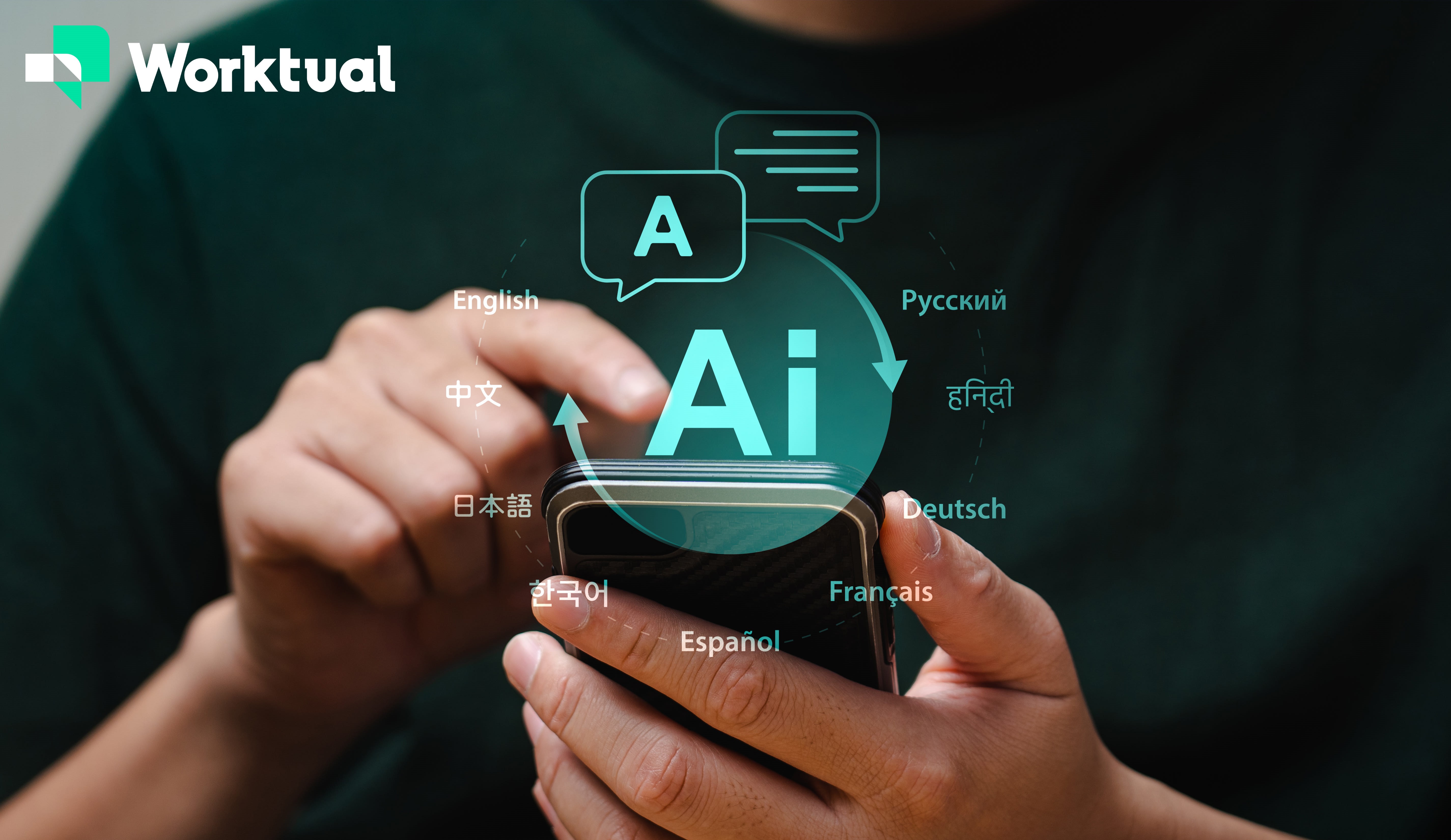
The Best Multilingual AI Chatbots for UK Businesses
Demand for multilingual AI chatbots is rising fast. Why? Because customers now expect service in their own language, not a bot-induced game of linguistic charades.
10 Best Drift Alternatives for Businesses in 2026
Conversational AI has revolutionised customer engagement, lead generation, and support automation. With businesses increasingly relying on chatbots to streamline interactions, choosing the right platform is crucial. Two leading contenders in 2025 are Worktual and Drift, each catering to different business needs.


