AI-Native Chatbots for Telecommunications: Improving Customer Support, Efficiency, and Service Scalability


Insights / AI-Native Chatbots for Telecommunications: Improving Customer Support, Efficiency, and Service Scalability

AI-Native Chatbots for Telecom

Telecom providers operate in a high-volume, service-intensive environment where customer expectations are defined by speed, accuracy, and always-on availability. Customers expect instant resolution for queries such as billing, plan usage, network issues, and service requests across digital channels. However, traditional support models struggle to deliver consistent performance due to fragmented systems, high interaction volumes, and dependency on human agents.

At the same time, telecommunications companies face increasing pressure to reduce operational costs while improving service quality. Contact centres handle large volumes of repetitive queries, while complex requests move across multiple systems and teams. As customer bases expand, maintaining consistent service across prepaid, postpaid, and digital ecosystems becomes more difficult, increasing both cost-to-serve and service variability.

AI-native chatbots provide a scalable and intelligent solution to these challenges. Unlike rule-based systems, AI-native chatbots use natural language processing and machine learning to understand intent, manage context, and continuously improve performance. For telecom providers, an AI chatbot for telecoms enables faster resolution, reduced operational load, and more consistent customer engagement across channels.

  • What AI-native chatbots mean for telecom businesses
  • Pain points driving revenue leakage, service inconsistency, and operational inefficiency
  • Solutions organisations need to improve response speed, scalability, and service quality
  • Impact, ROI, and operational gains from AI-native chatbots in telecoms
  • Why Worktual works for AI chatbot telecom customer support
  • Faqs

What AI-native chatbots mean for telecommunication businesses

AI-native chatbots represent a shift from rule-based automation to intelligent, adaptive customer engagement. An AI-native chatbot for telecom can understand customer intent, process natural language, and respond accurately in real time. This improves interaction quality while reducing reliance on predefined scripts and manual intervention.

For telecom providers, this enables continuous support across websites, mobile apps, messaging platforms, and customer portals. Customers can resolve queries instantly without waiting for agent availability, improving accessibility and engagement. This ensures consistent support across multiple digital touchpoints.

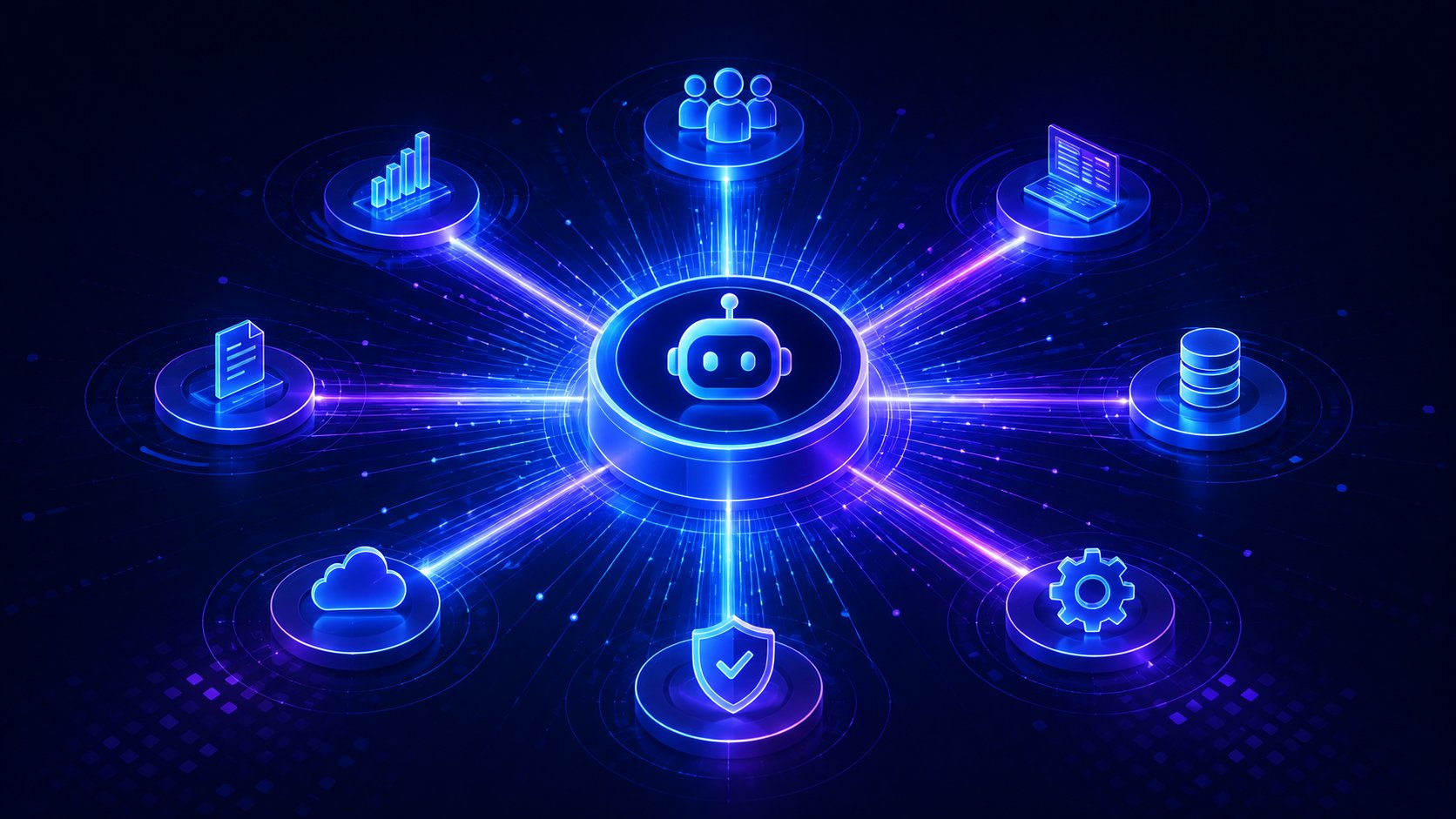
These chatbots integrate with telecommunication systems such as billing platforms, CRM, and network tools to deliver context-aware responses. This creates a unified interaction layer where customer queries are resolved using real-time data. As a result, customer experience becomes more consistent, efficient, and scalable.

Pain points driving revenue leakage, service inconsistency, and operational inefficiency

Telecom providers face ongoing revenue leakage due to complex billing structures and inconsistent query resolution. Customers frequently raise disputes related to data usage, roaming charges, bundled services, and promotional plans. These interactions are not only high in volume but also impact revenue assurance and customer trust when responses vary across channels.

Service inconsistency across prepaid and postpaid ecosystems creates fragmented customer experiences. Customers interact through apps, call centres, retail outlets, and self-service systems, often receiving different responses for the same issue. This lack of unified visibility reduces resolution accuracy and weakens overall AI chatbot telecom customer support effectiveness.

High-cost escalation cycles further increase operational pressure. Queries related to SIM swaps, KYC updates, plan migrations, and complaints often move from automated channels to human agents due to limited system integration. These escalations increase handling time, raise operational costs, and limit the ability to scale support efficiently.

Solutions organisations need to improve response speed, scalability, and service quality

Worktual AI-native chatbots address these challenges by automating telecom interactions with intelligence and context awareness. Our advanced AI chatbot telecom customer support system can manage billing queries, service requests, and account-related interactions in real time. This reduces dependency on human agents and improves response efficiency.

Real-time response capability eliminates wait times and improves customer experience across channels. Automation enables telecom providers to handle large volumes of simultaneous interactions without compromising service quality. This ensures scalability during peak demand and service disruptions.

Integration with telecommunication systems allows chatbots to access billing data, customer profiles, and network information. This enables accurate, personalised, and context-aware responses. Consistent and 24/7 availability further improves service delivery while reducing operational workload.

Impact, ROI, and operational gains from AI-native chatbots in telecoms

The adoption of AI-native chatbots delivers measurable improvements across customer experience and operational performance. Faster and more accurate responses improve customer satisfaction and reduce friction in interactions. This leads to better engagement and stronger customer trust.

Key metrics such as Customer Satisfaction (CSAT), First Contact Resolution (FCR), and Average Handling Time (AHT) show consistent improvement. Automation reduces repeat interactions and improves resolution efficiency. This creates a more streamlined and effective support model.

Operational costs decrease as routine queries are handled automatically. This reduces the need for large support teams while improving resource utilisation. Telecom providers also benefit from improved scalability, consistent service delivery, and stronger customer retention.

AI-Native Chatbots for Telecom

Why Worktual works for AI chatbot telecom customer support

Worktual delivers AI-native chatbot telecoms customer support through a unified and intelligence-driven platform. Instead of standalone deployments, chatbots are integrated with customer data, telecom systems, and service workflows. This ensures a connected and consistent customer experience.

Through its Cognitive Data Platform, Worktual enables real-time insights, personalisation, and continuous optimisation. This allows telecommunications service providers to deliver more relevant and effective interactions across the customer lifecycle. Engagement becomes more data-driven and outcome-focused.

Worktual’s consultancy-led approach ensures alignment with business objectives and operational requirements. From improving billing resolution to reducing escalation cycles, implementations are designed to deliver measurable outcomes. This enables scalable, efficient, and high-impact customer engagement.

Discover how Worktual can transform your telecom customer support with AI-native chatbots, improving response speed, reducing operational costs, and delivering consistent customer experiences at scale.

FAQs

1.  What are AI-native chatbots?

AI-Native Chatbots are intelligent systems that use natural language processing and machine learning to understand and respond to customer queries in real time.

2. How does an AI chatbot for telecoms improve customer support?

It automates routine queries, reduces wait times, and provides instant, accurate responses across multiple channels.

3. Can AI chatbots handle telecom billing and service queries?

Yes. AI-native chatbots can manage billing issues, plan queries, and service requests through integration with telecom systems.

4. Are AI chatbot telecom customer support systems scalable?

Yes. They can handle large volumes of simultaneous interactions, making them suitable for telecom operations.

5. Do AI chatbots replace human agents?

No. Chatbots handle routine and high-volume queries, while human agents manage complex and high-empathy interactions.