

Top Agentic AI Companies Changing Customer Experience and AI Automation
Insights / Top Agentic AI Companies Changing Customer Experience and AI Automation

Table of Contents
Currently, businesses are not looking to buy automation tools that can automate their businesses. They are looking for automation tools that can think and act on their own with autonomous execution and human oversight. It is against this backdrop that Agentic AI companies are changing the way businesses are thinking and acting.
For instance, whereas businesses can use traditional AI tools that wait to be commanded by customers before they can perform their operations, businesses are using AI Agents for Business that can handle their customers and businesses through autonomous execution with human oversight.
- What is Agentic AI?
- What Are Agentic AI Companies?
- How Agentic AI Companies Work?
- Key Use Cases of Agentic AI Across Industries
- Agentic AI vs Traditional AI and Chatbots
- Business Benefits and ROI of Agentic AI
- Difference between AI Tools and AI Agents
- Ways in Which Agentic AI Is Revolutionizing Customer Experience
- Top Agentic AI Companies Transforming CX 2026
- How to Choose the Right Agentic AI Company
- What Makes a Company Truly “Agentic AI”?
- Industries Using Agentic AI
- The Future of Agentic AI
- FAQs
What is Agentic AI?
This is a term used to refer to artificial intelligence tools that are independent and can plan and decide the way in which they can carry out their functions and reach their goals through autonomous execution with human oversight.
Unlike traditional AI tools, agentic AI tools are goal-oriented and can analyze any situation, reason about the steps required to reach the goal, and take the most appropriate action in any situation.
Agentic AI systems are often described as AI Agents, and when multiple agents work together under one coordinated framework, it forms an Agentic AI System that manages multiple agents to achieve business goals.
What Are Agentic AI Companies? (Quick Guide)
Agentic AI companies are organisations that develop or use autonomous AI systems capable of making decisions, taking actions, and completing tasks without constant human input. These companies leverage agentic AI to automate workflows, improve efficiency, and deliver measurable business outcomes.
Agentic AI company focus on building and deploying AI systems that go beyond simple automation. Unlike traditional AI or rule-based chatbots, agentic AI systems can:
- Understand context and intent
- Make independent decisions
- Execute multi-step tasks
- Continuously learn and improve
This makes agentic AI companies a key driver of next-generation business automation and intelligent operations.
How Agentic AI Companies Work? (Simple Explanation)
Agentic AI companies combine multiple technologies to create autonomous systems:
- Machine learning models for prediction and decision-making
- Natural language processing (NLP) for understanding conversations
- Workflow automation engines for task execution
- Real-time data integration with CRM, CDP, and enterprise systems
These systems act like digital agents, capable of handling tasks such as customer support, lead qualification, scheduling, and even transactions.
Real-World Key Use Cases of Agentic AI Across Industries
1. Customer Support Automation
One of the most common use cases for Agentic AI companies is in customer support.
Agentic AI systems can:
- Resolve customer queries end-to-end
- Escalate complex issues to human agents
- Update CRM systems automatically
- Provide 24/7 support across channels
Result:
Reduced support costs, faster response times, and improved customer satisfaction.
This helps businesses scale customer support operations more efficiently without increasing operational workload or support team size.
2. Sales and Lead Qualification
Agentic AI is transforming sales workflows by automating lead engagement and qualification.
Capabilities include:
- Engaging website visitors in real time
- Qualifying leads based on behaviour and intent
- Scheduling meetings automatically
- Sending personalised follow-ups
Result:
Higher conversion rates and improved sales efficiency.
Businesses can also improve lead response speed and automate repetitive follow-up activities across the sales funnel.
3. Marketing Automation and Personalisation
Agentic AI companies enable hyper-personalised marketing at scale.
Use cases:
- Delivering personalised content and offers
- Managing customer journeys across channels
- Segmenting audiences dynamically
- Triggering campaigns based on user behaviour
Result:
Improved engagement, higher click-through rates, and increased ROI.
4. Healthcare and Patient Management
In healthcare, agentic AI improves operational efficiency and patient experience.
Applications include:
- Appointment scheduling and reminders
- Patient query handling
- Care plan updates and documentation
- Compliance tracking
Result:
Reduced administrative burden and better patient care delivery.
5. Financial Services and Banking Automation
Agentic AI is widely used in finance for secure and efficient operations.
Key use cases:
- Customer onboarding and KYC processes
- Fraud detection and alerts
- Transaction support and query handling
- Financial product recommendations
Result:
Improved compliance, reduced risk, and enhanced customer experience.
6. E-commerce and Conversational Commerce
In e-commerce, agentic AI drives conversions through intelligent interactions.
Capabilities:
- Product recommendations
- Cart recovery automation
- Order tracking and updates
- Seamless checkout support
Result:
Higher sales, improved customer journeys, and reduced drop-offs.
7. IT and Operations Automation
Agentic AI companies also apply AI to internal operations.
Use cases:
- Automating IT support tickets
- Workflow orchestration
- Incident detection and resolution
- Data processing and reporting
Result:
Increased productivity and reduced operational costs.
Agentic AI vs Traditional AI and Chatbots (Key Differences)
Agentic AI companies build AI systems that can act autonomously, make decisions, and complete tasks, while traditional AI provides insights and chatbots handle predefined conversations with limited automation.
| Feature | Agentic AI | Traditional AI | Chatbots |
|---|---|---|---|
| Autonomy | High (acts independently) | Low (assists only) | Very low (rule-based) |
| Decision-Making | Yes | Limited | No |
| Task Execution | End-to-end workflows | Partial | Single-step responses |
| Learning Ability | Continuous | Model-based | Minimal |
| Use Case | Automation, operations | Analytics, predictions | Customer queries |
Business Benefits and ROI of Agentic AI
Agentic AI companies deliver ROI by automating end-to-end workflows, reducing operational costs, improving customer experience, and increasing conversion rates through autonomous decision-making.
How Agentic AI Drives Business ROI
Agentic AI companies enable organisations to move beyond basic automation and achieve measurable business outcomes. By allowing AI systems to act independently, businesses can optimize operations at scale.
Key ROI Drivers:
- Cost Reduction: Automates repetitive tasks, reducing manual effort and support costs
- Increased Efficiency: Completes tasks faster with minimal human intervention
- Higher Conversion Rates: AI agents guide customers through journeys and complete actions
- Improved Customer Experience: Faster responses and personalised interactions
- Scalability: Handles high volumes without increasing headcount
Difference between AI Tools and AI Agents
| Traditional AI Tools | Agentic AI Systems |
|---|---|
| Follow fixed rules | Make independent decisions |
| Need human triggers | Can take action autonomously |
| Limited learning | Continuously improve |
| Task-based | Goal-based |
| Reactive responses | Reasoning-driven actions |
For example, the classic chatbot can only respond to queries. However, the AI agent can identify the problem, process the refund, update the CRM, and inform the customer.
This is where the power of agentic AI comes in. It can reason about the problem and act on its own.
A practical example of Reactive vs Proactive CX:
Reactive AI: Answering a customer question after the customer asks about a delayed delivery.
Agentic AI: Detecting that a delivery will be delayed and automatically re-routing a replacement shipment before the customer asks.
Ways in Which Agentic AI Is Revolutionizing Customer Experience
Agentic AI technology is revolutionizing the customer experience of many organisations. In different ways, it has made business processes easier and more efficient.
1. Intelligent CRM Management
Another major change that is happening in the field of CRM.
Agentic AI synchronizes workflows across sales, support, and marketing.
The AI agents that are revolutionizing the field of CRM have the capability to coordinate different departments within a business.
The AI agents are helpful in understanding customers and the different issues that may occur in the near future.
The AI agents can:
Identify customers who are most likely to churn
Suggest different strategies to retain customers
Make updates
Coordinate different departments within a business
This is making the management of customers very easy.
2. Omnichannel Customer Engagement
Customers are making use of different platforms to communicate with the business.
The different platforms that the customers make use of to communicate with the business could be email, websites, or phone calls.
The AI-powered platforms that are used for the purpose of customer engagement have made sure that the customer engagement with the business is connected and easy.
The agentic AI is helpful in:
Maintaining context in conversations
Sending personal responses
Offering faster customer service on different platforms
Agentic AI Companies, Providers, and Platforms: What's the Difference?
These terms are often used interchangeably, but understanding the distinctions helps when researching options:
• Agentic AI companies — businesses that build and/or deploy agentic AI products (e.g., Worktual, OpenAI, Salesforce, HubSpot).
• Agentic AI providers — companies that supply agentic AI as a service, often with implementation support.
• Agentic AI vendors — a broader commercial term for any company selling agentic AI products or licences.
• Agentic AI platforms — the software products themselves.
Top Agentic AI Companies Transforming CX 2026 (Updated List)
Several companies are leading the way in creating agentic AI platforms for improving customer experiences and business automation. These platforms use intelligent AI agents for streamlining customer communication and improving overall business efficiency.
The best Agentic AI platforms combine autonomous decision-making, workflow automation, CRM integration, and omnichannel customer engagement to improve business efficiency and customer experience.
Below are some of the leading AI-driven platforms helping businesses automate customer interactions and operational workflows through intelligent AI systems.
Worktual
Worktual is a new and emerging AI-driven customer engagement platform for autonomous customer experience (CX) automation. This platform offers AI agents for improving customer communication, CRM automation, and AI-driven contact center solutions.
Using AIfor customer communication, Worktual allows businesses to respond quickly and efficiently to customer communications and provide more personalised customer experiences.
Some of the key features of Worktual include its AI Assistant for real-time customer support, its CXAI platform for intelligent customer experience management, and its AI solutions for different business industries.
Worktual Voicebots and Ticketing systems are agentic because they do not only record information but can resolve support tickets and manage full phone conversations from start to finish.
Worktual AI agents also integrate with the Customer Data Platform (CDP), enabling them to instantly access the customer’s complete interaction history and provide highly personalised responses.
These features enable businesses to create more intelligent customer engagement platforms and improve overall business efficiency.
Worktual’s AI-driven platform also helps businesses automate customer journeys across chat, voice, CRM, and support systems while maintaining personalised and context-aware customer interactions.
OpenAI
OpenAI is one of the most influential organisations in the AI industry. It offers the most popular AI model used in the latest AI agents developed by global enterprises and organisations across industries.
OpenAI provides the AI engine (Large Language Models) that powers many agentic systems. Businesses build AI agents on top of these models to comprehend and process languages, analyze data, and automate tasks.
The AI agents developed by organisations across industries are helping them to improve their customer support process, content development process, and task automation process.
OpenAI is significantly contributing to the development of AI agents by organisations across industries.
Salesforce
Salesforce is one of the most popular CRM systems developed for global enterprises and organisations across industries.
It is using Agentforce to automate various marketing, sales, and customer support processes for organisations across industries.
It is using AI technology to process customer information and improve customer engagement with organisations across industries.
It is helping organisations across industries to improve their customer management process.
Salesforce is significantly contributing to the development of CRM systems.
HubSpot
HubSpot is a popular AI marketing automation platform used for managing customer interactions.
It offers marketing, sales, and customer service tools all under one platform.
HubSpot has introduced Breeze, its AI-powered system designed to support intelligent automation across marketing, sales, and service workflows.
The AI technology helps to automate marketing activities, marketing campaigns, and customer interactions.
It is commonly used by various startups and small businesses for customer interaction.
The marketing and sales processes have been made easy and efficient with the use of HubSpot.
Agentic Analytics + Agentic Commerce
Agentic Analytics
Agentic analytics refers to AI systems that autonomously investigate data anomalies and recommend or trigger actions — rather than waiting for someone to run a report. Platforms like Worktual include this as part of their CX automation suite, surfacing customer experience trends and triggering workflow actions automatically.
Agentic Commerce
Agentic commerce describes AI agents that can complete purchasing actions on a customer’s behalf — from product discovery to checkout. In e-commerce, this builds on the cart recovery and order-tracking use cases above, extending toward fully autonomous purchase completion.
Best Agentic AI Platforms for Businesses You Should Know
Key features to look for:
- Autonomous decision-making
- Omnichannel communication
- CRM integration
- Workflow automation
- Real-time analytics
Platforms like Worktual enable end-to-end customer experience automation
How to Choose the Right Agentic AI Company
To choose the right agentic AI company, evaluate its automation capabilities, integration options, scalability, industry expertise, and ability to deliver measurable ROI through autonomous AI solutions.
Key Factors to Evaluate:
Selecting from the growing number of Agentic AI companies requires a strategic approach. Not all providers offer the same level of autonomy, scalability, or business impact.
1. Level of Autonomy and Intelligence
The core strength of Agentic AI companies lies in their ability to build systems that can act independently.
Look for:
- Multi-step task execution
- Real-time decision-making
- Minimal human intervention
Avoid tools that only provide basic automation or scripted responses.
2. Integration with Existing Systems
A strong agentic AI solution should integrate seamlessly with your existing tech stack.
Check compatibility with:
- CRM platforms
- Customer Data Platforms (CDP)
- Contact centre systems
- Payment and booking systems
This ensures smooth workflows and unified customer experiences.
3. Scalability and Performance
As your business grows, your AI system should scale effortlessly.
Evaluate:
- Ability to handle high interaction volumes
- Multi-channel support (chat, voice, email)
- Global deployment capabilities
Leading Agentic AI companies design solutions that grow with your business.
4. Industry Expertise and Use Cases
Choose a provider with proven experience in your industry.
Look for:
- Case studies
- Industry-specific solutions
- Pre-built workflows
This reduces implementation time and improves ROI.
5. ROI and Performance Metrics
The right provider should clearly demonstrate business impact.
Ask for:
- Cost reduction benchmarks
- Conversion rate improvements
- Customer satisfaction (CSAT) metrics
- Automation/deflection rates
Top Agentic AI companies focus on measurable outcomes, not just features.
6. Customisation and Flexibility
Every business has unique requirements.
Ensure the platform allows:
- Custom workflows
- Personalised customer journeys
- Configurable automation rules
Flexibility is key to long-term success.
7. Security, Compliance, and Data Privacy
AI systems handle sensitive customer data, so security is critical.
Verify:
- GDPR compliance
- Data encryption standards
- Access control and governance
This is essential for enterprise adoption.
8. Support and Implementation
A reliable partner should offer:
- Onboarding support
- Continuous optimisation
- Technical assistance
The best Agentic AI companies act as long-term partners, not just vendors.
Why Choosing the Right Agentic AI Company Matters
Selecting the right provider directly impacts:
- Speed of automation
- Customer experience quality
- Operational efficiency
- Overall ROI
Businesses that partner with the right Agentic AI companies achieve faster transformation and long-term competitive advantage.
How Implementation Differs by Company Size
• 1–249 employees: Pre-built, low-configuration workflows deployable without dedicated AI teams — typically live within days.
• 250–1,000 employees: Moderate customisation, CRM/helpdesk integration, dedicated onboarding support.
• 1,000–10,000+ employees: Deep multi-system integration, custom workflow design, enterprise security and compliance review.
For CX automation and KYC specifically, evaluate providers on automation accuracy, compliance system integration, and audit-trail capabilities — areas where purpose-built CX platforms differ from general-purpose AI infrastructure tools.
What Makes a Company Truly “Agentic Ai”?
But not all AI companies can be categorised under the umbrella of agentic AI companies.
There are some companies that still make use of AI automation. When we consider this, the AI automation used by these companies is based on ‘rules.’ Such AI operates in accordance with the ‘if-then’ rule.
Such AI has to be trained by humans to operate.
Agentic AI, on the other hand, does not operate on the basis of ‘rules.’ Such AI agents operate in such a way that they try to achieve some goal.
Such Ai agents can analyze the situation, reason about the best course of action, and take decisions on their own in order to achieve some goal.
Such AI agents learn from the situations they are placed in. Such AI agents learn how to perform better with the passage of time.
Another major point of differentiation between AI automation and agentic AI is that, unlike AI automation, agentic AI is proactive.
So, one major point of differentiation between AI automation and agentic AI is that in AI automation, there is a need to provide instructions, whereas in the case of agentic AI, there is no need to provide instructions. In the case of agentic AI, it acts on its own with autonomous execution and human oversight.
Industries Using Agentic AI
Agentic AI is increasingly used across industries to automate customer interactions, streamline operations, and improve service delivery. The industries benefiting most are those with high volumes of repetitive, structured interactions — where AI agents can connect directly to CRM, booking, or transaction systems and act on the data in real time.
| Industry | How Agentic AI Is Used | Key Benefit |
|---|---|---|
| SaaS | Automated onboarding, customer success workflows | Faster activation, reduced churn |
| E-commerce | Personalised shopping, cart recovery, order tracking | Higher conversion, fewer drop-offs |
| Healthcare | Appointment scheduling, patient follow-ups, care plan updates | Reduced admin burden, better care delivery |
| Real Estate | Lead qualification, property tour scheduling | More qualified viewings |
| Financial Services | Fraud detection, KYC automation, transaction queries | Improved compliance, lower risk |
| Contact Centres | High-volume conversation handling across channels | Scalable support without added headcount |
| Retail | Inventory queries, personalised promotions | Improved customer retention |
Why these industries lead adoption: each combines high interaction volume with structured backend systems (CRM, booking platforms, payment processors) that AI agents can query and act on directly — which is the core capability that separates agentic AI from traditional chatbots.
Agentic AI Companies & Providers Across the UK
Businesses across the UK — from London and the South East to regional hubs nationwide — are adopting agentic AI to automate customer experience, sales, and operations.
Worktual works with businesses throughout the UK, including:
• London & Greater London — Westminster, Kensington, Ealing, Hammersmith, Paddington, the West End, and the South Bank
• South East England — Surrey, Kent, Sussex, Hampshire, Berkshire, Buckinghamshire, Bedfordshire, Oxfordshire
• North & Midlands — Manchester, Sheffield, Salford
• Scotland & Wales — Edinburgh, Glasgow, Cardiff
• Channel Islands & Isle of Man
Agentic AI for Small & Medium Businesses (SMBs) in the UK
Agentic AI isn’t only for large enterprises. UK SMBs are adopting it for:
• Automating customer support without hiring additional staff
• Qualifying inbound leads 24/7 without a dedicated sales team
• Managing bookings, follow-ups, and CRM updates automatically
Worktual’s platform is designed to be deployable for SMBs — with pre-built workflows that reduce setup time, making it accessible to businesses with under 250 employees as well as larger enterprises.
Agentic AI Companies & Providers Across the UK
Businesses across the UK — from London and the South East to regional hubs nationwide — are adopting agentic AI to automate customer experience, sales, and operations.
Worktual works with businesses throughout the UK, including:
• London & Greater London — Westminster, Kensington, Ealing, Hammersmith, Paddington, the West End, and the South Bank
• South East England — Surrey, Kent, Sussex, Hampshire, Berkshire, Buckinghamshire, Bedfordshire, Oxfordshire
• North & Midlands — Manchester, Sheffield, Salford
• Scotland & Wales — Edinburgh, Glasgow, Cardiff
• Channel Islands & Isle of Man
Agentic AI for Small & Medium Businesses (SMBs) in the UK
Agentic AI isn’t only for large enterprises. UK SMBs are adopting it for:
• Automating customer support without hiring additional staff
• Qualifying inbound leads 24/7 without a dedicated sales team
• Managing bookings, follow-ups, and CRM updates automatically
Worktual’s platform is designed to be deployable for SMBs — with pre-built workflows that reduce setup time, making it accessible to businesses with under 250 employees as well as larger enterprises.
The Future of Agentic AI (What’s Next?)
The future of AI concerning customer experience is also expected to be more collaborative and interactive with the involvement of both humans and AI agents.
For instance, it is projected that by the year 2026, AI agents will have the ability to become digital teammates.
This also includes Agent-to-Agent communication, where a customer’s AI agent may communicate directly with a business’s AI agent to resolve issues, negotiate refunds, or settle disputes automatically.
This suggests that AI agents will become involved in the management of workflows, analysis, and decision-making processes.
It therefore suggests that AI agents will not replace the human workforce but will enhance efficiency and collaboration in customer experience operations.
See how Worktual’s Agentic AI automates customer conversations → Book a demo
Why Worktual for Agentic AI Solutions
Worktual delivers advanced agentic AI capabilities for modern businesses:
✔ Omnichannel AI engagement
✔ Real-time decision-making
✔ CRM and system integration
✔ Voice + chat automation
Designed to automate customer interactions and improve ROI
FAQS
1. What are Agentic AI Companies?
Agentic AI companies can be defined as the class of businesses that have specialized in the development of AI systems which have the ability to act autonomously with human oversight.
The AI agents have the ability to reason, make decisions, and act on their own in order to achieve a set goal.
2. How is Agentic AI Different from Automation?
Agentic AI systems are different from conventional automation systems in that traditional automation operates on predefined rules and requires human instructions.
Agentic AI systems can analyze situations, reason about possible actions, and make decisions autonomously to achieve business goals.
3. What are the companies that are leading in the development of agentic AI?
Some of the companies that are developing agentic AI are Worktual, OpenAI, Salesforce, and HubSpot.
These companies are developing AI that can be used to automate customer interactions and business processes.
4. Why is agentic AI important to the customer experience?
Agentic AI is important to the customer experience because it provides instant, 24/7, personalised resolutions rather than just canned responses.
It enables businesses to resolve customer issues faster, maintain conversation context across channels, and deliver proactive customer support experiences.
5. What’s the difference between agentic AI and AI agents?
“AI agents” typically refers to individual autonomous tools performing specific tasks (e.g., a single chatbot that can book appointments). “Agentic AI” refers to the broader system or company capability — multiple AI agents working together, with reasoning and decision-making, to achieve business goals.
6. Is agentic AI only useful for customer service? True or false?
False. While customer service is one of the most common applications, agentic AI is also widely used in sales (lead qualification), finance (fraud detection, KYC), operations (IT ticket automation), and marketing (personalised campaign automation).
7. What are the top agentic AI platforms for 2026?
Leading agentic AI platforms for 2026 combine autonomous decision-making, CRM integration, omnichannel communication, and measurable ROI tracking. Platforms like Worktual focus specifically on customer experience automation, while others (OpenAI, Salesforce, HubSpot) provide broader AI infrastructure or CRM-embedded agentic features.
8. Are there agentic AI companies that serve small businesses in the UK?
Yes. While many agentic AI providers focus on enterprise clients, platforms like Worktual are designed for deployment by UK SMBs as well — offering pre-built automation workflows that don’t require dedicated AI or IT teams to implement.

Related Posts

Voice AI in UK Contact Centres: What It Is and Why It’s Growing
Business-to-business (B2B) customer engagement has changed significantly as buyers now expect faster responses, connected interactions, and highly personalised experiences across every stage of the customer journey. Decision-makers no longer compare B2B experiences only with competitors within the same industry. They compare them with the seamless digital experiences they receive across retail, banking, streaming platforms, and consumer applications. This shift has increased pressure on enterprises to modernise how they manage customer relationships, support operations, and lifecycle engagement.

AI-Driven Campaign Management: A Simple Guide for UK Businesses
Business-to-business (B2B) customer engagement has changed significantly as buyers now expect faster responses, connected interactions, and highly personalised experiences across every stage of the customer journey. Decision-makers no longer compare B2B experiences only with competitors within the same industry. They compare them with the seamless digital experiences they receive across retail, banking, streaming platforms, and consumer applications. This shift has increased pressure on enterprises to modernise how they manage customer relationships, support operations, and lifecycle engagement.
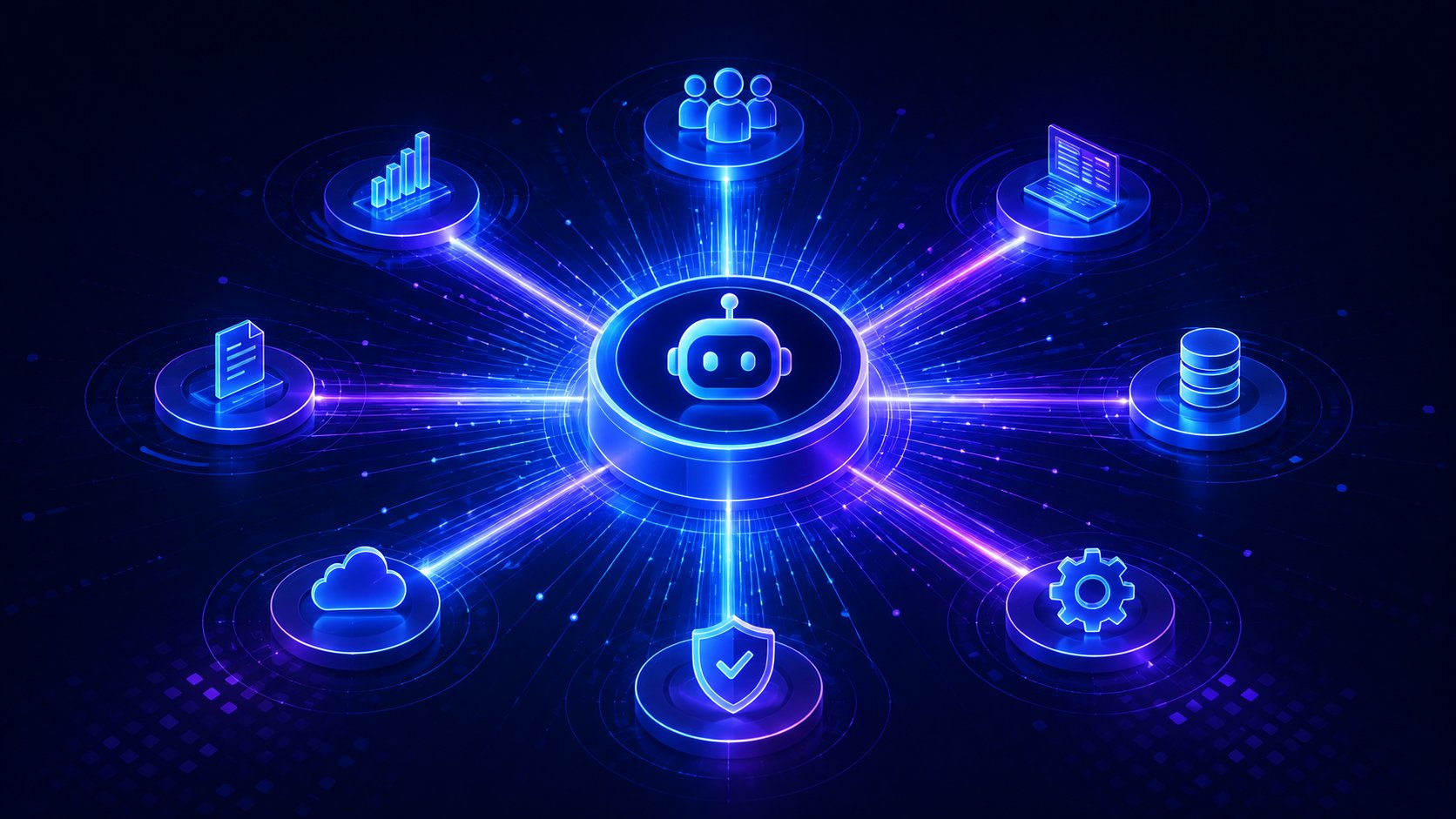
Hub-and-Spoke Architecture for AI Agents: How It Connects Enterprise
Business-to-business (B2B) customer engagement has changed significantly as buyers now expect faster responses, connected interactions, and highly personalised experiences across every stage of the customer journey. Decision-makers no longer compare B2B experiences only with competitors within the same industry. They compare them with the seamless digital experiences they receive across retail, banking, streaming platforms, and consumer applications. This shift has increased pressure on enterprises to modernise how they manage customer relationships, support operations, and lifecycle engagement.


