From Customer Data to Customer Action: How AI Is Changing Enterprise CRM

Insights / From Customer Data to Customer Action: How AI Is Changing Enterprise CRM

AI Native CRM UK Customer Data to Action

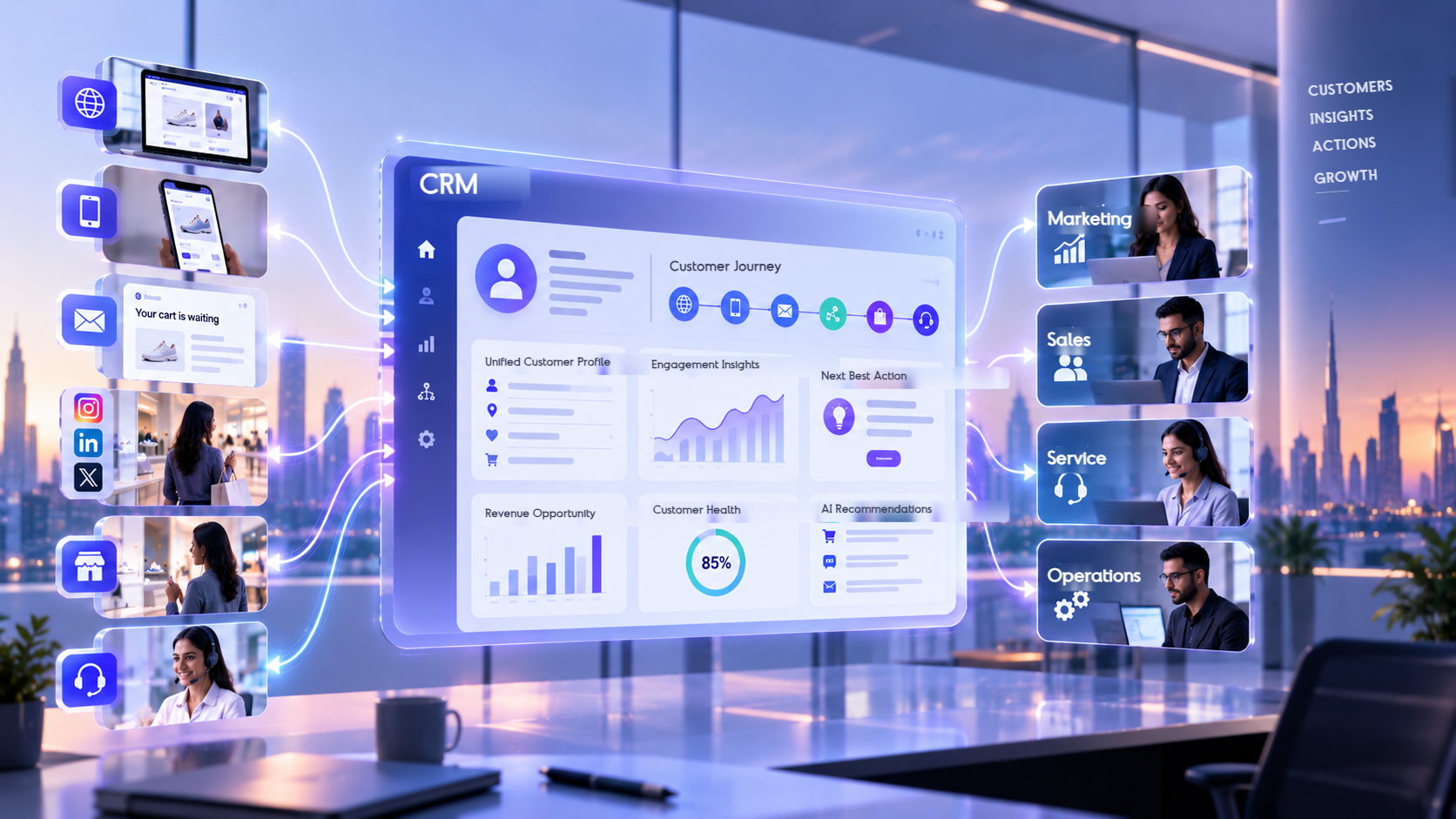
For years, enterprise CRM has provided the operational record of the customer relationship — storing account information, tracking opportunities, and giving teams a place to manage customer activity. AI is changing what happens next: turning CRM from a system centred on records into an intelligent environment that connects context, recognises intent, and helps coordinate the next action. The progression runs from customer data, to customer context, to customer intent, to intelligent decision-making, to coordinated action.

For CIOs and CTOs, this raises questions of integration and governance. For CMOs, it creates real-time engagement and pipeline opportunity. For customer experience leaders, it connects interactions across the journey. The opportunity is bigger than adding another AI feature — it’s a more connected way for the enterprise to understand and respond to customers.

From Customer Data to Customer Context

A website visit, support conversation, product enquiry, and sales meeting each provide useful information alone. Connected together, they create Connected Customer Context — a richer picture of what the customer is doing and where the relationship is heading. A business customer who visits a pricing page, downloads an implementation guide, and then contacts sales within the same week gives a far stronger buying signal read together than any one interaction gives alone. The same applies post-purchase: a customer contacting support while exploring a higher-tier service needs that context read as one relationship, not two separate events.

For large UK enterprises, where relationships span multiple departments and systems, this is where Shared Intelligence becomes commercially important — relevant customer understanding informing multiple functions, not staying confined to whichever team first captured it.

Real-Time Intent Changes the Way Businesses Respond

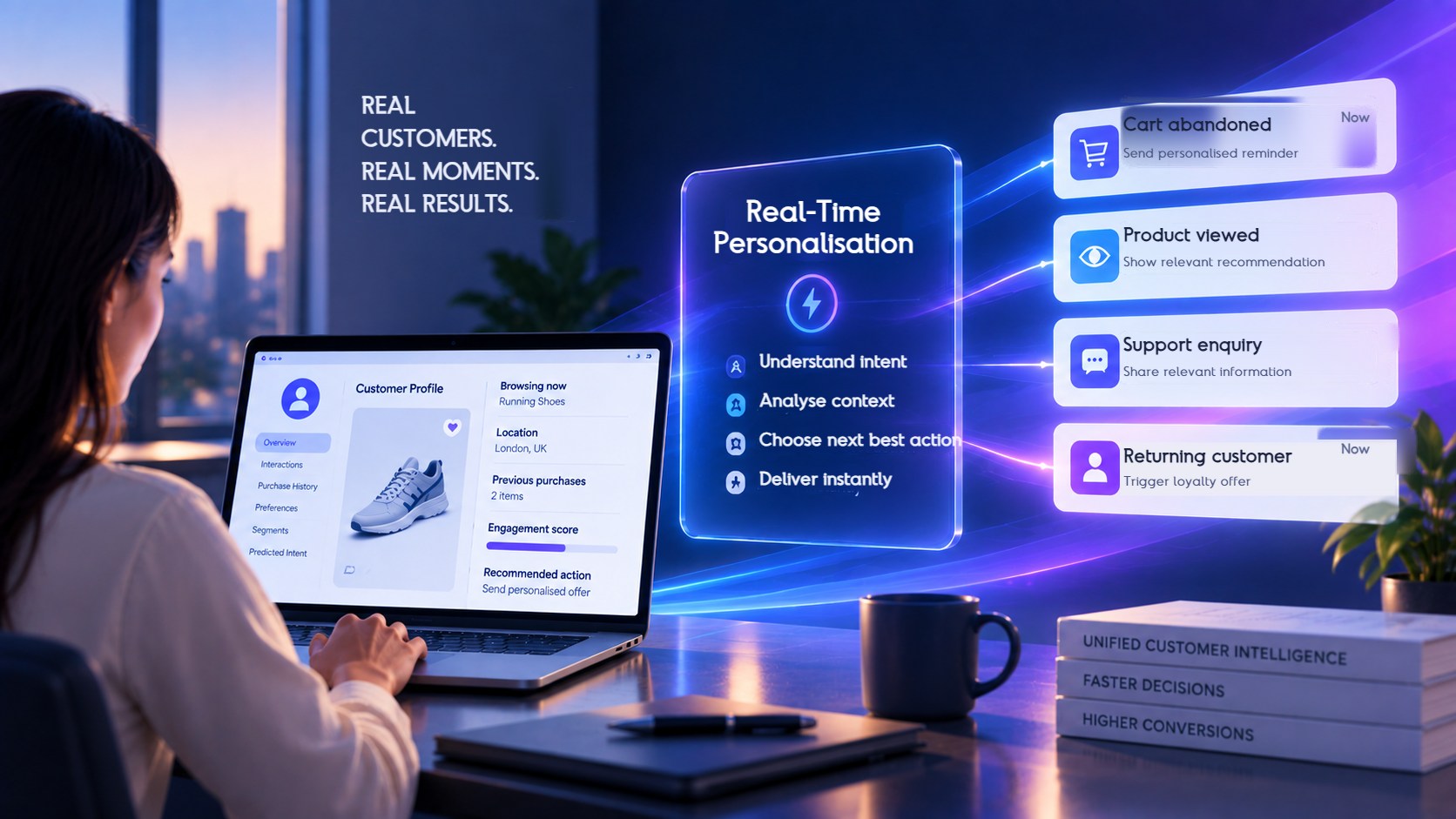
Customer intent develops through behaviour: repeated visits to a product page, increased service usage, engagement with several pieces of content before a sales call. AI can analyse these patterns as they develop, recognising meaningful change while it’s still relevant — this is Real-Time Customer Intent.

  • Marketing can use Instant Cross-Channel Attribution & Intent Mapping to connect behavioural signals with engagement, supporting Autonomous Brand Responsiveness for complex, multi-channel journeys.
  • Sales gains a continuously updated view rather than a static lead score, so an account showing increased activity across pricing and implementation content receives attention accordingly — supporting pipeline acceleration.
  • Customer experience teams can read repeated contact or changing interaction patterns as indicators of urgency, bringing relevant context to the right team at the right point.

From Insight to Action

Recognising intent is one part of the process. Turning it into coordinated action — Autonomous Orchestration — is where AI has broader operational impact: a customer signal leads to AI interpretation, a business decision, a workflow trigger, and coordinated engagement. A behaviour change could prompt a sales alert; a new service requirement could update a workflow; an expansion signal could initiate a marketing journey. AI doesn’t need to operate as an unrestricted decision-maker — enterprise environments can define permissions, business rules, and human oversight around significant actions, creating Intelligent Automation with clear operational boundaries.

Why Shared Intelligence Matters

Customer relationships rarely belong to a single department. Marketing understands campaign engagement, sales understands commercial discussions, service understands support history — each perspective is valuable alone, and more valuable connected. A customer who has raised a support issue while also engaging with an expansion campaign benefits from that wider picture informing the next interaction, rather than each team responding from its own fragment. This supports more consistent experiences, better cross-functional coordination, and greater visibility across the customer lifecycle — the foundation of what’s increasingly called Enterprise AI: connecting intelligence with business processes and decision-making at scale.

What This Means for UK Enterprises

The latest ONS analysis, published July 2026, found 35% of UK businesses with 10 or more employees used at least one AI technology in June 2026, rising to 49% among businesses with 250 or more employees. DSIT’s 2026 AI Adoption Research found 75% of AI-using businesses reported improved workforce productivity and 57% developed new or improved processes, with 72% identifying marketing as a current or future AI focus area, against 49% for sales and 46% for customer service.

  • Connected customer experiences: Connected Customer Context creates continuity across the multiple channels and departments customers interact through.
  • Faster response to intent: real-time intelligence helps identify behaviour change while it’s still commercially relevant.
  • More relevant engagement: AI connecting behaviour with business rules supports Autonomous Brand Responsiveness for CMOs specifically.
  • Coordinated workflows: marketing, sales, and service can draw on shared intelligence to coordinate action across functions.
  • Responsible use of enterprise data: DSIT found 84% of AI-using businesses apply at least some human input or checking to AI outputs, with 67% reporting significant checking — reinforcing the need for clear governance around AI-enabled customer operations.
AI Native CRM UK From Customer Data to Action

What to Look for in an AI-Native CRM

The evaluation should extend beyond the presence of AI features to how intelligence actually operates across the customer lifecycle.

  • Shared customer context: a connected, current understanding of activity across the channels marketing, sales, and service all rely on.
  • Real-time intelligence: the ability to identify relevant signals as they emerge, particularly where timing affects engagement or retention.
  • Cross-channel engagement: support for customers moving between web, email, messaging, and voice within one connected context.
  • Intelligent orchestration: whether a signal can connect to a defined workflow, recommendation, or escalation — moving from insight to coordinated execution.
  • Enterprise integration and governance: how the platform works within the wider technology environment, with clear permissions, auditability, and human oversight.
  • Scalability and measurable outcomes: the ability to extend AI across functions without creating disconnected intelligence, measured against pipeline acceleration, retention, and customer lifetime value.

Where Worktual Fits

Worktual approaches enterprise CRM around this same progression: from customer data to connected context, from context to intent, and from intent to coordinated action. Its AI-native approach to CRM connects customer information across sales, marketing, service, and engagement workflows, creating a foundation for Shared Intelligence and applying Autonomous Orchestration to connect customer signals with appropriate action. For CTOs and CIOs, the focus is a connected intelligence environment with enterprise integration and control. For CEOs and transformation leaders, the broader opportunity is Autonomous Enterprise Velocity — customer intelligence moving through the organisation to contribute to faster, more coordinated business action.

Conclusion

Enterprise CRM is entering a stage where the value of customer information increasingly depends on how quickly and intelligently an organisation can put it to work. For UK enterprises, that means bringing together customer understanding, behavioural signals, decision support, and workflow execution across the functions that shape the relationship. The future of enterprise CRM will be shaped by how effectively organisations connect intelligence with execution — and AI-native CRM is one clear path toward that model.

Frequently Asked Questions

1. What is an AI-native CRM?

An AI-native CRM is a CRM environment designed around AI as a core capability — connecting customer context, identifying intent, supporting decision-making, and coordinating workflows across customer-facing operations.

2. How is an AI-native CRM different from an AI CRM?

The terms are often used interchangeably. AI CRM broadly covers CRM platforms with AI capabilities; AI-native CRM generally refers to platforms designed around AI more deeply, with intelligence embedded across data, decisions, and workflows.

3. What is Shared Intelligence in CRM?

Customer understanding that can inform multiple customer-facing functions, so marketing, sales, service, and customer experience teams work from connected context rather than isolated information.

4. What does Real-Time Customer Intent mean?

Signals indicating what a customer may currently be interested in or trying to achieve — website behaviour, engagement patterns, product interactions, and service conversations.

5. What is Autonomous Orchestration in CRM?

Connecting customer signals and AI-driven decisions with appropriate workflows or actions — triggering engagement, routing an opportunity, or alerting staff, according to business rules and permissions.

6. How can AI CRM support marketing and sales teams?

For marketing, it can support real-time responsiveness and pipeline acceleration through personalised, cross-channel engagement. For sales, it provides richer context and current engagement signals to help teams prioritise attention and respond to changing intent.

7. What should UK enterprises consider when choosing an AI-native CRM?

Shared Intelligence, Connected Customer Context, real-time intelligence, cross-channel engagement, Autonomous Orchestration, enterprise integration, governance, and scalability.

Related Posts

Real Time vs Batch Personalisation UK

Real-Time vs. Batch Personalisation: Why the Lag Is Costing You the Sale

Business-to-business (B2B) customer engagement has changed significantly as buyers now expect faster responses, connected interactions, and highly personalised experiences across every stage of the customer journey. Decision-makers no longer compare B2B experiences only with competitors within the same industry. They compare them with the seamless digital experiences they receive across retail, banking, streaming platforms, and consumer applications. This shift has increased pressure on enterprises to modernise how they manage customer relationships, support operations, and lifecycle engagement.

Natwest AI Transformation UK Customer Experience

Redesign From the Outcome Backward: What NatWest’s AI Transformation Shows About UK Customer Experience

Business-to-business (B2B) customer engagement has changed significantly as buyers now expect faster responses, connected interactions, and highly personalised experiences across every stage of the customer journey. Decision-makers no longer compare B2B experiences only with competitors within the same industry. They compare them with the seamless digital experiences they receive across retail, banking, streaming platforms, and consumer applications. This shift has increased pressure on enterprises to modernise how they manage customer relationships, support operations, and lifecycle engagement.
Ticket Deflection vs Ticket Resolution

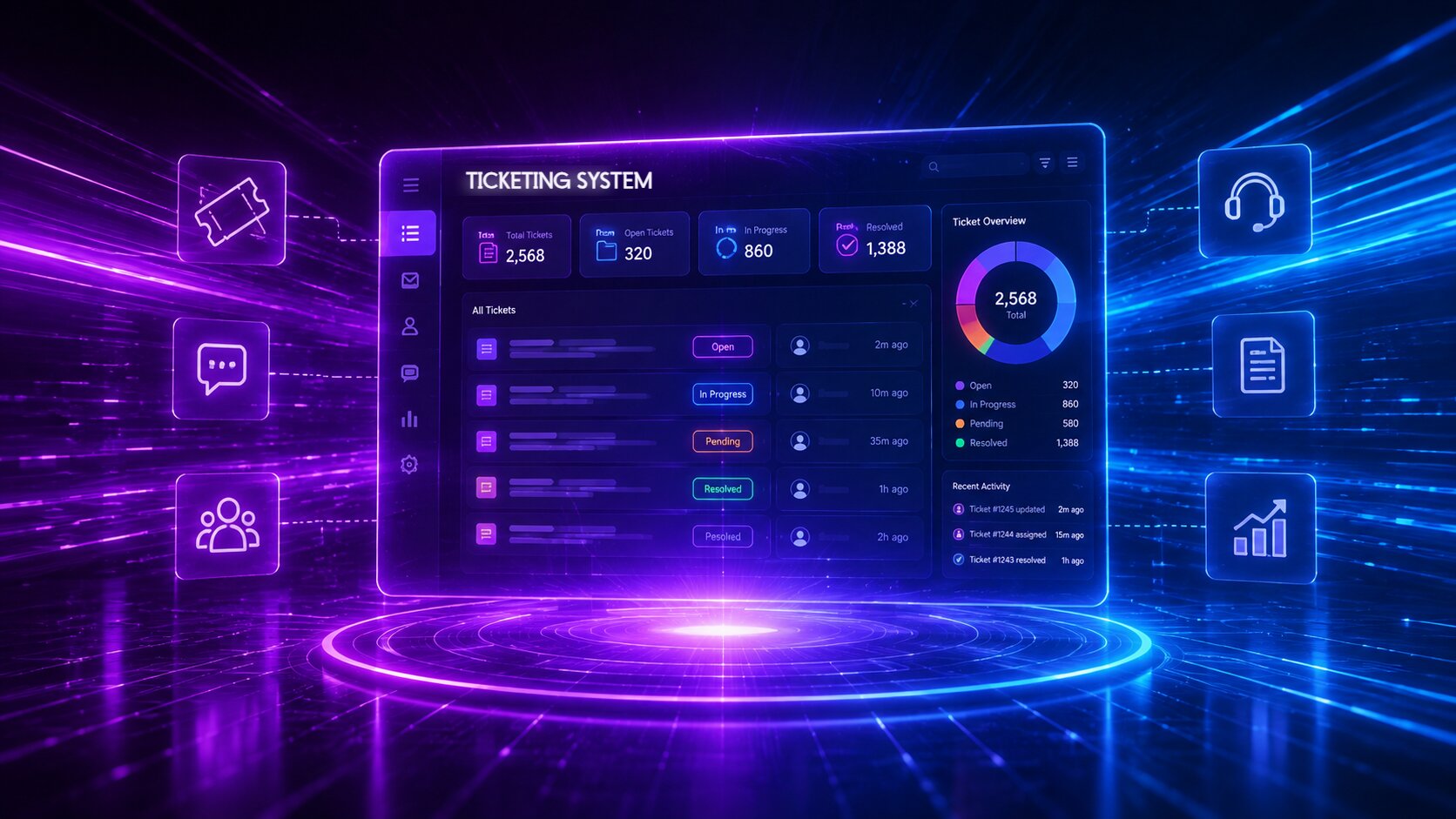
Ticket Deflection vs Ticket Resolution: Why the Metric Everyone Tracks Is the Wrong One

Business-to-business (B2B) customer engagement has changed significantly as buyers now expect faster responses, connected interactions, and highly personalised experiences across every stage of the customer journey. Decision-makers no longer compare B2B experiences only with competitors within the same industry. They compare them with the seamless digital experiences they receive across retail, banking, streaming platforms, and consumer applications. This shift has increased pressure on enterprises to modernise how they manage customer relationships, support operations, and lifecycle engagement.