Best Salesforce Alternative for UK Teams in 2026

Insights / Best Salesforce Alternative for UK Teams in 2026
Best Salesforce Alternative

AI-Native CRM That British Businesses Actually Adopt

It is 5:45pm on a Friday in Manchester, and a sales rep has just finished her fourth call of the afternoon. She knows she should log the notes in Salesforce before the weekend. She also knows it’ll take fifteen minutes she doesn’t have, so it waits until Monday, half-remembered.

That gap between “what happened” and “what’s in the CRM” is why so many UK enterprises are reassessing Salesforce in 2026. It isn’t that the platform stopped working; the effort required to keep it updated no longer matches what revenue teams can spare.

  • Why UK Businesses Are Looking Beyond Salesforce
  • What Makes an AI-Native CRM Different
  • What UK Revenue Teams Need in 2026
  • Salesforce vs AI-Native CRM: A Quick Comparison
  • What to Look for in a Salesforce Alternative
  • Best Salesforce Alternatives for UK Teams in 2026
  • Why AI-Native CRM Improves User Adoption
  • Salesforce Migration Checklist for UK Businesses
  • FAQs

Why UK Businesses Are Looking Beyond Salesforce

A few pressures show up again and again in these reviews:

  • Rising costs — core licensing, AI add-on fees, and consultancy costs for every configuration change
  • Long implementations — multi-month rollouts with heavy configuration and external consultants
  • Low adoption — manual data entry and a complex interface push reps toward workarounds
  • Hybrid working demands — mobile-first access, AI meeting summaries, remote-friendly collaboration
  • UK compliance needs — GDPR, UK GDPR, ICO guidance, and data residency all factor into procurement

None of this means Salesforce is wrong for every enterprise. Organisations with deeply bespoke governance needs and the budget to match still find it worth the investment. But a growing number are questioning whether that customisation is worth months of implementation just to get AI capability competitors now ship as standard.

What Makes an AI-Native CRM Different

A bolt-on AI feature and an AI-native platform aren’t the same thing. AI-native CRM has automation running through daily workflows from the start, not added as a plugin later.

Traditional CRMAI-native CRM
Manual updatesAutomatic updates
ReportsPredictions
Record keepingAI execution
User searchesAI recommendations
Manual follow-upsAI-generated follow-ups

In practice, that’s AI meeting summaries, automated lead qualification, opportunity scoring, customer health monitoring, AI-drafted emails, and predictive forecasting built into the workflow, not a separate step someone has to remember.

What UK Revenue Teams Need in 2026

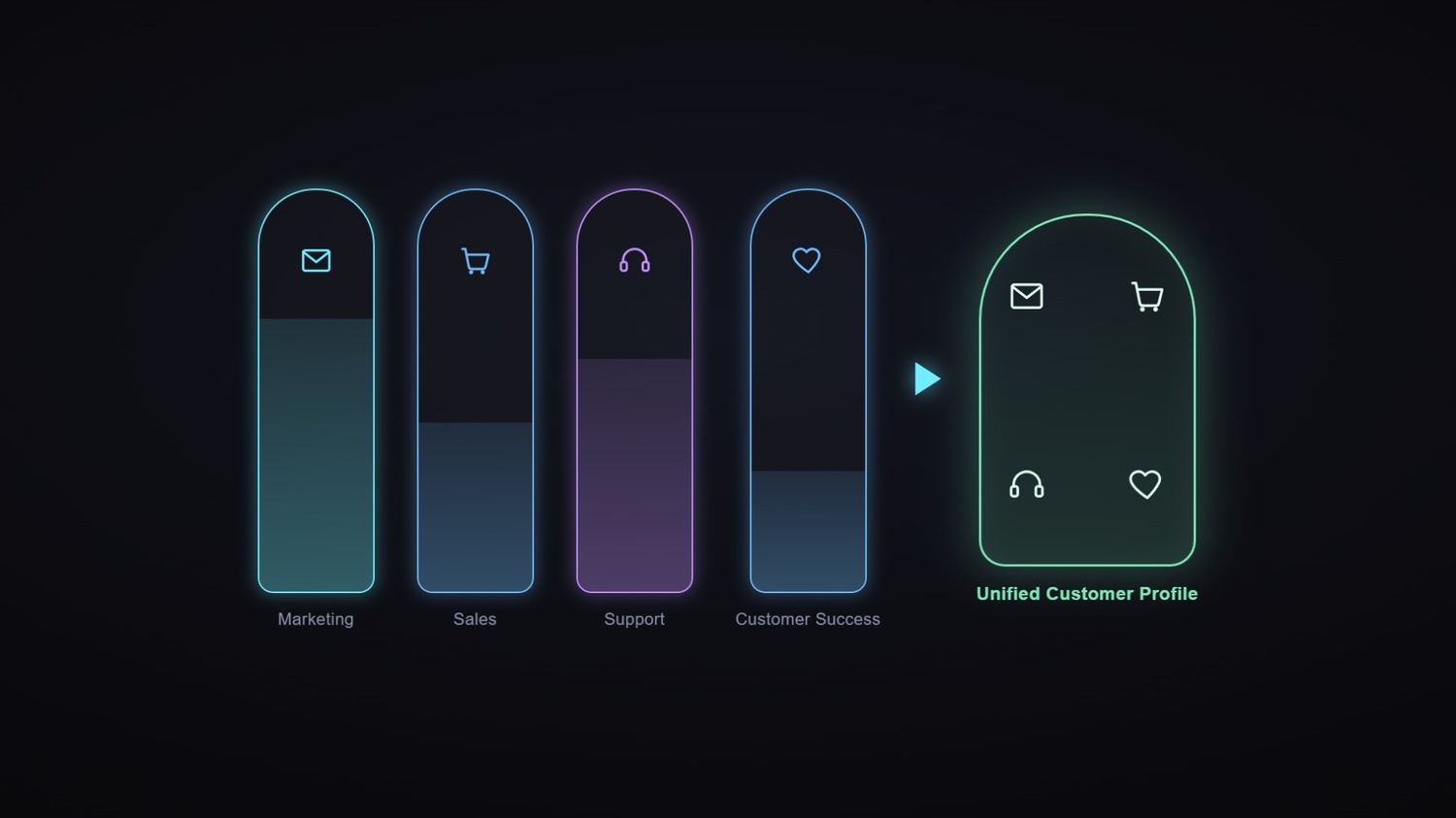
Across functions, the asks look similar: sales wants opportunity scoring and forecast accuracy; marketing wants campaign attribution and journey automation; customer success wants churn prediction and health scoring; support wants an AI chatbot and case summaries; RevOps wants one dashboard instead of five. The common thread: a single source of customer truth every team can act on, not just read.

Salesforce vs AI-Native CRM: A Quick Comparison

SalesforceAI-Native CRM
Initial costHighLower
AI capabilitiesAdd-on licensingBuilt in
Implementation timeMonthsWeeks
CRM adoptionOften inconsistentHigher, less manual entry
GDPR / UK hostingAvailable, configuration-dependentOften built in from the start

What to Look for in a Salesforce Alternative

Prioritise: AI-first architecture with built-in agents, genuine GDPR compliance, omnichannel engagement across voice, email and chat, a customer data platform underneath it, revenue intelligence, low-code configuration, enterprise-grade security, and a deployment measured in weeks, not months.

Best Salesforce Alternatives for UK Teams in 2026

Recent UK reviews commonly point to a similar shortlist for enterprise buyers, with the right fit depending on architecture, ecosystem, and how much of the AI layer needs to be native rather than bolted on. Here’s how five of the leading options compare on strengths and trade-offs.

1. Worktual

Best for: enterprises seeking unified customer intelligence

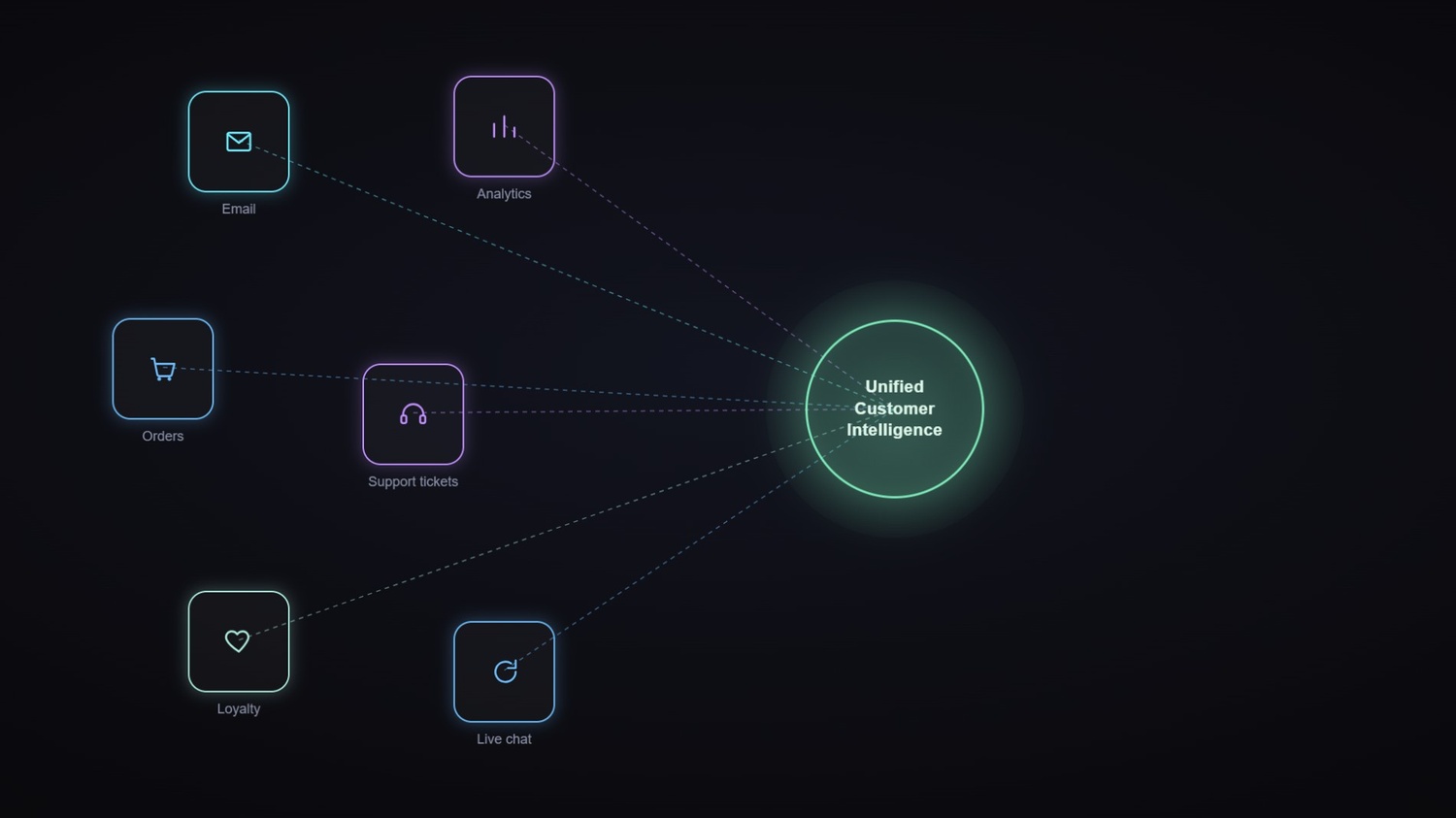
  • AI-native architecture built around Worktual’s Cognitive CDP, unifying voice, web, email, and support channels into one continuously updated customer profile
  • Built-in Next-Best-Action automation without stitching together separate AI tools
  • Not partner-dependent, so enterprises deploy and get support directly

Considerations: a newer platform than the established global CRM incumbents.

Alternatives to Salesforce

2. HubSpot (Enterprise tier)

Best for: marketing-led enterprise growth teams

  • Tight alignment between campaign data and CRM records
  • Breeze AI runs across the platform
  • Enterprise Hub has expanded to support more complex sales and service operations

Considerations: costs scale steeply at enterprise tier, approaching Salesforce-level pricing, and the platform is still built more for a marketing-led motion than deeply complex enterprise sales processes.

3. Microsoft Dynamics 365

Best for: Microsoft-first enterprises

  • Native integration with Teams, Outlook, Azure, and the Power Platform
  • Copilot for Sales sits directly inside tools reps already use daily

Considerations: full value depends on already being deep in the Microsoft ecosystem; Sales, Service, and Marketing are separate modules often licensed independently, adding cost as adoption grows; AI is layered onto existing CRM architecture rather than built AI-native from the ground up.

4. Zoho CRM (Enterprise edition)

  • Lower total cost of ownership than several incumbents
  • Zia AI covers prediction, lead scoring, and sentiment analysis
  • Broad configurability without heavy custom development

Considerations: AI capabilities are less deeply embedded than purpose-built AI-native platforms, and getting full value typically requires significant configuration.

5. Creatio

Best for: enterprises with complex, well-defined workflows

  • No-code workflow engine lets business teams build automations without developer time
  • Combines CRM and process automation on a single platform
  • Strong fit for regulated or process-heavy sectors

Considerations: Sales, Marketing, and Service are licensed separately, so total cost of ownership needs careful evaluation, and enterprise deployments typically involve multi-year commitments and higher minimum spend.

Across all five, the evaluation question is the same: does the AI and customer-data layer come built in, or is it something your team spends the next year integrating.

Why AI-Native CRM Improves User Adoption

People don’t dislike CRM — they dislike the admin that comes with it. Automatic activity logging, meeting transcription, AI reminders, and auto-generated customer timelines remove most of that admin, which is usually enough to change behaviour without a single training session on “why updating the CRM matters.”

Salesforce Migration Checklist for UK Businesses

  1. Audit current CRM usage
  2. Export Salesforce data
  3. Remove duplicate records
  4. Map customer journeys
  5. Configure AI workflows
  6. Integrate communication channels
  7. Pilot with one department
  8. Train end users
  9. Measure adoption
  10. Roll out in full

Is Salesforce Still the Right CRM?

Salesforce still stacks up for enterprises whose governance needs demand extremely bespoke, ground-up configuration and the in-house team to maintain it. AI-native CRM increasingly stacks up too, for enterprises after the same governance and security standards but with AI built in from day one and a shorter path to value.

Conclusion

The UK CRM market is shifting from systems of record to systems of intelligence. The right evaluation criteria today are adoption, AI maturity, implementation speed, compliance, and whether the platform actually changes what your team does day to day.

FAQs

1. What is the best Salesforce alternative in the UK?

It depends on company size and needs, but AI-native platforms like Worktual, HubSpot, Microsoft Dynamics 365, and Zoho CRM are among the most commonly evaluated in 2026.

2. Why are UK businesses moving away from Salesforce?

Rising costs, long implementations, low user adoption, and the need for AI capability without extra add-on licensing are the most cited reasons.

3. What is an AI-native CRM?

A CRM built with AI embedded into everyday workflows from the ground up, rather than added as a separate feature or plugin later.

4. Is Salesforce suitable for UK enterprises?

Yes, particularly for enterprises with highly bespoke governance and customisation requirements — though many are now weighing that against the faster deployment and built-in AI that native alternatives offer.

5. Which CRM is GDPR compliant?

Most major CRM platforms offer GDPR-compliant configurations; the difference is whether compliance and UK data residency are built in by default or require additional setup.

6. How much does Salesforce cost in the UK?

Costs vary by edition, user count, and add-ons (including AI licensing), so it’s worth requesting a like-for-like quote against any alternative you’re evaluating.

7. How difficult is Salesforce migration?

It’s manageable with a structured plan — auditing usage, cleaning data, and piloting with one department before a full rollout meaningfully reduces risk.

8. Which CRM has the best AI features?

This depends on your priorities — evaluate whether AI is built into daily workflows or sold as a separate add-on, since that affects both cost and adoption.

9. Can AI automate CRM administration?

Yes — automatic activity logging, meeting summaries, and AI-generated follow-ups are now standard features of AI-native platforms.

10. Which CRM is best for hybrid sales teams?

Look for mobile-first design, AI meeting summaries, and remote collaboration features — these matter more for hybrid teams than for office-based ones.

Related Posts

Unified Intelligence for Technology

Unified Intelligence AI for Technology: Accelerating Product Adoption, Customer Retention, Expansion Revenue

Business-to-business (B2B) customer engagement has changed significantly as buyers now expect faster responses, connected interactions, and highly personalised experiences across every stage of the customer journey. Decision-makers no longer compare B2B experiences only with competitors within the same industry. They compare them with the seamless digital experiences they receive across retail, banking, streaming platforms, and consumer applications. This shift has increased pressure on enterprises to modernise how they manage customer relationships, support operations, and lifecycle engagement.

intelligent case management ai ticketing

Intelligent Case Management: How AI Transforms Ticketing into Predictive Support Infrastructure

Customer service has evolved from a reactive support function into a strategic driver of customer loyalty, operational efficiency, and long-term business growth. As organisations manage increasing volumes of customer interactions across digital channels, every enquiry, complaint, and service request influences customer experience and business outcomes. Yet many organisations continue to rely on traditional ticketing systems that were designed to organise work, not understand customers.

B2B Buyer Intent before rfp

B2B Buyer Intent in the UK Market: Predicting the Moment before the RFP

By the time an RFP or tender is issued, the shortlist has typically already formed. Research from 6sense and Gartner indicates that a substantial majority of the B2B buying journey happens anonymously, before a vendor is ever contacted — placing control of the timeline firmly with the buyer rather than the seller.