Real-Time vs. Batch Personalisation: Why the Lag Is Costing You the Sale

Insights / Real-Time vs. Batch Personalisation: Why the Lag Is Costing You the Sale
Real Time vs Batch Personalisation UK

For CMOs and Revenue Leaders

Every marketing team says it personalises. Almost none of them do it fast enough to matter. Deloitte’s 2024 research found 92% of retailers believe they deliver personalised experiences well and only 48% of their customers agree. That gap isn’t a creativity problem. It’s a speed problem, and it’s costing UK brands the exact moment their customer was ready to buy.

This is the shift from static campaigns to Autonomous Brand Responsiveness: a marketing motion that acts on live customer intent the instant it appears, instead of discovering it in next week’s report.

The Real Gap Isn't Content. It's Timing.

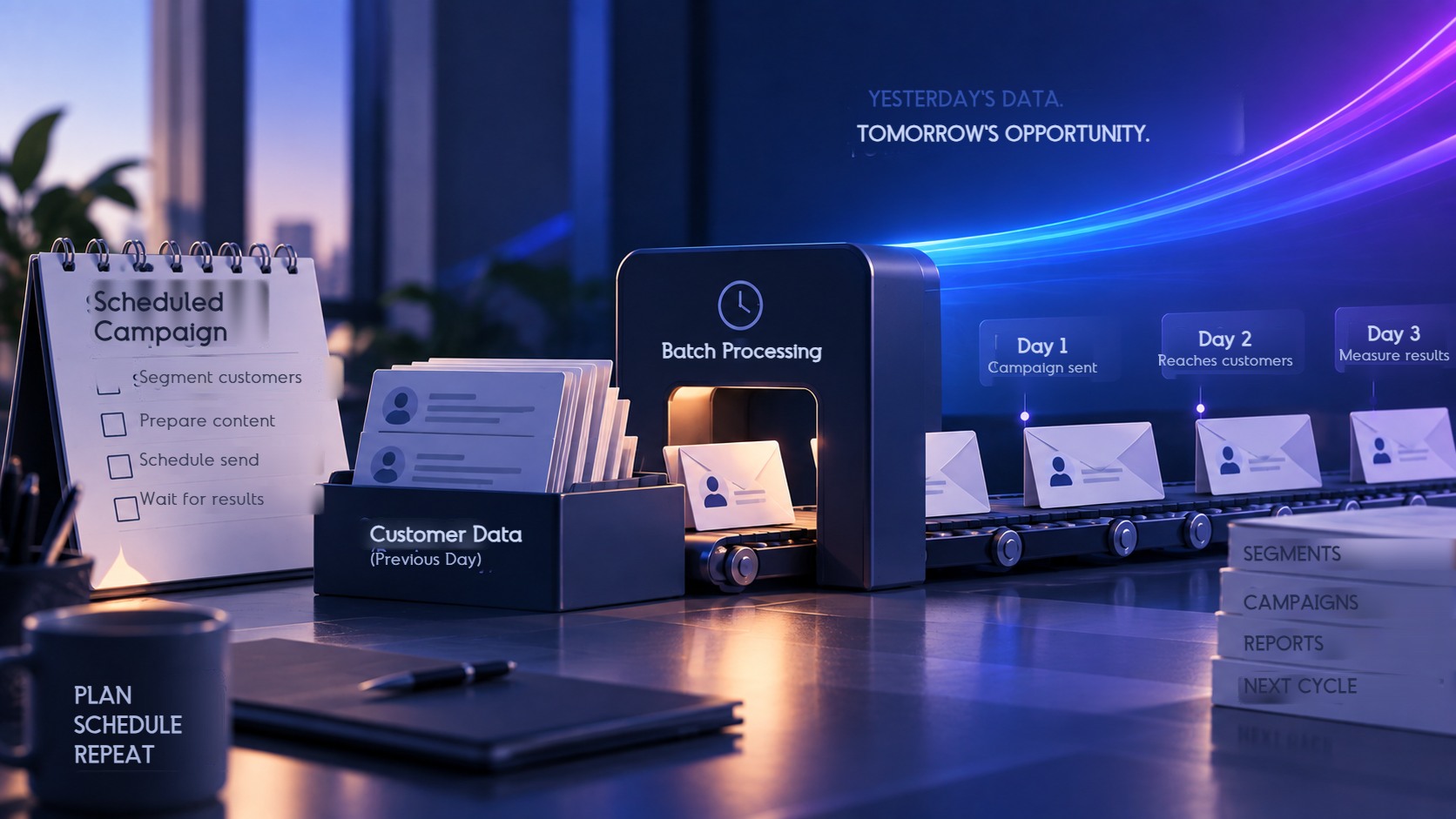
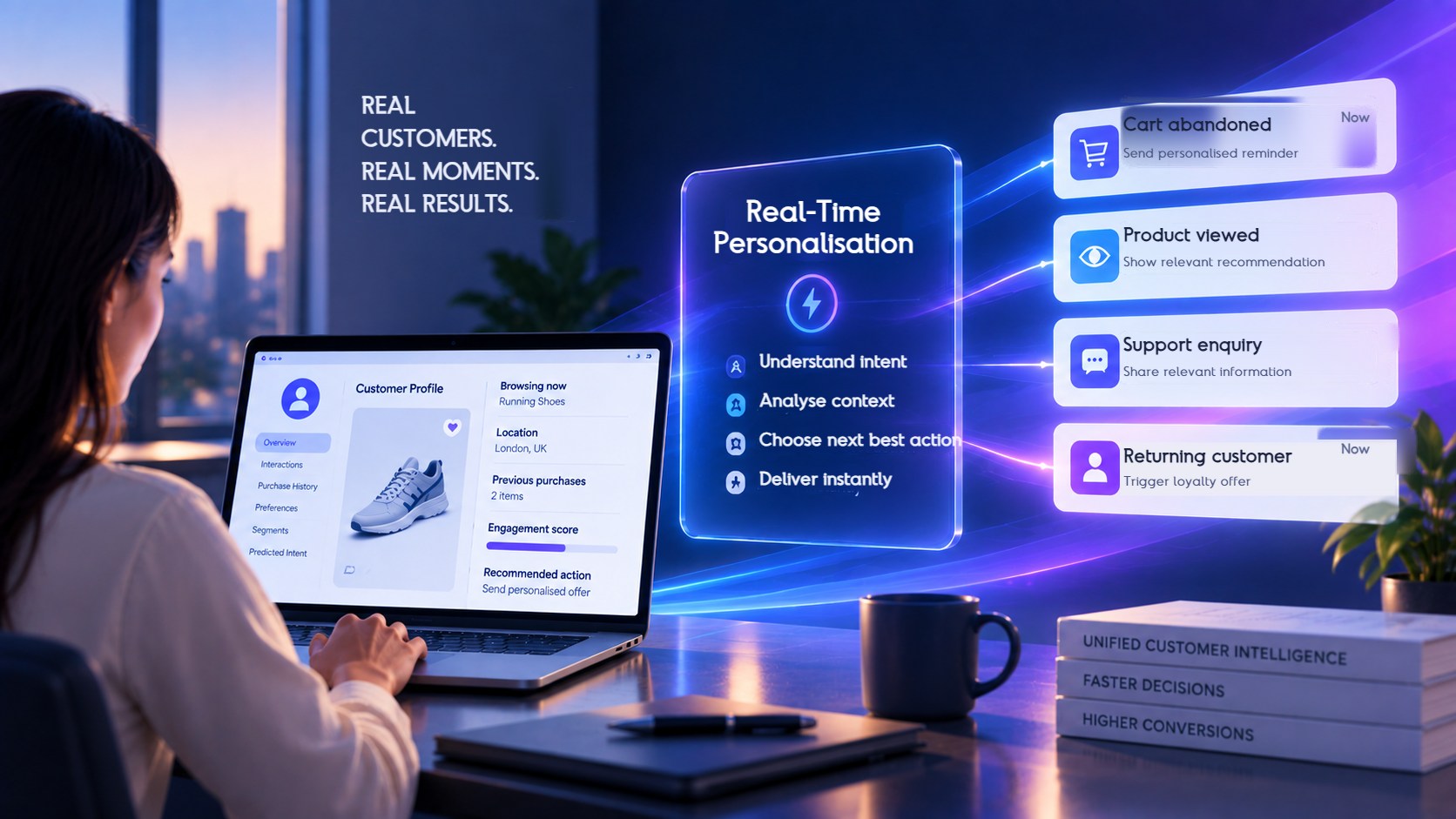
Batch personalisation waits. It refreshes overnight, or weekly, and acts on what a customer did yesterday. Real-time personalisation acts the instant a signal fires — a cart abandoned, a page revisited, a product viewed twice in one session. The difference sounds technical. The impact is not: Deloitte Digital’s 2024 Privacy-First Personalisation report found that brands in the two most mature personalisation tiers convert 16 percentage points higher than brands in the least mature tier. Sixteen points isn’t a rounding error. It’s the difference between a campaign that works and one that quietly doesn’t.

Batch vs. Real-Time, Side by Side

Batch PersonalisationReal-Time Personalisation
When it actsHours or days after the behaviour happenedThe moment the behaviour happens
What it's based onYesterday's data, refreshed on a scheduleWhat the customer is doing right now
Best forNewsletters, broad segmentsCart recovery, live offers, urgent moments
The cost of being lateA cooled-off customer, a missed momentNone — the moment is still live

Why Batch Feels Safe and Costs You Anyway

Batch personalisation is comfortable because it’s predictable — the same segment gets the same message on the same schedule, every time. Comfortable isn’t the same as effective. Deloitte’s research found that 80% of consumers prefer brands that personalise, and spend 50% more with the ones that get it right. A message that arrives a day late isn’t personalisation. It’s a newsletter with the customer’s name on it.

The uncomfortable part of Deloitte’s finding isn’t the 16-point gap itself; it’s who’s on which side of it. Most brands aren’t failing because they never invested in personalisation. They invested, built the segments, wrote the campaigns, and still landed in the lower tiers, because the system underneath was never built to act at the speed the moment actually required. Buying more personalisation tools doesn’t close that gap. Buying faster ones does.

The Maturity Divide Is Widening, Not Closing

This isn’t a gap that closes on its own over time. The brands already acting in real time compound their advantage with every customer interaction; more current data, sharper timing, better decisions, feeding straight back into the next moment. The brands still running on batch schedules are optimising a system that was already behind before the campaign even launched. The distance between the two groups isn’t standing still while everyone catches up. It’s growing.

Real Time vs Batch Personalisation

Where This Actually Shows Up

  • Cart abandonment. A reminder sent the next morning reaches a customer who’s already moved on. One sent within minutes reaches a customer who’s still deciding.
  • Browsing signals. A shopper who views the same product three times in one visit is telling you something, right then — not something worth acting on next week.
  • Service-to-sales handoffs. A customer who just resolved a complaint is not the moment for a generic promotional blast — and batch systems can’t tell the difference.

What Real-Time Personalisation Actually Requires

  • A live, current view of the customer. Not a snapshot from last week’s export.
  • A system that acts the moment a signal appears, not one that waits for the next scheduled run.
  • Decisioning connected directly to execution, so the right message reaches the right channel while the moment is still live.

Where Worktual Fits

This is exactly what Worktual‘s CVM is built for: living customer intelligence that scores every signal the instant it happens and triggers the response in real time, not on a batch schedule. When connected with Cognitive CDP; that response draws on a single, continuously synchronised view of the customer, not a snapshot from whenever the data was last refreshed which is precisely the difference between the top two personalisation tiers and everyone else in Deloitte’s research.

The Bottom Line

A 16-point conversion opportunity comes from acting while customer intent is still live. UK brands that close that gap are creating more timely, relevant experiences — responding to customers in the moment and helping them move forward without waiting.

Frequently Asked Questions

1. What is the difference between real-time and batch personalisation?

Batch personalisation updates on a schedule — hourly, daily, or weekly — and acts on past behaviour. Real-time personalisation responds the instant a customer signal happens, while the moment is still relevant.

2. How much of a difference does real-time personalisation actually make?

Deloitte Digital’s 2024 Privacy-First Personalisation report found brands in the two most mature personalisation tiers convert 16 percentage points higher than brands in the least mature tier.

3. Why do so many brands still rely on batch personalisation?

It’s simpler to run and feels lower-risk. But Deloitte found 92% of retailers believe they personalise well, while only 48% of their customers agree — batch systems create that confidence gap because they’re reacting to old data.

4. Where does real-time personalisation matter most?

Cart abandonment, live browsing signals, and moments right after a service interaction are the clearest examples — cases where a delayed response misses the customer entirely.

5. How does Worktual support real-time personalisation?

CVM scores customer signals the moment they happen and triggers the response instantly. Connected with Cognitive CDP, that response is based on a genuinely current customer view, not a scheduled data refresh.

Related Posts

AI Native CRM UK Customer Data to Action

From Customer Data to Customer Action: How AI Is Changing Enterprise CRM

Business-to-business (B2B) customer engagement has changed significantly as buyers now expect faster responses, connected interactions, and highly personalised experiences across every stage of the customer journey. Decision-makers no longer compare B2B experiences only with competitors within the same industry. They compare them with the seamless digital experiences they receive across retail, banking, streaming platforms, and consumer applications. This shift has increased pressure on enterprises to modernise how they manage customer relationships, support operations, and lifecycle engagement.

What is a Super Agent in AI

What Is a Super Agent in AI? Architecture, Components and Use Cases for UK Enterprises

Business-to-business (B2B) customer engagement has changed significantly as buyers now expect faster responses, connected interactions, and highly personalised experiences across every stage of the customer journey. Decision-makers no longer compare B2B experiences only with competitors within the same industry. They compare them with the seamless digital experiences they receive across retail, banking, streaming platforms, and consumer applications. This shift has increased pressure on enterprises to modernise how they manage customer relationships, support operations, and lifecycle engagement.

AI Native vs AI Assisted CRM UK

AI-Native vs. AI-Assisted CRM: What Actually Matters in the UK

Business-to-business (B2B) customer engagement has changed significantly as buyers now expect faster responses, connected interactions, and highly personalised experiences across every stage of the customer journey. Decision-makers no longer compare B2B experiences only with competitors within the same industry. They compare them with the seamless digital experiences they receive across retail, banking, streaming platforms, and consumer applications. This shift has increased pressure on enterprises to modernise how they manage customer relationships, support operations, and lifecycle engagement.