

Top 5 CCaaS Providers in the UK for 2026
Insights / Top 5 CCaaS Providers in the UK for 2026

Table of Contents
As customers demand faster, smarter, and more joined-together support experiences, Businesses evaluating the best Contact Centre providers are increasingly prioritising AI-powered automation, omnichannel engagement, and scalable cloud infrastructure.
The rise of AI-powered virtual contact centres has become impossible to ignore.
What is Cloud Contact Centre as a service (CCaaS)?
CCaaS (Contact Centre as a Service) is a cloud-based platform that lets businesses manage customer interactions across voice, email, chat, messaging, and social media from a single hub. It removes the need for on-premise hardware, enabling easy scaling, remote work, and consistent omnichannel support.
Why businesses need the right CCaaS solution
Choosing the right CCaaS provider is critical to delivering exceptional customer experiences in today’s fast-paced digital landscape. The right platform not only improves efficiency but also helps businesses stay agile and competitive.
- Enables 24/7 seamless customer service with modern, frictionless experiences
- Supports hybrid and remote teams with flexibility and ease
- Boosts productivity through AI-driven automation
- Ensures scalability, security, and adaptability to meet evolving customer demands
CCaaS vs On-Premise vs UCaaS
| Feature / Aspect | CCaaS (Contact Centre as a Service) | On-Premise Contact Centre | UCaaS (Unified Communications as a Service) |
|---|---|---|---|
| Definition | Cloud-based customer experience platform for managing support interactions | Locally hosted Contact Centre infrastructure | Cloud-based communication platform for internal collaboration |
| Primary Use Case | Customer support, service, engagement | Customer support (traditional setup) | Internal team communication (calls, chat, video) |
| Deployment | Fully cloud-based | Installed on company servers | Cloud-based |
| Scalability | Highly scalable (on-demand) | Limited, requires hardware upgrades | Highly scalable |
| Setup Time | Fast (days to weeks) | Slow (months) | Very fast (hours to days) |
| Cost Model | Subscription (OPEX) | High upfront cost (CAPEX) + maintenance | Subscription (OPEX) |
| Maintenance | Managed by provider | Managed by internal IT team | Managed by provider |
| AI & Automation | Advanced (chatbots, voicebots, analytics) | Limited unless heavily customised | Basic to moderate (depends on provider) |
| Omnichannel Support | Yes (voice, chat, email, social, WhatsApp) | Limited or complex to integrate | Limited (mainly communication channels) |
| Remote Work Support | Excellent (work from anywhere) | Poor (location dependent) | Excellent |
| Integration Capabilities | Strong (CRM, CDP, APIs) | Complex and costly | Moderate (integrates with productivity tools) |
| Reliability & Updates | Automatic updates, high uptime | Depends on internal infrastructure | Automatic updates |
| Customization | High (via APIs & workflows) | Very high but complex & expensive | Moderate |
| Ideal For | Modern businesses, scalable CX, AI-driven support | Large enterprises with strict control needs | Teams needing seamless internal communication |
How to Compare CCaaS Providers: The 7-Factor Framework
Evaluating CCaaS vendors across the right criteria prevents costly migrations. Use this framework when comparing shortlisted platforms:
| Factor | What to Evaluate | Questions to Ask Vendor |
|---|---|---|
| AI & Automation Depth | Native vs bolt-on AI; autonomous resolution rate | What % of queries does your AI resolve without human escalation? |
| Omnichannel Coverage | Voice, email, chat, WhatsApp, SMS, social — all native | Are all channels managed from one agent desktop? |
| Uptime SLA | Guaranteed uptime %; multi-region failover architecture | What is your 12-month historical uptime? Do you offer SLA credits? |
| CRM & API Integration | Native CRM connectors; webhook/API support; no-code flows | How many out-of-box CRM integrations do you offer? |
| Pricing Transparency | Per-agent or consumption-based; no hidden telco charges | What's included in the base plan? What are common add-on costs? |
| Scalability | Handles seasonal spikes without pre-buying fixed capacity | Can we scale from 10 to 1,000 agents without re-contracting? |
Use this scorecard to rate each shortlisted vendor from 1–5 on each factor. Any vendor scoring below 3 on uptime, security, or omnichannel coverage should be eliminated from consideration before commercial negotiation begins.
How to Choose the Best CCaaS Provider
Choosing the best CCaaS provider depends on your business size, customer engagement strategy, AI requirements, and existing technology stack. While every CCaaS platform delivers cloud-based contact centre functionality, the leading providers differentiate themselves through AI-powered automation, omnichannel engagement, analytics, security, and scalability.
When comparing CCaaS providers, consider the following factors:
- AI-powered voice and chat automation
- Omnichannel communication support
- CRM and business application integrations
- Workforce engagement and quality management
- Intelligent call routing and IVR
- Real-time analytics and reporting
- Enterprise-grade security and compliance
- Global availability and multilingual support
- Transparent pricing and licensing
The best CCaaS platform should improve customer experience while reducing operational costs through automation and AI-driven insights.
Leading CCaaS Vendors in 2026
The CCaaS market continues to evolve as vendors introduce generative AI, conversational intelligence, and autonomous customer service capabilities.
Leading CCaaS vendors typically offer:
- Cloud-native architecture
- AI-powered customer service
- Intelligent routing
- Speech analytics
- Digital channel management
- CRM integrations
- Workforce optimisation
- Customer journey analytics
- Enterprise security certifications
Rather than focusing solely on feature count, businesses should evaluate vendors based on scalability, implementation support, AI innovation, and total cost of ownership.
CCaaS Uptime & Reliability — What to Look For in 2026
CCaaS Uptime: Why 99.9% is Not Enough
A single percentage point difference in uptime SLA translates to real downtime your customers experience. Here is what the numbers mean in practice:
| SLA Uptime | Annual Downtime | Monthly Downtime | Impact on 100-Agent Contact Centre |
|---|---|---|---|
| 99.0% | ~87.6 hours | ~7.3 hours | Catastrophic — multiple full-day outages per year |
| 99.5% | ~43.8 hours | ~3.65 hours | Severe — one major outage per month |
| 99.9% | ~8.7 hours | ~44 minutes | Acceptable — plan for monthly maintenance windows |
| 99.95% | ~4.4 hours | ~22 minutes | Good — most enterprise-grade platforms target this |
| 99.99% | ~52 minutes | ~4.4 minutes | Excellent — mission-critical operations minimum |
The 5 Reliability Factors That Matter More Than SLA Numbers
• Multi-region redundancy — data centres in at least two geographic locations with automatic failover
• Telco carrier diversity — using multiple telephony providers so a single carrier outage doesn’t kill voice
• Incident transparency — public status page with real-time updates and post-incident reports
• SLA credits — financial penalty clauses that kick in when uptime targets are missed
• On-call SLAs — guaranteed response time for critical incidents (target: under 15 minutes)
Top 5 CCaaS providers in the UK (2026)
The best Contact Centre providers combine AI capabilities, omnichannel communication, analytics, and automation to deliver modern customer experiences at scale.
Here are five leading CCaaS providers making waves in the UK market this year:
1. Worktual
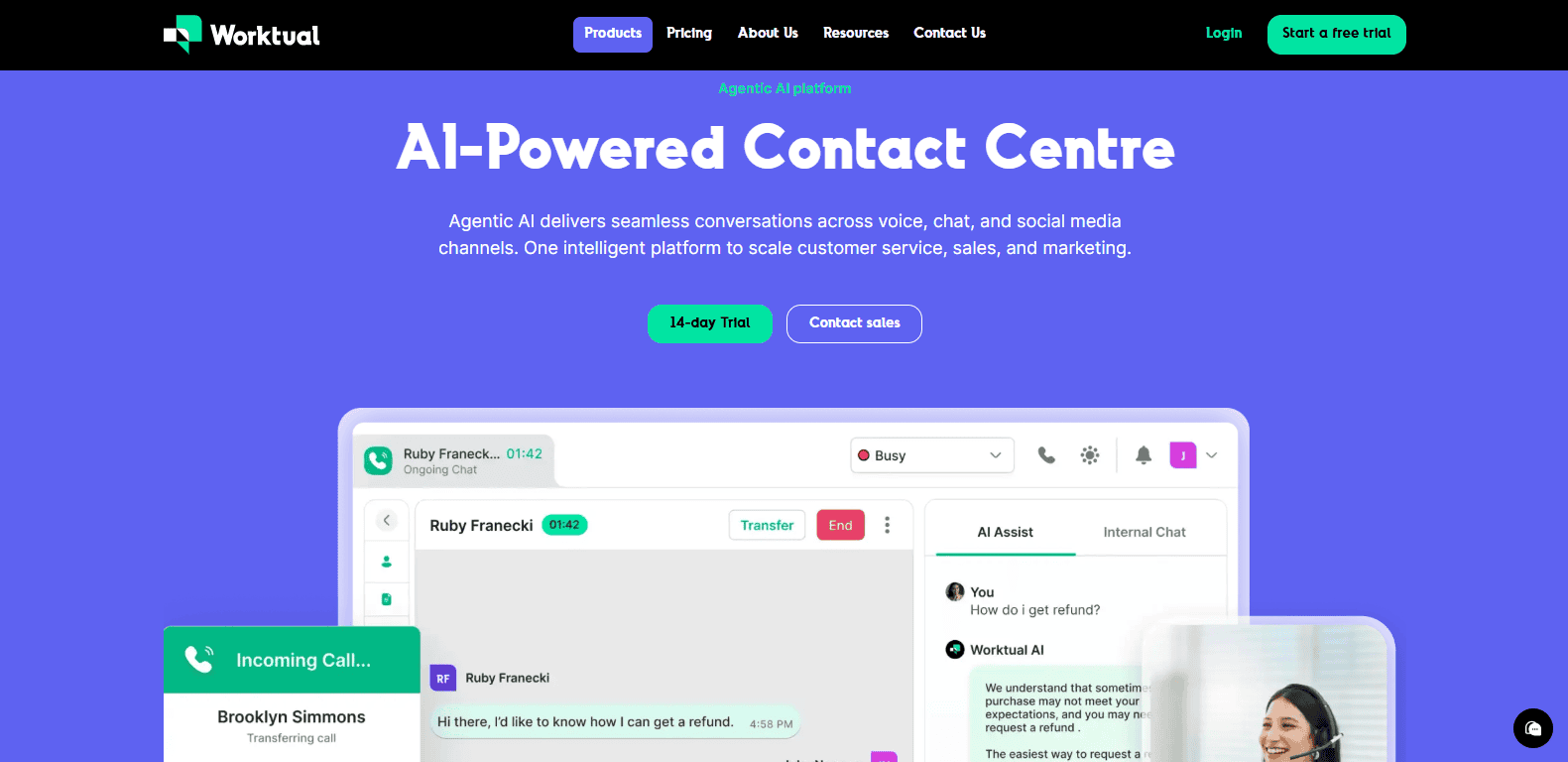
Pros:
- Advanced AI contact centre tools
- Flexible plans for SMBs and enterprises
- Omnichannel support: WhatsApp, live chat, phone, email
- Built-in AI agent for 24/7 assistance
- Seamless CRM and eCommerce integrations
Real-time analytics and automation workflows Best for:
Growing businesses that want to start with a low-cost AI agent and scale into a full-featured AI-powered virtual contact centre
2. Genesys CX
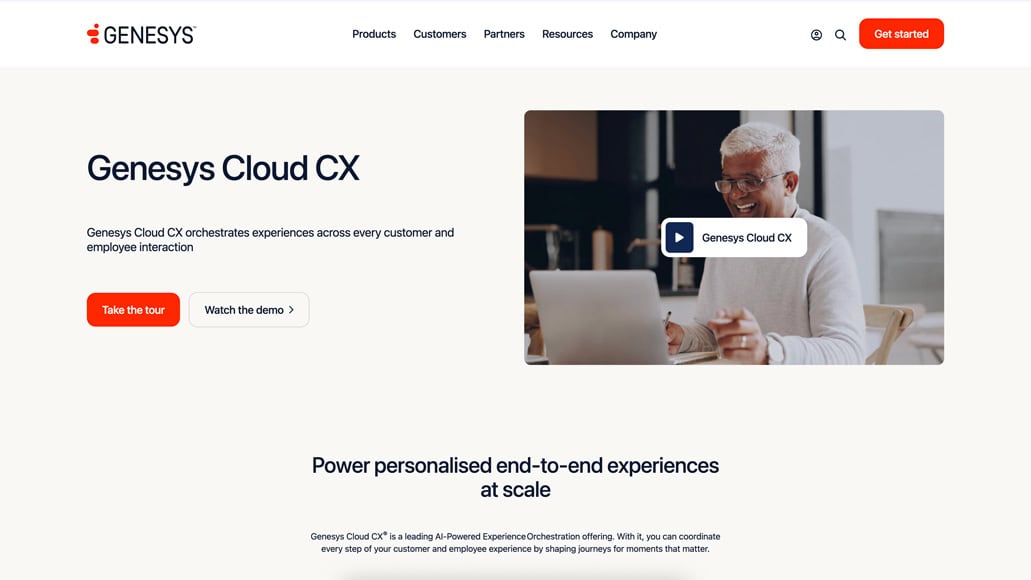
Pros:
- Enterprise-grade customer experience platform
- AI-powered journey orchestration
- Advanced workforce engagement tools
- Voicebots, chatbots, predictive engagement
Best for:
Large enterprises seeking a robust, feature-rich contact centre with a focus on AI-driven customer experience
3. Vonage
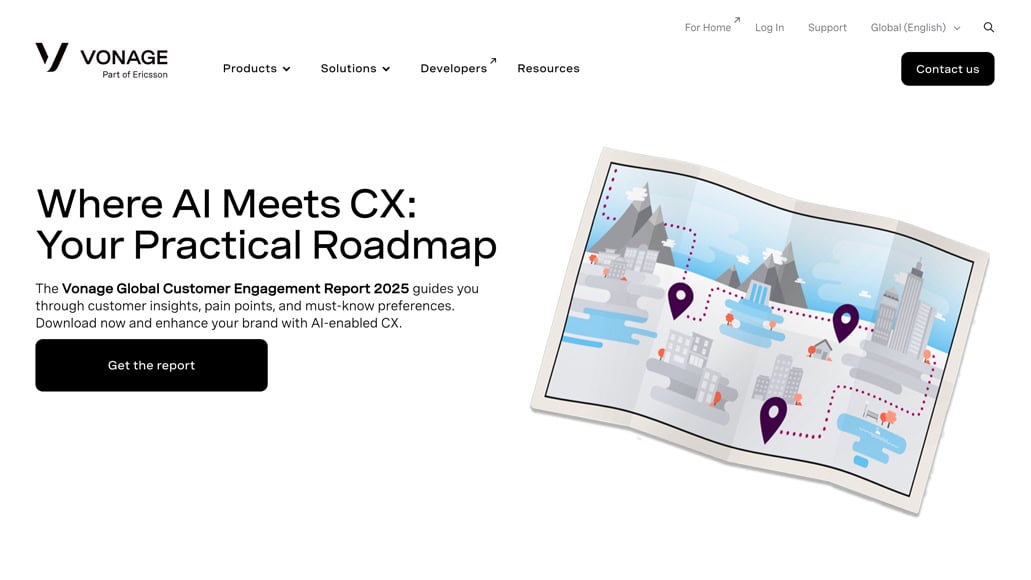
Pros:
- Strong APIs for custom development
- Global telephony reach
- Native video and messaging capabilities
- Real-time transcription and call recording
Best for:
Tech-forward businesses needing flexible voice and video support within a developer-friendly ecosystem
4. 8x8
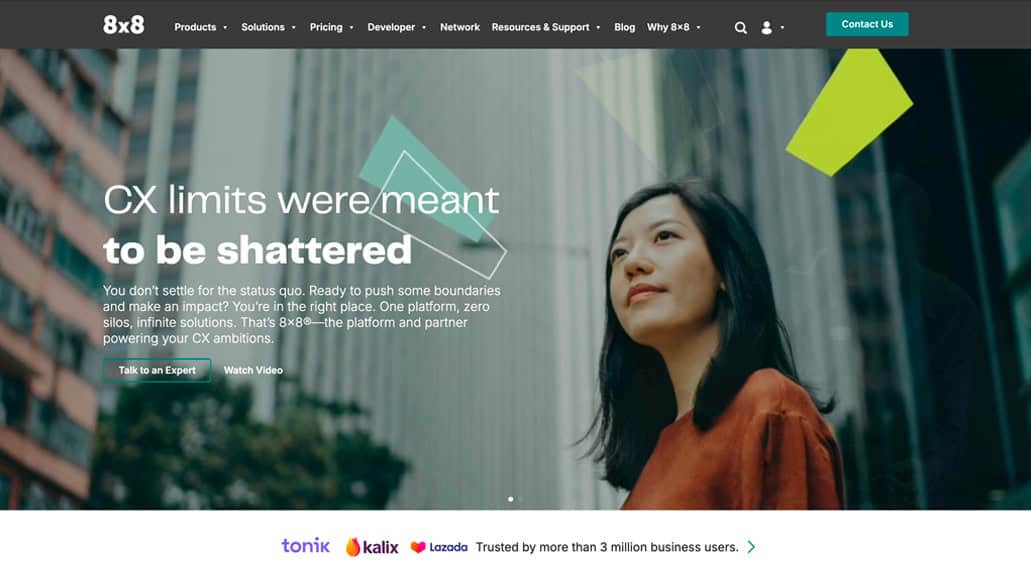
Pros:
- All-in-one business communications suite
- Call handling, video meetings, and messaging in one platform
- AI analytics and sentiment detection
- GDPR and HIPAA compliance
Best for:
Organisations looking for a unified communications platform with strong security credentials and good value
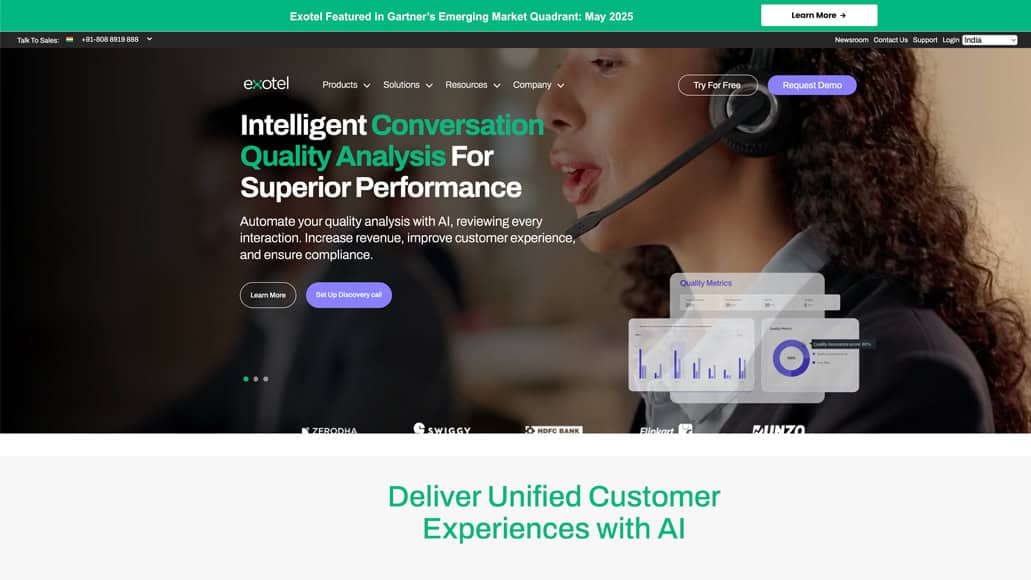
5. Exotel
Pros:
- Easy-to-deploy CCaaS for SMEs
- Smart IVR, call tracking, and analytics
- API-first approach with low-code tools
- Competitive pricing and pay-as-you-go model
Best for:
Startups and regional businesses seeking a cost-effective solution with basic omnichannel functionality
Which CCaaS Platform is Best for AI Virtual Agents in the UK?
AI virtual agents have become the defining differentiator in the CCaaS market for 2026. Unlike basic chatbots, AI virtual agents handle complex multi-turn conversations, resolve tickets without human escalation, and integrate with CRM systems to personalise every interaction in real time.
- The best CCaaS platforms for AI virtual agents in the UK share four capabilities:
- Native LLM integration — built-in large language model support without third-party middleware
- Autonomous resolution — ability to complete tasks end-to-end, from booking to refunds, without agent handoff
- Real-time sentiment analysis — detecting customer frustration and escalating proactively
- Omnichannel AI — deploying the same AI agent across voice, WhatsApp, email, and live chat simultaneously
Among the top CCaaS providers evaluated, Worktual stands out in the UK market for offering an AI agent that can be deployed in under 48 hours, with no-code workflow configuration and native WhatsApp + voice support. Genesys CX leads for enterprise-scale AI journey orchestration, while 8×8 offers strong AI analytics built into its unified communications suite.
CCaaS AI Capabilities Comparison (2026)
| AI Feature | Worktual | Genesys CX | Vonage | 8x8 | Exotel |
|---|---|---|---|---|---|
| AI Virtual Agent | ✅ Native | ✅ Native | ✅ API-based | ✅ Native | ⚠️ Basic |
| Conversational IVR | ✅ | ✅ | ✅ | ✅ | ✅ |
| Sentiment Analysis | ✅ Real-time | ✅ Real-time | ⚠️ Limited | ✅ Real-time | ❌ |
| Autonomous Resolution | ✅ | ✅ | ⚠️ Partial | ⚠️ Partial | ❌ |
| No-Code AI Config | ✅ | ⚠️ Complex | ⚠️ Dev needed | ✅ | ✅ |
| Omnichannel AI Deploy | ✅ Voice+WA | ✅ | ✅ | ✅ | ⚠️ Voice only |
Best CCaaS Providers: Quick Comparison Guide
| Provider | Starting Price* | Best For | What Makes It Unique |
|---|---|---|---|
| Worktual | Custom pricing | SMEs and growing enterprises | AI-powered contact centre that combines chat, voice, and customer data in one place |
| Genesys CX | Starts from £60 per user/month | Large companies with complex needs | Powerful AI journey tools and workforce optimisation |
| Vonage | Custom pricing | Tech-focused firms needing flexibility | Developer-friendly platform with strong APIs and global calling |
| 8x8 | Custom pricing | Companies wanting “all-in-one” tools | Combines calling, video, messaging, and analytics in one system |
| Exotel | Starts from £70 per user/month | Startups and regional businesses | Quick-to-set-up cloud contact centre with smart call routing |
Best CCaaS Platforms for Small Businesses & SMBs (2026)
What Makes a CCaaS Platform Right for Small Businesses?
Small businesses and startups have fundamentally different CCaaS requirements to enterprise contact centres. The right platform must balance capability with cost-efficiency, and setup speed with long-term scalability.
The five non-negotiables for SMB CCaaS selection are:
- Pay-as-you-go or low-commitment monthly pricing — no upfront hardware costs or multi-year lock-in
- Fast deployment — live in days, not months, without dedicated IT resource
- A low-cost AI agent starting tier — allowing small teams to automate routine queries from day one
- Native omnichannel in the base plan — not gated behind premium tiers
- Transparent pricing — no hidden telephony or API call charges
Best CCaaS Platforms by Industry (2026)
Why Industry Context Changes Your CCaaS Decision
Generic CCaaS comparisons miss the mark because different industries have fundamentally different compliance burdens, peak load patterns, and integration requirements. The right platform for a fintech firm is rarely the right choice for a retail ecommerce operation.
| Industry | Top Pick | Key Requirements | Must-Have Features | Watch Out For |
|---|---|---|---|---|
| Financial Services / Fintech | Worktual / 8x8 | FCA compliance, PCI DSS, call recording, no PII in AI responses | Encrypted call recording, PCI-compliant IVR, audit trails | Vendors that store sensitive data outside EU/UK |
| E-commerce / Retail | Worktual / Genesys CX | Seasonal spike handling, WhatsApp commerce, order tracking bots | Elastic scaling, WhatsApp integration, Shopify/WooCommerce APIs | Fixed-capacity contracts that penalise volume spikes |
| Healthcare | Worktual/ Vonage | HIPAA / NHS data standards, patient confidentiality, 24/7 coverage | HIPAA-compliant storage, NHS SystmOne/EMIS integration | AI that misidentifies clinical urgency |
| Professional Services / SaaS | Worktual / Vonage | CRM-led routing, account-based service, developer APIs | Salesforce / HubSpot native connectors, API-first architecture | Platforms with poor CRM depth |
| Startups / High-Growth | Worktual / Exotel | Low startup cost, fast deploy, scales without re-contracting | Pay-as-you-go billing, no minimum seats, fast onboarding | Enterprise platforms with 12-month minimums |
How to Migrate to a New CCaaS Platform Without Disruption
The 6-Stage CCaaS Migration Roadmap
Migrating from an on-premise contact centre or legacy CCaaS platform is the most common reason businesses re-evaluate their provider. Poorly planned migrations cause call drops, data loss, and agent downtime. A structured approach eliminates most risks.
Stage 1: Pre-Migration Audit (Weeks 1–2) Map all current integrations, call flows, IVR trees, data schemas, and API dependencies. Document every custom workflow. Identify data that must be migrated vs rebuilt.
Stage 2: Vendor Selection & POC (Weeks 2–4) Run a proof-of-concept with your top 2–3 shortlisted vendors using real call volumes from a low-risk team (e.g., 5 agents). Test AI performance, CRM sync, and reporting accuracy.
Stage 3: Data Migration Planning (Weeks 3–5) Agree data residency, export formats, and migration scripts with your new vendor. Identify GDPR implications — customer interaction history may require explicit re-consent under certain migration scenarios.
Stage 4: Parallel Running (Weeks 5–8) Run old and new platforms simultaneously. Route 10–20% of traffic to the new platform and compare KPIs. Increase gradually once quality is confirmed.
Stage 5: Agent Training & Cutover (Weeks 6–10) Train agents on the new platform UI. Use AI-assisted onboarding tools if available. Plan a defined cutover date and time — low-volume periods (Sunday 2am) minimise impact.
Stage 6: Post-Migration Review (Week 12+) Measure CSAT, AHT, first contact resolution, and AI deflection rates against pre-migration baselines. Use a 90-day review cycle to optimise new workflows.
CCaaS Providers in the UK: What Sets Them Apart
UK businesses face specific requirements that global CCaaS vendors sometimes underestimate. These include UK GDPR data residency (post-Brexit), Ofcom number porting regulations, FCA compliance for financial services, and preference for UK-based support teams operating in GMT/BST time zones.
Worktual is the only provider in this comparison with UK headquarters and a team specifically supporting British businesses with local compliance expertise. For UK businesses that require UK-sovereign data storage and British phone number provisioning, this is a material advantage.
Conclusion
Picking the right CCaaS partner for 2026 and beyond Whether you run a startup or an enterprise, the right CCaaS platform is critical to delivering fast, consistent, and human-like customer service. The top CCaaS vendors of 2026 offer more than just cloud telephony. They bring together automation, analytics, AI, and omnichannel tools to help your business grow.
FAQs
1. What is the best CCaaS provider?
The best CCaaS provider depends on your business requirements, including customer volume, AI capabilities, omnichannel support, integrations, and budget. Enterprise organisations often prioritise scalability and advanced analytics, while mid-sized businesses may focus on ease of deployment and affordability.
2. What is the difference between a CCaaS provider and a CCaaS platform?
A CCaaS provider is the company that delivers the solution, while a CCaaS platform refers to the cloud technology used to manage customer interactions, agent productivity, and AI-powered engagement across multiple channels.
3. Which CCaaS platform is best for enterprises?
Enterprise businesses should look for CCaaS platforms that provide advanced AI automation, workforce optimisation, omnichannel engagement, enterprise security, global scalability, and deep CRM integrations.
4. What is omnichannel support in CCaaS?
Omnichannel support means managing customer conversations seamlessly across multiple touchpoints (voice, chat, email, social) from one platform. This gives agents context and ensures customers don’t have to repeat details when switching channels.
5. Are CCaaS solutions suitable for small businesses too?
Yes. Many CCaaS platforms offer scalable plans and pay-as-you-go pricing models that make modern contact centre capabilities accessible to startups, SMEs, and growing teams.

Related Posts

Agentic AI in Voice Bots: Reactive vs Proactive Agents Explained
Discover how Agentic AI transforms voice bots from reactive responders to proactive agents, delivering smarter, faster, and more human-like support.

Agentic AI CCaaS: The Future of Agentic AI Contact Centres
Agentic AI CCaaS is a cloud-based contact centre solution powered by autonomous AI agents that can independently handle customer interactions, make decisions, and execute tasks without constant human intervention.
10 Best Drift Alternatives for Businesses in 2026
Conversational AI has revolutionised customer engagement, lead generation, and support automation. With businesses increasingly relying on chatbots to streamline interactions, choosing the right platform is crucial. Two leading contenders in 2025 are Worktual and Drift, each catering to different business needs.


