

Unified Intelligence AI for Healthcare: Improving Patient Access, Engagement, and Revenue Performance
Insights / Unified Intelligence AI for Healthcare: Improving Patient Access, Engagement, and Revenue Performance

Table of Contents
Healthcare providers are managing an increasingly complex environment where operational efficiency, patient access, and revenue performance are tightly interconnected. Rising patient expectations, increasing administrative burden, and workforce shortages continue to place pressure on both clinical and non-clinical teams. Patients now expect immediate responses, seamless scheduling, and consistent communication across channels, yet many healthcare systems still rely on fragmented processes and delayed engagement. These gaps result in missed appointments, underutilised capacity, and inconsistent patient care experiences that directly impact both outcomes and financial performance.
Every stage of the patient journey carries the weight of these compounding pressures. High no-show rates reduce clinic utilisation and provider productivity, while repetitive administrative queries consume capacity and slow response times. Patient data fragmented across electronic health records, scheduling systems, and contact centres limits the visibility needed to coordinate care or engage patients proactively. In an increasingly competitive landscape, patient retention is difficult to sustain without a coordinated, data-informed engagement model.
Worktual addresses these systemic gaps by establishing a unified intelligence layer that connects every stage of the patient journey, from first contact through to ongoing care and retention. Rather than applying isolated solutions to individual operational problems, the approach is consultancy-led and structured around the provider’s specific patient access model, service configuration, and performance objectives. The Worktual Cognitive Data Platform brings together data from scheduling systems, electronic health records, contact centre interactions, and patient communication channels into a single real-time operational environment. This enables healthcare providers to reduce administrative burden, improve patient engagement at critical touchpoints, and build a more consistent care experience that supports both clinical outcomes and long-term financial performance.
- What unified intelligence means for healthcare patient access and lifetime value
- Healthcare pain points affecting access, engagement, and operational efficiency
- Solutions healthcare providers need to improve patient lifecycle performance
- Impact, ROI, and operational gains from unified intelligence in healthcare
- Why Worktual works for healthcare providers
- FAQs
What unified intelligence means for healthcare patient access and lifetime value
Worktual’s unified intelligence for healthcare means connecting patient data, engagement history, appointment activity, and care journey interactions into one continuously updated intelligence system. Instead of operating across disconnected systems such as Electronic Health Record (EHR) platforms, scheduling tools, contact centres, and billing systems, healthcare providers work from a shared intelligence layer that provides a complete and real-time view of each patient. This enables better decision-making across patient access, care coordination, engagement, and long-term relationship management while improving operational visibility across departments and reducing delays in response and action across teams and systems.
The patient journey is complex and often fragmented across multiple touchpoints. A patient may search for services online, call for appointment booking, miss a follow-up due to lack of reminders, and disengage from preventive care programmes. During and after treatment, additional signals emerge through interactions, adherence patterns, and repeat visits. Worktual’s unified intelligence connects these signals, allowing providers to understand what is happening, why it is happening, and where intervention can improve engagement, attendance, and outcomes across the full care lifecycle and across different service lines and clinical pathways.
For healthcare leaders, this represents a shift from reactive patient management to proactive lifecycle orchestration. Performance is no longer driven only by patient volumes, but by improving utilisation, reducing no-shows, and increasing patient lifetime value through sustained engagement. Worktual’s unified intelligence enables providers to deliver more coordinated care, improve patient experience, and strengthen long-term relationships while maintaining clinical accuracy, compliance, and operational control across the organisation and across complex healthcare delivery environments.
Healthcare pain points affecting access, engagement, and operational efficiency
Healthcare providers face structural challenges that directly impact both patient outcomes and financial performance. High appointment no-show rates, often ranging between 15–30%, lead to underutilised provider time and lost revenue opportunities. Patients frequently miss appointments due to lack of timely reminders, unclear communication, or difficulty rescheduling. At the same time, appointment booking processes can be slow and fragmented, reducing access and creating friction at the first point of interaction with the healthcare system and limiting timely care delivery across different patient segments and clinical specialties.
Administrative workload further constrains efficiency. Patient access and contact centre teams handle large volumes of repetitive queries related to scheduling, confirmations, test results, and billing. These tasks consume significant time and reduce the capacity of staff to focus on complex or high-value interactions. As demand increases, response times slow down and service consistency declines, which negatively impacts patient satisfaction and operational performance across departments and care delivery functions and increases pressure on already constrained resources and staffing levels.
Data fragmentation creates an additional barrier to improvement. Patient information is typically distributed across EHR systems, scheduling platforms, Customer Relationship Management (CRM) tools, and billing systems. Without a unified view, providers struggle to personalise communication, track patient engagement, or identify gaps in care. Preventive care participation remains low, and patient retention becomes more difficult. The result is missed revenue opportunities, inefficient operations, and limited visibility into patient behaviour and long-term value across the entire healthcare journey and multiple care interactions and service pathways.
Solutions healthcare providers need to improve patient lifecycle performance
Addressing these challenges requires an integrated system built on unified intelligence rather than disconnected tools. This begins with Worktual’s central intelligence hub that consolidates patient data from all systems into a real-time, actionable view. This hub enables healthcare providers to understand patient behaviour, engagement patterns, and care needs across the lifecycle, forming the foundation for more informed decision-making and more effective patient management. Without this layer, optimisation remains fragmented and reactive, limiting the ability to act on insights in a timely and coordinated manner across departments and care delivery teams.
Connected capabilities then operate as spokes around this hub, activating intelligence at critical moments. Conversational AI supports appointment booking, reminders, and patient queries in real time. An omnichannel contact centre ensures consistent communication across voice, messaging, and digital channels, while intelligent ticketing structures workflows and care coordination. These capabilities reduce administrative workload, improve response times, and enhance consistency across all patient interactions while improving internal coordination between teams and ensuring better workflow visibility across functions and operational units.
Patient Data Platform functionality, patient value management, and care journey orchestration convert intelligence into measurable outcomes. Unified patient profiles enable segmentation, prioritisation, and targeted engagement, while automated journeys support reminders, follow-ups, and preventive care outreach. This integrated approach improves appointment adherence, increases utilisation, and strengthens long-term engagement. The key is integration, ensuring all components operate as one unified system that continuously learns and improves performance across the patient lifecycle and care pathways while enabling proactive and predictive engagement strategies and better resource allocation decisions.
Impact, ROI, and operational gains from unified intelligence in healthcare
For healthcare providers evaluating return on investment, Worktual’s unified intelligence delivers measurable impact across both efficiency and revenue performance. Improved patient engagement and timely communication can reduce appointment no-shows by 20–40%, directly increasing clinic utilisation and provider productivity. Even modest improvements in attendance can generate significant financial value by recovering lost capacity and improving scheduling efficiency without additional resource investment or staffing increases across healthcare facilities and multi-location systems, while also improving appointment slot optimisation and reducing last-minute cancellations.
The gains do not stop at scheduling, with improved patient lifetime value and preventive care engagement adding another dimension of return. Targeted communication and lifecycle orchestration can increase participation in screenings, follow-ups, and wellness programmes by 10–20%. This not only improves health outcomes but also strengthens long-term revenue stability. Better engagement also improves patient satisfaction and retention, which are increasingly important in a competitive healthcare environment with multiple care delivery options and evolving patient expectations and digital-first alternatives, while supporting more consistent care adherence across patient populations.
Operational efficiency compounds these returns further. Automating 30–50% of routine patient queries reduces administrative workload, improves response times, and enhances coordination across teams. Structured workflows and improved visibility increase efficiency and accountability. Combined, these improvements enable healthcare providers to reduce operational cost, improve patient experience, and achieve measurable return on investment, making unified intelligence a practical and commercially grounded model for healthcare transformation at scale across large and complex healthcare systems and integrated care networks, while also enabling better forecasting and capacity planning.

Why Worktual works for healthcare providers
FAQs
Worktual elevates healthcare provider performance by connecting patient access, engagement, and operational efficiency within one integrated system rather than isolated tools. It begins with a consultancy-led approach, working closely with each organisation to understand patient journeys, workflows, data structures, and system architecture. This ensures that every solution aligns with clinical and commercial priorities, including reducing no-shows, improving access, and increasing patient lifetime value while supporting coordination across departments, care teams, and administrative functions, improving overall operational clarity.
What makes this possible is a bespoke unified intelligence system, designed and integrated around the Worktual Cognitive Data Platform as its central hub. Around this hub sit connected capabilities, including conversational AI, an omnichannel contact centre, intelligent ticketing, patient data management, patient value management, and lifecycle orchestration. Each capability operates within a unified system, ensuring every interaction is informed by shared intelligence. Worktual’s proprietary AI keeps sensitive patient and clinical data protected at every level – from access controls to how data is handled and stored – which for healthcare providers, is a regulatory necessity. And because everything operates through one connected system, providers gain clearer operational visibility and a stronger foundation for sustained performance.
The relationship does not stop at implementation. Worktual continues to optimise performance through an ongoing partnership model, ensuring that the system evolves alongside the provider. This continuous optimisation improves utilisation, enhances efficiency, and strengthens patient engagement. For healthcare leaders, this provides a scalable path to operational excellence and sustainable revenue growth while maintaining compliance, accuracy, and patient trust across interactions and care delivery processes in evolving regulatory environments.
Discover how Worktual can improve patient access, engagement, and lifetime value through unified intelligence tailored to your organisation.
1. What is unified intelligence healthcare and how does it relate to healthcare CRM software?
Unified intelligence healthcare connects data from healthcare CRM software, EHR systems, and patient communication platforms into a single healthcare data platform. This creates a unified AI platform for healthcare that improves patient lifecycle management, care coordination, and decision-making.
2. How does AI in healthcare improve patient access and appointment scheduling?
AI in healthcare enables patient appointment scheduling software, online doctor appointment booking systems, and AI chatbot for healthcare to automate bookings and reduce delays. This improves patient intake automation and helps reduce patient wait times in healthcare.
3. What is the role of Worktual’s patient engagement platform in improving patient experience?
Worktual’s patient engagement platform enables personalised patient engagement through omnichannel patient communication and AI-powered patient engagement tools. This improves patient experience, strengthens relationships, and increases participation in ongoing care.
4. How does fragmented patient data affect healthcare performance?
Fragmented data across healthcare management software, EHRs, and communication systems limits visibility and weakens care coordination. A healthcare customer data platform solves this by creating unified patient profiles and enabling AI-driven healthcare insights.
5. How can an AI chatbot for healthcare improve patient communication?
An AI chatbot for healthcare supports conversational AI in healthcare by handling appointment booking, answering queries, and providing real-time support. This improves patient communication automation and reduces missed interactions.
6. What role does healthcare automation software play in operations?
Healthcare automation software reduces administrative workload through patient intake automation, scheduling, and follow-ups. This improves efficiency, supports staff productivity, and enhances patient access management.
7. How does unified intelligence healthcare impact revenue performance?
Unified intelligence healthcare supports healthcare revenue cycle management by reducing missed appointments, improving patient retention strategies, and enabling healthcare marketing automation. This helps increase patient revenue in healthcare.
8. What is the difference between the Worktual healthcare customer data platform and traditional systems?
The Worktual healthcare customer data platform unifies patient data across systems and applies machine learning, predictive analytics, and generative AI to deliver AI-driven healthcare insights. This enables a more advanced AI healthcare platform for lifecycle management.
9. What are the best AI tools for improving patient engagement in healthcare?
AI patient engagement tools, patient communication platforms, and omnichannel patient communication systems help deliver personalised patient engagement. These tools improve adherence, communication consistency, and overall care experience.
10. How is Worktual different from standard healthcare management software?
Unlike traditional healthcare management software, Worktual delivers a unified intelligence healthcare approach that combines healthcare CRM software, AI chatbot for healthcare, patient engagement platform, and lifecycle orchestration into an AI-powered patient lifecycle platform and AI-driven healthcare growth platform.
Related Posts
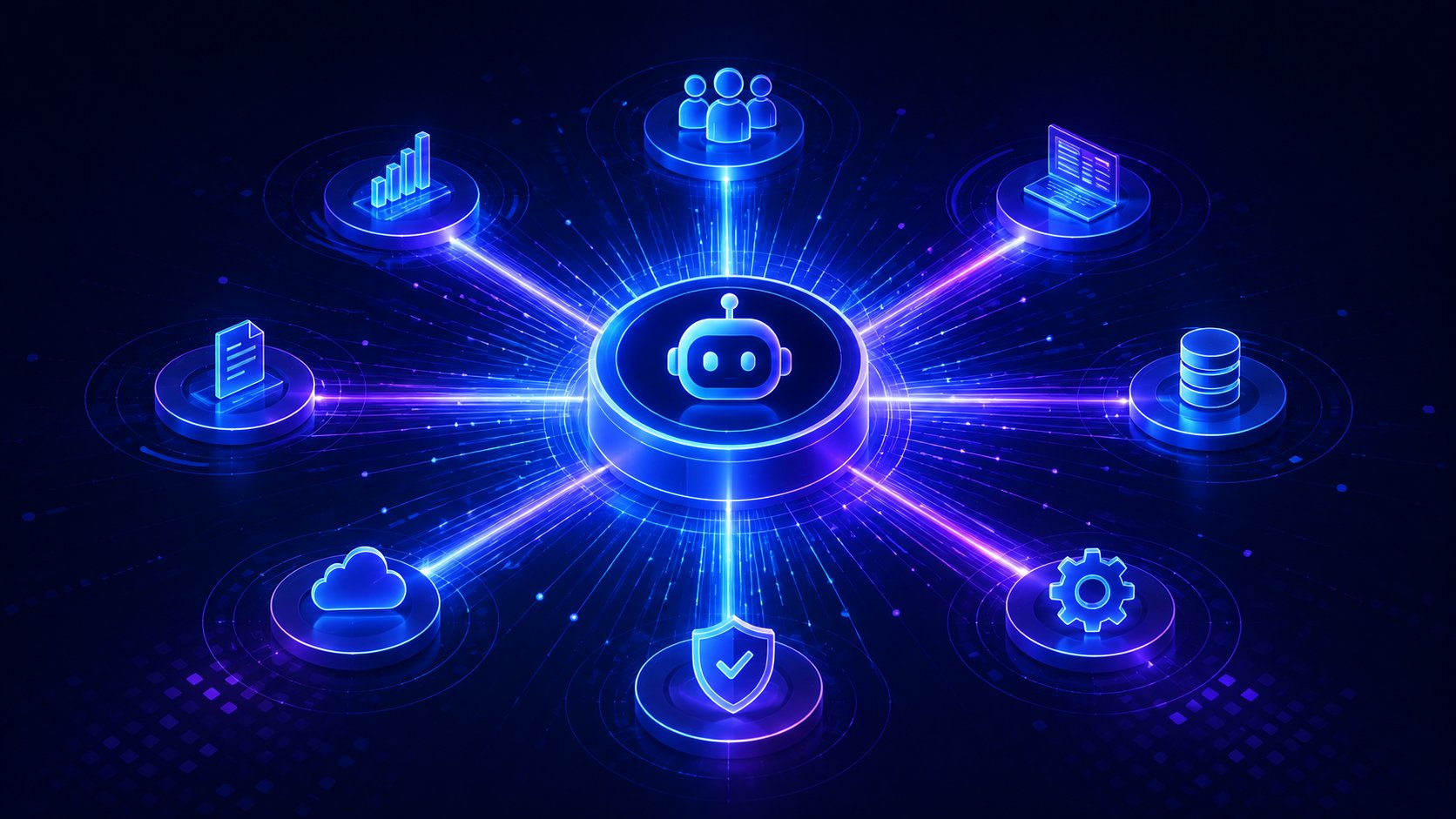
Hub-and-Spoke Architecture for AI Agents: How It Connects Enterprise
Business-to-business (B2B) customer engagement has changed significantly as buyers now expect faster responses, connected interactions, and highly personalised experiences across every stage of the customer journey. Decision-makers no longer compare B2B experiences only with competitors within the same industry. They compare them with the seamless digital experiences they receive across retail, banking, streaming platforms, and consumer applications. This shift has increased pressure on enterprises to modernise how they manage customer relationships, support operations, and lifecycle engagement.

From Customer Data to Customer Action: How AI Is Changing Enterprise CRM
Business-to-business (B2B) customer engagement has changed significantly as buyers now expect faster responses, connected interactions, and highly personalised experiences across every stage of the customer journey. Decision-makers no longer compare B2B experiences only with competitors within the same industry. They compare them with the seamless digital experiences they receive across retail, banking, streaming platforms, and consumer applications. This shift has increased pressure on enterprises to modernise how they manage customer relationships, support operations, and lifecycle engagement.

AI Contact Centre for Banking: Why Customer Outcomes Matter More Than Cost Savings
Business-to-business (B2B) customer engagement has changed significantly as buyers now expect faster responses, connected interactions, and highly personalised experiences across every stage of the customer journey. Decision-makers no longer compare B2B experiences only with competitors within the same industry. They compare them with the seamless digital experiences they receive across retail, banking, streaming platforms, and consumer applications. This shift has increased pressure on enterprises to modernise how they manage customer relationships, support operations, and lifecycle engagement.


