

Omnichannel Conversational AI: Web Chat + WhatsApp + Instagram Unified
Insights / Omnichannel Conversational AI: Web Chat + WhatsApp + Instagram Unified

Table of Contents
Why Omnichannel Conversations Matter in 2026?
Customers don’t experience brands in channels — they experience journeys. In 2026, a single customer may start on Instagram, ask follow-up questions on WhatsApp, and complete a purchase or support request on a website. When these conversations are handled by disconnected tools, the business pays the price.
Broken conversations lead to lost leads, repeated questions, longer average handling time (AHT), duplicate tickets, and higher agent workload. Revenue leaks when high-intent users drop off mid-journey, and operational costs rise when teams are forced to re-establish context again and again.
Omnichannel conversational AI is not just a CX improvement — it is a revenue and efficiency architecture. By unifying conversations across web chat, WhatsApp, and Instagram, businesses reduce friction, accelerate conversions, and scale customer engagement without scaling headcount.
- Why Omnichannel Conversations Matter in 2026?
- What Is Omnichannel Conversational AI?
- Omnichannel vs Multichannel: The Difference That Matters
- Key Channels Explained: Web, WhatsApp, and Instagram
- How Unified Omnichannel AI Works ?
- Omnichannel Conversational AI Use Cases (With Real Journeys)
- Benefits of Unifying Web, WhatsApp, and Instagram
- Best Practices for Omnichannel Conversational AI
- KPIs to Track for Omnichannel Success
- What to Look for in an Omnichannel AI Platform ?
- Common Omnichannel Mistakes to Avoid
- How Worktual Enables True Omnichannel AI
- FAQs
What Is Omnichannel Conversational AI?
Omnichannel conversational AI is a system where one AI manages conversations across multiple channels — web chat, WhatsApp, Instagram, and more — while maintaining shared memory, unified intelligence, and consistent decision-making.
Unlike multichannel chatbots, which operate independently on each platform, omnichannel AI enables customer context continuity, preserves cross-channel conversation history, and allows users to switch channels without losing context.
This is an architectural shift, not simply channel expansion. The value comes from unified intelligence, not just broader presence.
Omnichannel vs Multichannel: The Difference That Matters
Many businesses believe they are omnichannel when they are simply multichannel. The distinction is critical.
| Dimension | Multichannel Chatbots | Omnichannel Conversational Ai |
|---|---|---|
| Context sharing | Conversations are handled independently on each channel, requiring customers to repeat information | Customer context and conversation history persist seamlessly across all channels |
| Analytics | Reporting is channel-specific and manually stitched together | Unified conversational analytics across the entire customer journey |
| Agent experience | Separate tools or inboxes per channel | A unified inbox with full cross-channel visibility |
| Automation depth | Limited to simple, predefined flows | Intent-driven, multi-step conversation orchestration |
| Customer experience | Channel switches feel disjointed | Experiences remain continuous across channels |
| Scalability | Each new channel adds complexity | Designed to scale centrally without duplication |
Key Channels Explained: Web, WhatsApp, and Instagram
Web Chat: Conversion and Lead Capture :
Web chat is often the first point of engagement. With proper website chatbot integration, businesses can answer FAQs, trigger proactive prompts, capture leads, and guide users toward checkout or resolution in real time. When integrated into omnichannel AI, web chat becomes a conversion engine rather than a standalone widget.
WhatsApp: Retention and Lifecycle Engagement :
As a high-trust channel powered by the WhatsApp Business API, WhatsApp excels at retention. Businesses use AI chatbots for WhatsApp to deliver order updates, support interactions, reminders, and follow-ups — all within a familiar conversational interface that customers actively monitor.
Instagram: Demand Generation and Speed-to-Lead :
Instagram DM automation turns social attention into action. AI chatbots for Instagram instantly respond to ad-driven inquiries, qualify leads from organic posts, and route high-intent conversations to sales or support without delay — dramatically improving speed-to-lead.
Omnichannel Conversational AI vs Agentic AI: What's the Difference in 2026?
As AI evolves, the line between conversational AI and agentic AI has blurred — but the distinction matters for platform decisions.
Omnichannel conversational AI focuses on maintaining continuity and context across customer-facing channels: web chat, WhatsApp, Instagram, and voice. It manages the customer interaction layer.
Agentic AI goes a step further. An AI agent doesn’t just respond — it autonomously plans, executes multi-step tasks, and takes action within systems. In an omnichannel context, an AI agent might:
• Identify a customer’s issue across channels without being told• Retrieve CRM data, check order status, and issue a refund — in one conversation
• Proactively reach out across WhatsApp when a delivery is delayed, without human trigger
| Dimension | Comparison |
|---|---|
| Primary Function | Conversational AI: Respond and route | Agentic AI: Decide and act |
| Memory Scope | Conversational AI: Within a session or customer profile | Agentic AI: Cross-system, persistent task memory |
| Human Involvement | Conversational AI: Escalates to human | Agentic AI: Operates autonomously with human oversight |
| Omnichannel Role | Conversational AI: Unifies customer experience | Agentic AI: Automates customer outcomes |
| 2026 Relevance | Conversational AI: Deployed at scale now | Agentic AI: Rapidly maturing — early enterprise adoption |
The best omnichannel platforms in 2026 are bridging both: conversational by design, agentic by capability. When evaluating vendors, ask whether their AI can act — not just respond.
How Unified Omnichannel AI Works ?
True omnichannel conversational AI is built on a shared intelligence layer. This includes a centralized context store, persistent intent memory, and cross-channel identity mapping that recognizes the same customer across platforms.
When a user moves from Instagram to WhatsApp, the AI retains intent, history, and prior decisions. Live agent handoff happens with full context, eliminating repetition. Channel-native bots fail here because they lack conversation memory persistence and unified orchestration.
This is what enables conversational AI across multiple channels — not duplicated bots, but one coordinated system.
How Omnichannel AI Manages Memory Across Channels
One of the most technically misunderstood aspects of omnichannel conversational AI is how context persists when a customer moves between channels. Here is how enterprise-grade platforms architect this:
1. Unified Customer Identity Layer
The platform maps a phone number, email, social handle, or cookie to a single customer profile. When a user messages on WhatsApp then opens web chat, the system recognises the same person without requiring them to log in again.
2. Centralised Conversation Memory Store
Rather than each channel holding its own conversation log, a shared memory store (typically a cloud-hosted conversation graph or vector database) retains all interaction history. Each channel reads from and writes to this shared state.
3. Intent Persistence, Not Just Message History
Sophisticated platforms don’t just store messages — they persist parsed intent, identified entities (product names, dates, account numbers), and conversation stage. This allows the AI to continue a resolution thread, not just replay a transcript.
4. Cross-Channel Handoff Protocol
When a customer switches channels, the AI queries the shared store, loads the relevant context window, and resumes. If a live agent is involved, the unified inbox surfaces the full history with a summarised handoff note.
| What to Ask Your Vendor |
|---|
| Where is customer context stored — per channel or in a shared layer? |
| Can a live agent on web chat see a conversation that started on WhatsApp? |
| How long does conversation memory persist (session only, or lifetime)? |
| Is cross-channel identity resolved in real time or batch? |
Omnichannel Conversational AI Use Cases (With Real Journeys) :
Sales Journey Example:
A customer clicks an Instagram ad and sends a DM. The AI qualifies intent, then follows up on WhatsApp with product details. When the customer visits the website, web chat already knows the context and assists with checkout — no repeated questions.
Support Journey Example:
A customer asks about an order on WhatsApp, then switches to web chat at work. The AI continues the conversation with full history, creates a support ticket if needed, and escalates to an agent with complete context.
Common use cases include lead generation, sales qualification, appointment booking, omnichannel customer support AI, order updates, and proactive retention campaigns.
Benefits of Unifying Web, WhatsApp, and Instagram :

Unified omnichannel customer engagement delivers measurable impact:
- 20–40% faster resolution times through preserved context
- 10–25% higher lead conversion rates via reduced drop-offs
- 30%+ reduction in agent workload through automation and containment
- Improved CSAT through consistent, continuous conversations
- Centralized reporting with actionable conversational analytics
Voice + Chat Under One AI Brain: Do You Need Separate Tools?
A common procurement question in 2026 is whether a business needs separate AI tools for voice (phone/IVR) and chat (web/WhatsApp/Instagram), or whether a single platform can manage both.
The short answer: it depends on the platform’s architecture, not the category.
Platforms built on a unified NLU (Natural Language Understanding) engine can handle both voice and text inputs through the same intent model. This means:
• The same trained intent recognises a customer asking ‘where is my order’ whether said by voice or typed in web chat
• Conversation history from a voice call is accessible when the same customer messages on WhatsApp
• Agents receive a unified interaction record regardless of which channel initiated the conversation
Platforms that bolt voice on as a separate product (acquired or integrated via API) lose this continuity. The AI models diverge, the memory stores are separate, and the customer experience fractures.
When evaluating whether you need one tool or two, ask:
• Is the NLU engine shared between voice and chat, or are there separate models?
• Can a conversation that starts on a voice call be continued on WhatsApp?
• Is there a single analytics dashboard for voice and chat interactions, or separate reporting?
True omnichannel AI in 2026 includes voice as a native channel — not an afterthought integration.
Best Practices for Omnichannel Conversational AI :
Design for continuity, not just channel presence. Conversations should adapt to each channel’s tone while maintaining brand consistency. Use stored context instead of re-asking questions, enable seamless human handoff, and continuously train models using real conversations.
Monitor performance by channel — without breaking the unified experience.
KPIs to Track for Omnichannel Success :
Experience KPIs:
CSAT, NPS, first response time, resolution time
Efficiency KPIs:
Containment rate, agent handoff rate, AHT reduction
Growth KPIs:
Conversion rate, channel-switch success, booked meetings
What to Look for in an Omnichannel AI Platform ?
Not all platforms that claim omnichannel truly deliver it. Look beyond surface features and evaluate whether the platform supports cross-channel identity resolution, persistent conversation memory, and unified analytics — not stitched dashboards.
Essential capabilities include native WhatsApp and Instagram support, a unified inbox for chat and social messaging, CRM and CDP integration, conversation orchestration, AI intent detection, security, and scalability.
How to Deploy Omnichannel Conversational AI for Customer Support: Step-by-Step
Moving from a basic chatbot to a true omnichannel conversational AI deployment for customer support requires a phased approach. Here is the practical framework:
Phase 1: Audit Your Channel Landscape (Week 1–2)
• Map where customers currently contact you: web chat, WhatsApp, Instagram DMs, email, voice
• Identify the top 10 query types per channel — these become your first AI intent models
• Identify the channels with the highest drop-off or longest resolution times — these are your deployment priorities
Phase 2: Select a Platform With True Unified Memory (Week 2–3)
• Require native integrations for WhatsApp Business API, Instagram Messaging API, and web widget
• Validate that cross-channel identity resolution is built-in, not bolt-on
• Confirm a unified inbox exists for human agents
Phase 3: Train on Real Conversations (Week 3–6)
• Use existing support tickets, chat logs, and call transcripts to train initial intent models
• Do not start with generic FAQ — train on your specific customer language
• Set containment targets per channel: typically 60–80% for FAQ automation, lower for complex queries
Phase 4: Launch on Highest-Volume Channel First
• Avoid simultaneous multi-channel launch — quality degrades
• WhatsApp or web chat is typically the highest ROI first deployment
• Establish a human escalation path before going live — never deploy AI without a handoff protocol
Phase 5: Measure, Expand, Iterate
• Track containment rate, CSAT, AHT reduction, and first-response time weekly
• Add channels once the first is stable and performing above targets
• Review conversation logs monthly and retrain models on failed intents
Common Omnichannel Mistakes to Avoid :
Many teams believe they are omnichannel but fall into these traps:
- Running separate bots per channel
- Losing context during live agent handoff
- Measuring performance independently per channel
- Treating WhatsApp and Instagram as broadcast tools
Avoiding these mistakes is as important as choosing the right technology.
How Worktual Enables True Omnichannel AI:
If you want to implement what this article describes, the platform must support unified intelligence by design.
Worktual delivers omnichannel conversational AI across web chat, WhatsApp, and Instagram with shared customer context, Ai + human hybrid workflows, and deep CRM and contact centre integrations. Unified analytics, governance, and scalability ensure conversations convert — not just respond.
FAQS
1. What is an omnichannel conversational AI digital worker?
An omnichannel conversational AI digital worker is an AI system that autonomously handles customer conversations across multiple channels — including web chat, WhatsApp, Instagram, and voice — while maintaining shared context and memory. Unlike a basic chatbot, a digital worker can execute multi-step tasks, escalate to humans with full context, and operate across every channel without requiring customer repetition. The term ‘digital worker’ signals autonomous task completion, not just conversation handling.
2. Does a conversational AI tool that supports omnichannel messaging need to be channel-specific?
No. A true omnichannel conversational AI uses a single unified intelligence layer that serves all channels — web chat, WhatsApp, Instagram, SMS, and voice. Channel-specific bots are multichannel, not omnichannel. The key difference is whether the AI shares context and intent data across all channels through a centralised memory store, or operates independently on each platform.
3. Which businesses benefit most from omnichannel conversational AI?
Businesses with high-volume customer interactions across multiple touchpoints benefit most: e-commerce, SaaS platforms, education institutions, healthcare providers, financial services, and telecoms. The ROI is highest where customers currently repeat themselves across channels, where agent workload is high relative to revenue, or where conversion is lost during channel switches. Any business running WhatsApp, Instagram, and web chat simultaneously should evaluate omnichannel AI.
4. Can one AI platform cover both voice and chat scheduling under the same model?
Yes — but only on platforms built with a unified NLU engine. When voice and chat share the same intent model, a customer who calls and then messages on WhatsApp is recognised as the same person with the same ongoing query. Platforms that treat voice as a separate integration typically store conversations separately, preventing true context continuity. When evaluating platforms, confirm whether voice and chat NLU are the same model or separate systems.
5. How do I find AI tools that manage conversations across platforms?
Look for platforms that offer native integrations with WhatsApp Business API, Instagram Messaging API, and web chat — not third-party connectors. Evaluate whether cross-channel identity resolution is built into the platform architecture. Key capabilities to confirm: unified inbox for agents, shared conversation memory, and single analytics dashboard across all channels. Request a proof of concept with a cross-channel conversation scenario before committing.
6. What omnichannel AI platforms support WhatsApp?
Platforms with native WhatsApp Business API integration support WhatsApp as a managed channel. This includes enterprise-grade conversational AI platforms like Worktual, as well as broader CCaaS and messaging platforms. For WhatsApp to be truly omnichannel (not just a standalone bot), the platform must connect WhatsApp conversations to the same customer profile used across web chat, Instagram, and other channels — sharing intent history, not just message logs.
Related Posts

The Accent Gap: What UK Voice AI Still Gets Wrong About Geordie, Scouse, and Scottish English
Business-to-business (B2B) customer engagement has changed significantly as buyers now expect faster responses, connected interactions, and highly personalised experiences across every stage of the customer journey. Decision-makers no longer compare B2B experiences only with competitors within the same industry. They compare them with the seamless digital experiences they receive across retail, banking, streaming platforms, and consumer applications. This shift has increased pressure on enterprises to modernise how they manage customer relationships, support operations, and lifecycle engagement.

Why UK Businesses Are Moving from AI Tools to Unified Intelligence Platforms
Business-to-business (B2B) customer engagement has changed significantly as buyers now expect faster responses, connected interactions, and highly personalised experiences across every stage of the customer journey. Decision-makers no longer compare B2B experiences only with competitors within the same industry. They compare them with the seamless digital experiences they receive across retail, banking, streaming platforms, and consumer applications. This shift has increased pressure on enterprises to modernise how they manage customer relationships, support operations, and lifecycle engagement.
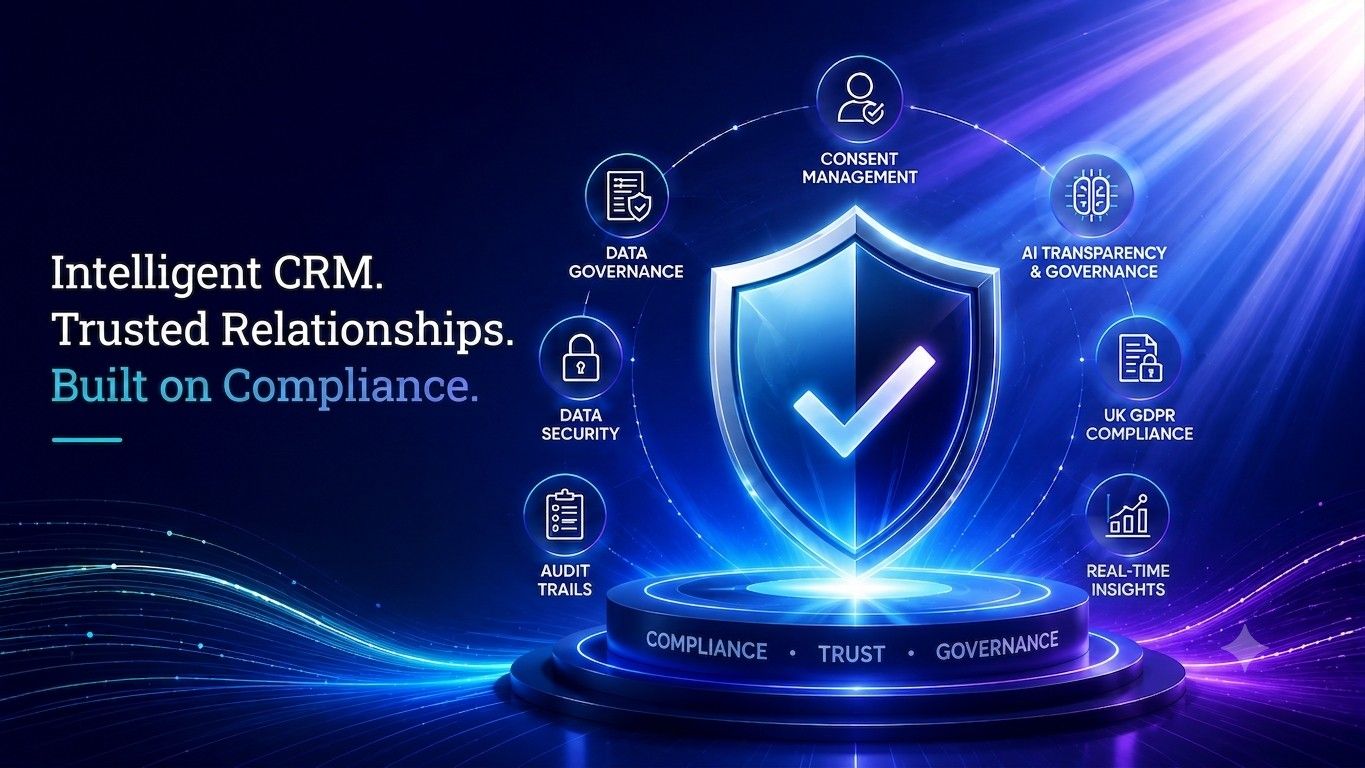
Why Intelligent CRM Is Becoming a Compliance Requirement, Not Just a Sales Tool
For years, CRM software had one job: keep track of leads, log calls, and give sales teams a pipeline to work from. That’s still how many organisations view it today — a sales tool, and little more.


