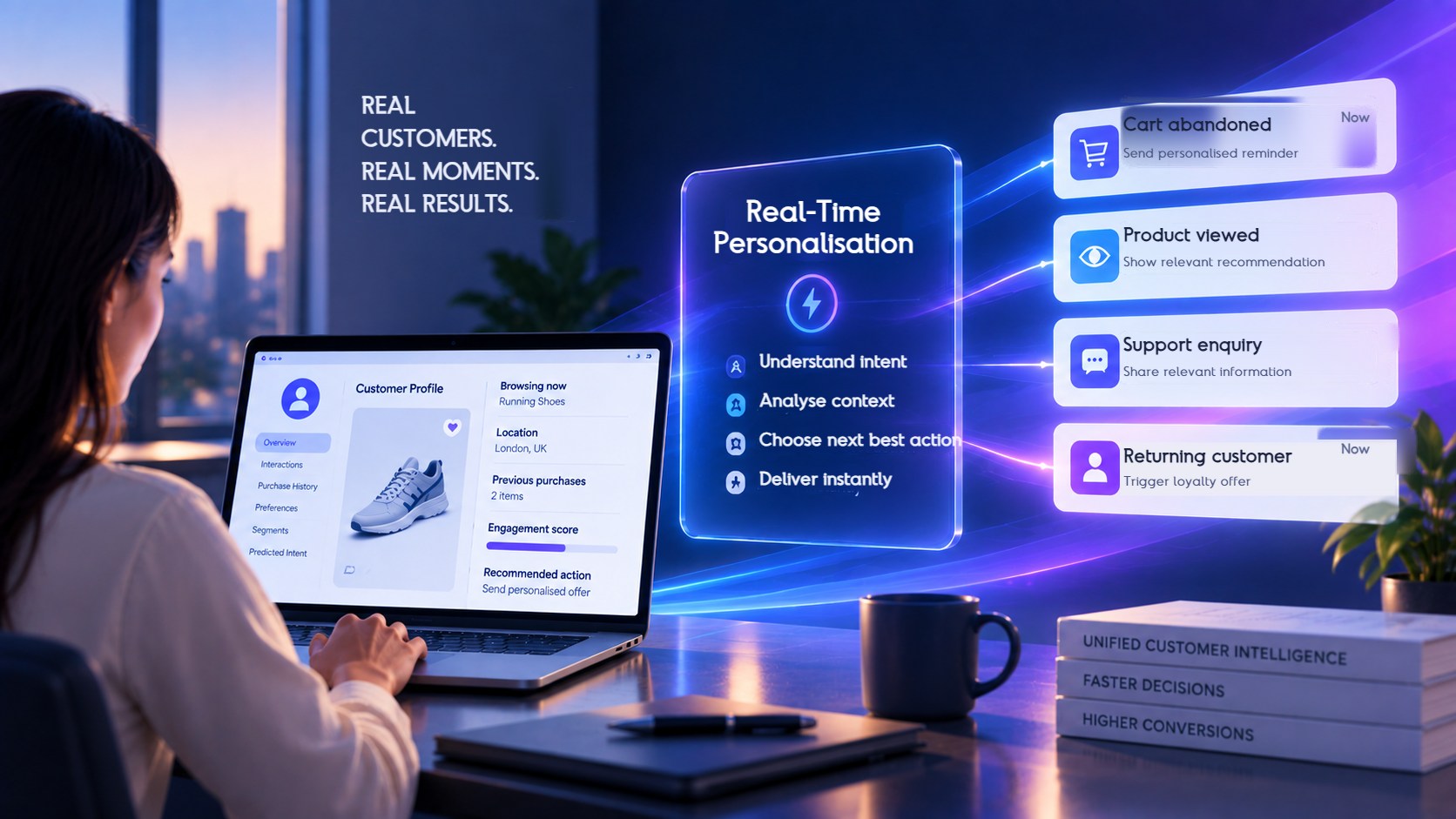
Why Intelligent CRM Is Becoming a Compliance Requirement, Not Just a Sales Tool
Insights / Why Intelligent CRM Is Becoming a Compliance Requirement, Not Just a Sales Tool
For years, CRM software had one job: keep track of leads, log calls, and give sales teams a pipeline to work from. That’s still how many organisations view it today — a sales tool, and little more.
But that view is out of date, and in the UK it’s becoming a genuine liability.
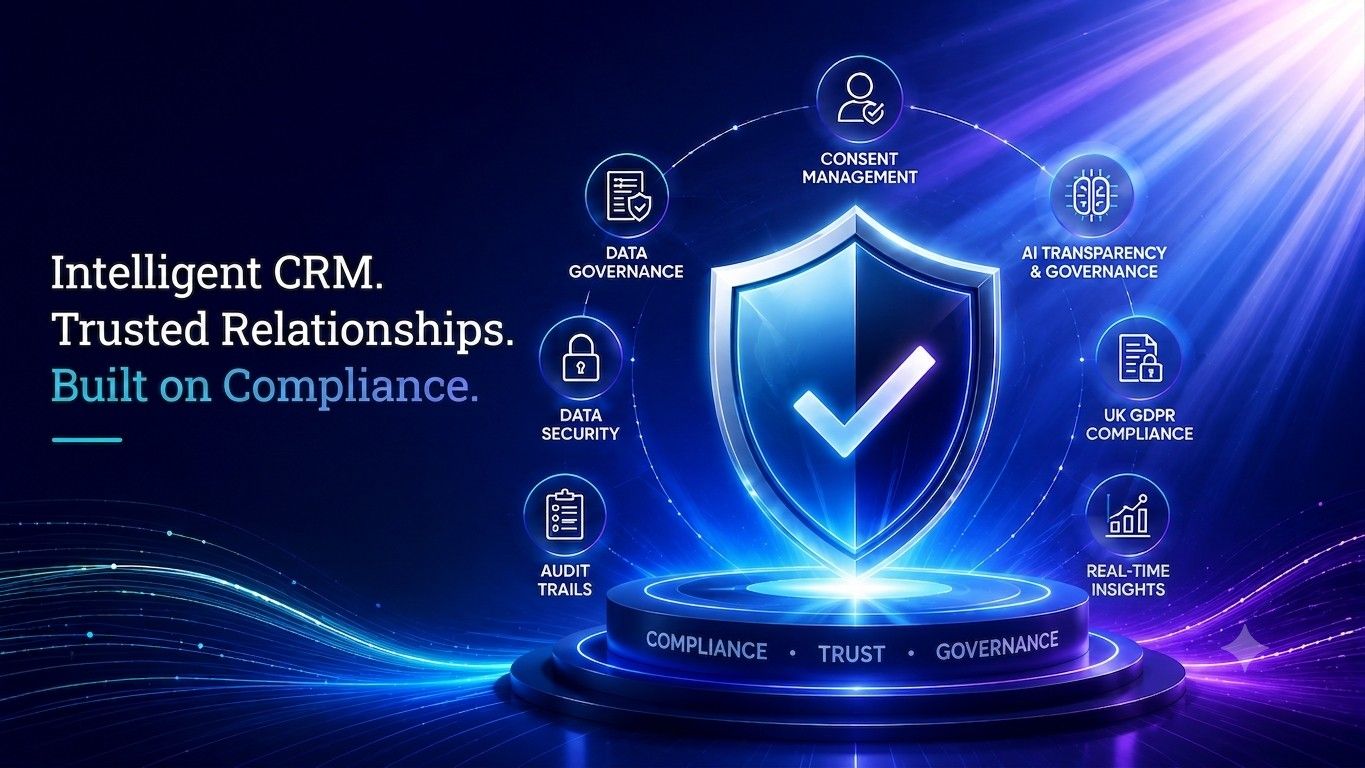
Between UK GDPR, growing scrutiny over how AI systems make decisions, and rising expectations around data transparency, the systems that manage customer information are no longer purely operational. They are becoming compliance infrastructure. A CRM is now one of the first places a regulator, auditor, or individual exercising their data rights will look — yet many legacy platforms were never designed with that level of scrutiny in mind.
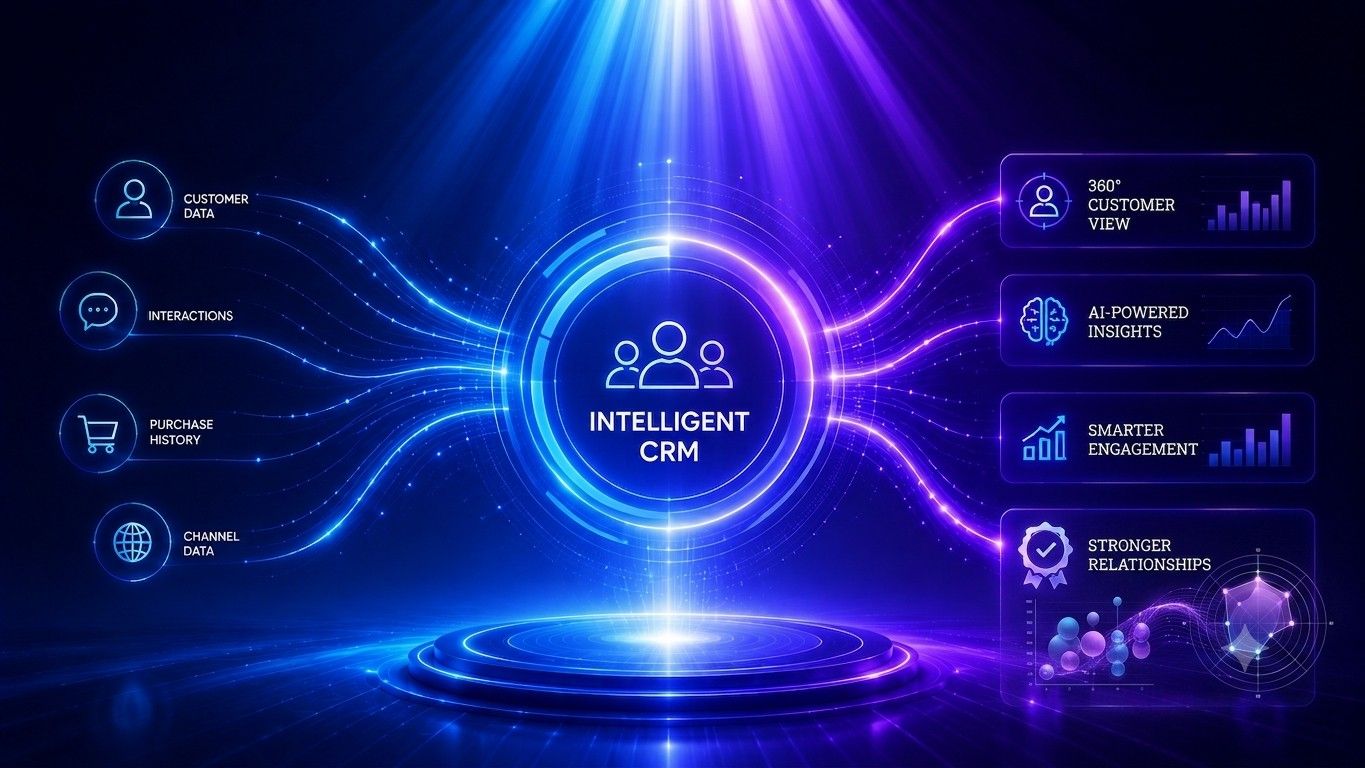
This is where Intelligent CRM changes the conversation. Rather than simply storing customer records, it combines AI, automation, and real-time customer intelligence with the governance, auditability, and consent controls regulated organisations now require. It’s no longer just a better sales tool; it’s becoming the foundation for responsible data stewardship.
- Why Traditional CRM Is No Longer Enough
- What Is an Intelligent CRM?
- Why Compliance Is Reshaping CRM Strategy in the UK
- The Hidden Compliance Risks of Legacy CRM
- Compliance Features Every Intelligent CRM Should Include
- Intelligent CRM Buyer’s Checklist
- FAQs
Why Traditional CRM Is No Longer Enough
Most traditional CRM platforms were designed in an era when the primary goal was helping sales teams manage leads and opportunities. That design still shows.
- Data silos — customer information is scattered across sales, marketing, service, and finance systems, leaving no single source of truth.
- Manual updates — records become outdated because they depend on someone remembering to log activity.
- Duplicate customer records — the same person often exists multiple times across different systems, making accurate reporting difficult.
- Limited customer context — teams see only part of the journey, leading to inconsistent experiences and missed opportunities.
- Reactive engagement — businesses respond to issues after they occur rather than anticipating them.
- Poor visibility across departments — without a unified view, collaboration suffers and oversight becomes difficult.
None of these look serious on their own. Combined, they raise real regulatory exposure, making it harder to meet UK GDPR obligations or demonstrate that data has been handled correctly.
What Is an Intelligent CRM?
An Intelligent CRM goes beyond storing customer information. It combines AI, predictive analytics, automation, and omnichannel engagement to help a business understand the people it serves, anticipate their needs, and recommend the next best action.
Where a traditional CRM mainly records activity, an Intelligent CRM continuously analyses behaviour, identifies patterns, and surfaces real-time insight for sales, marketing, service, and compliance alike.
Its core capabilities include:
- AI — embedded throughout the platform to support decision-making and automation.
- Customer Intelligence — a continuously updated understanding of behaviour, preference, and intent.
- Predictive Analytics — surfacing trends, opportunities, and risks before they materialise.
- Automation — streamlining repetitive tasks and keeping business processes consistent.
- Omnichannel Engagement — one customer view across every touchpoint.
- Real-Time Decisioning — recommending or triggering the next action from live context.
The shift is from recording what already happened to understanding what’s happening now and anticipating what comes next — while still meeting the auditability regulated environments demand.
Why Compliance Is Reshaping CRM Strategy in the UK
Three regulatory priorities are reshaping the role of CRM in UK organisations.
UK GDPR
Consent must be tracked, not assumed. Data minimisation and purpose limitation mean a business can no longer hold personal data simply because it might be useful someday. Data subjects also have the right to access and erase their own records — requests that are genuinely difficult to fulfil when information is scattered across several systems.
AI Governance
As CRM platforms increasingly use AI to score leads and automate decisions, businesses need human oversight, decision transparency, and ongoing monitoring built in. AI should sharpen decision-making, not introduce a new category of risk.
Data Governance
A trustworthy record depends on accurate data, appropriate access controls, and clearly defined retention rules. Strong data governance keeps information secure and consistent across its entire lifecycle.
Together, these three pressures have turned CRM from a sales application into critical infrastructure for regulatory accountability.
The Hidden Compliance Risks of Legacy CRM
Legacy CRM environments tend to accumulate risk gradually, with problems only surfacing when a data access request, audit, or regulatory review exposes them. Common patterns include:
- Duplicate customer records that make erasure requests difficult to fulfil.
- Outdated or unclear consent status, leading to inconsistent communications.
- Fragmented customer histories spread across multiple systems.
- Manual exports sitting in spreadsheets, email attachments, or personal drives.
- Shadow IT, where staff rely on unofficial tools outside approved systems.
- Incomplete visibility, producing inconsistent engagement across departments.
- Missing or partial audit trails that make compliance hard to prove.
Any one of these looks manageable in isolation. Stacked together, they raise regulatory exposure and make it far harder to demonstrate — not just claim — that data has been handled properly.
Compliance Features Every Intelligent CRM Should Include
An Intelligent CRM should do more than manage relationships. It should provide the specific controls needed to protect data, support regulatory obligations, and build trust in AI-driven decisions. Key capabilities include:
- Consent Management — records and manages customer consent throughout the relationship.
- Role-Based Access Control — restricts data access according to a user’s role.
- Audit Logs — keeps a complete record of user activity and system changes.
- Customer Data Lineage — tracks where information originates and how it changes over time.
- Data Retention Policies — ensures data is kept and deleted in line with regulatory rules.
- Encryption — protects data both in transit and at rest.
- Decision Transparency — makes AI recommendations explainable and auditable.
- Automated Compliance Workflows — applies policy consistently across business processes.
- Omnichannel Interaction History — keeps one record of contact across every channel.
- Secure API Integrations — connects enterprise systems without weakening oversight.
Together, these capabilities strengthen data governance, reduce risk, and support a more consistent experience for the people on the other end of it.
Intelligent CRM Buyer's Checklist
When evaluating an Intelligent CRM, look past the sales feature list and assess whether the platform genuinely supports the governance, intelligence, and security your organisation needs.
Data Governance
- Unified customer profile
- Consent tracking
- Customer data lineage
- Clear data ownership
AI & Automation
- Predictive recommendations
- Explainable AI
- AI agents
- Workflow automation
Security & Compliance
- UK GDPR support
- Encryption
- SOC 2 and ISO 27001
- Role-based access control
Customer Intelligence
- Real-time segmentation
- Customer behaviour analysis
- Customer lifetime value (CLV)
- Next-best-action recommendations
Enterprise Integrations
- ERP and finance systems
- Contact centre
- Marketing automation
- Customer Data Platform (CDP)
Reporting & Insights
- Compliance dashboards
- Customer analytics
- Audit reports
- AI performance monitoring
Questions Every UK Procurement Team Should Ask CRM Vendors
Selecting an Intelligent CRM takes more than comparing features and pricing. A procurement team should understand exactly how the platform supports governance and long-term business objectives — not just what it costs today.
- How does the platform manage customer consent and support UK GDPR compliance?
- How are automated recommendations explained, so a person can review and override them?
- Can customer data be accessed, corrected, or deleted on request, and how is that process managed?
- What certifications does the platform hold, such as ISO 27001 or SOC 2?
- Where is customer data stored, and how is it protected in transit and at rest?
- How are audit logs maintained, and for how long are they retained?
- Can workflows enforce compliance policy automatically, without manual intervention?
- How does the platform adapt as AI and data governance requirements continue to evolve?
Why Intelligent CRM Is the Future of Enterprise Customer Management
The role of CRM is changing. What was once a system for tracking relationships is becoming a platform for intelligence and accountable decision-making.
As automation and regulatory expectations both advance, businesses will increasingly favour platforms that combine intelligent automation with strong data governance and transparency. The ability to deliver a personalised experience while maintaining trust will become a genuine differentiator, not a nice-to-have.
For UK businesses, an Intelligent CRM is no longer simply an investment in sales productivity — it’s an investment in long-term resilience and trust.
How Worktual Supports Intelligent CRM
Worktual brings AI, real-time insight, omnichannel engagement, and workflow automation together within a single platform, built to improve engagement while supporting governance and regulatory obligations.
Its capabilities map closely to the evaluation criteria in this guide: AI-powered CRM, a unified customer view through Cognitive CDP, AI agents, enterprise integrations, auditability, and real-time analytics. Rather than treating compliance as a separate add-on, Worktual builds consent management, access controls, and workflow automation into the platform itself — helping organisations manage those relationships while staying ready for what regulation asks of them next.
Conclusion
CRM is no longer only a sales tool. It’s becoming the platform through which a business manages relationships, governance, and compliance together.
For UK businesses, investing in an Intelligent CRM is about more than productivity. It’s about building trusted relationships, reducing risk, and preparing for the next generation of enterprise operations.
FAQs
1. What is an Intelligent CRM?
A CRM platform that combines AI, customer intelligence, predictive analytics, and automation with built-in governance and compliance controls, rather than simply storing contact records.
2. How is Intelligent CRM different from traditional CRM?
Traditional CRM stores and reports on customer data. Intelligent CRM analyses it continuously, predicts behaviour, automates workflows, and maintains the audit trail compliance requires.
3. Why is CRM important for UK GDPR compliance?
Because CRM is typically where consent, contact history, and personal data live. If that data is fragmented or poorly governed, honouring rights like access and erasure becomes genuinely difficult.
4. Can CRM help with consent management?
Yes. An Intelligent CRM can track what a customer has consented to, when, and keep that status current across every connected system.
5. What compliance features should an Intelligent CRM include?
At minimum: consent management, role-based access control, audit logs, data lineage, retention policies, encryption, AI decision transparency, and automated compliance workflows.
6. How does AI improve CRM compliance?
By enabling real-time monitoring, automated consent validation, and predictive risk alerts — replacing periodic manual review with continuous oversight.
7. Is Intelligent CRM suitable for regulated industries?
Yes. Financial services, insurance, and healthcare organisations in particular benefit from the auditability and governance controls built into these platforms.
8. Can Intelligent CRM integrate with legacy systems?
Most modern platforms integrate with ERP, contact centre, marketing automation, and finance systems through secure APIs, rather than requiring a full replacement.
9. How does Intelligent CRM support audit requirements?
Through consistent logging, data lineage tracking, and compliance dashboards that make it possible to demonstrate — not just assert — that data has been handled correctly.
Related Posts

Customer Intelligence for Financial Services in the UK (Cognitive CDP)
For years, CRM software had one job: keep track of leads, log calls, and give sales teams a pipeline to work from. That’s still how many organisations view it today — a sales tool, and little more.

How AI Is Reducing Customer Service Costs for UK Enterprises (CCaaS)
An AI CRM is customer relationship management software with artificial intelligence built into its core workflows. Rather than simply storing contact records, it scores leads, drafts follow-ups, forecasts deals, and surfaces the next action automatically. The difference from a normal CRM is not an added chatbot; it is that the software itself does some of the work, not just the record-keeping.

Best Salesforce Alternative for UK Teams in 2026
AI-Native CRM That British Businesses Actually Adopt
It is 5:45pm on a Friday in Manchester, and a sales rep has just finished her fourth call of the afternoon. She knows she should log the notes in Salesforce before the weekend. She also knows it’ll take fifteen minutes she doesn’t have, so it waits until Monday, half-remembered.