

Voice Bot for Healthcare: Instant Appointments and Better Care
Insights / Voice Bot for Healthcare: Instant Appointments and Better Care

Table of Contents
Healthcare systems are under growing pressure — rising patient volumes, stretched front-desk staff, and patients who expect instant access to care. Every missed call is a missed appointment. Every appointment missed is a patient who waited too long.
AI voicebots for healthcare are changing that. By handling appointment booking, symptom pre-screening, and patient follow-ups through natural voice conversations — over phone calls and WhatsApp — healthcare voicebots give patients instant access to care while freeing clinical staff to focus on what matters.
Studies show that automated voice reminders reduce patient no-show rates by up to 40%. Voicebots operate 24/7, support multiple languages, and connect directly to your existing scheduling system or EHR — with no manual data entry required.
This guide covers everything a healthcare provider needs to know: how AI voicebots work, the specific use cases delivering the fastest results, HIPAA compliance, deployment timelines, and ROI.
- What Are Healthcare Voice Bots?
- Core Capabilities of Healthcare Voice Bots
- Traditional Systems vs. Healthcare Voice Bots
- Enterprise-Ready & Secure Integrations
- Strategic Benefits for Healthcare Providers
- Industry Applications of Voice Bots in Healthcare
- Deployment Best Practices
- Conclusion and Call to Action
- FAQs
What Are Healthcare Voice Bots?
Healthcare voice bots are AI-powered systems that enable patients to interact with healthcare providers using natural speech instead of manual calls or form-based systems. Often referred to as voice bots for healthcare or healthcare voice AI, these solutions are designed to simplify and accelerate patient access at the first point of contact.
Powered by technologies such as speech recognition, natural language understanding (NLU), and conversational automation, an AI voice bot for hospitals can understand patient intent, respond instantly, and guide users through key processes like appointment booking, symptom triage, and follow-ups.
Unlike traditional IVR systems that rely on fixed menus and long wait times, healthcare voice bots deliver real-time, contextual conversations. Patients can book appointments, ask health-related queries, or get updates without navigating complex systems or waiting in queues.
When integrated with hospital systems such as EHRs, CRMs, and scheduling tools, healthcare voice bots improve response times, reduce administrative workload, and ensure seamless, scalable patient engagement across channels.
Voicebot for Appointment Booking and Reminders: How It Works
Appointment scheduling is where AI voicebots deliver the fastest, most measurable results for healthcare providers. Whether you run a single clinic or a multi-site hospital, a voicebot for appointment booking eliminates the queue — patients book, reschedule, and confirm in seconds, without waiting on hold.
What a healthcare appointment voicebot handles end-to-end:
- Checks real-time slot availability across departments, clinicians, and locations via secure API integration with your EHR or scheduling system
- Books new appointments through natural voice conversation — patients state their name, reason, and preferred time; the voicebot confirms instantly
- Reschedules and cancels without hold music or staff involvement, 24 hours a day
- Sends automated appointment reminders via phone call or WhatsApp — reducing no-shows by up to 40%
- Handles high-volume periods (flu season, vaccination campaigns) without adding front-desk headcount
- Confirms attendance with a simple voice or WhatsApp reply — yes or no
Can AI voicebots fully handle appointment scheduling for healthcare clinics?
Yes — AI voicebots can fully handle appointment scheduling for healthcare clinics, including booking, rescheduling, cancellations, and reminder calls. They connect directly to your existing calendar or EHR via secure API, check live availability, and confirm bookings in real time — with no manual data entry or staff involvement required.
Clinics using voicebots for appointment scheduling typically go live within days using pre-built healthcare templates. For practices where the front desk spends hours each day on appointment calls, this is the fastest return-on-investment use case.
| Traditional phone scheduling | Voicebot appointment scheduling |
|---|---|
| Patient waits on hold (avg. 8–12 min) | Booking confirmed in under 60 seconds |
| Staff manually checks availability | Real-time EHR/calendar lookup via API |
| No-show rate: 20–30% (no reminders) | No-show rate: reduced by up to 40% |
| Limited to staffed hours | Available 24/7, 365 days |
| One call at a time | Handles thousands of simultaneous calls |
| Cost per booking: staff time + overhead | Cost per booking: fraction of staff cost |
Core Capabilities of Healthcare Voice AI for Hospitals
Healthcare voice bots go beyond basic IVR by combining conversational AI, speech recognition, and automation to support both patients and care providers.
Medical-Grade Speech Recognition
Understands medical terminology, symptoms, accents, and natural patient speech, while supporting multilingual interactions suited to diverse patient populations.
Guided Symptom Triage
Conducts guided preliminary assessments based on approved protocols, helping route patients to the appropriate specialist, teleconsultation, or urgent care while reducing unnecessary load on front-desk and nursing staff.
Secure Appointment Scheduling
Handles appointment booking, rescheduling, and confirmations instantly, sending reminders and integrating with hospital calendars to reduce errors and no-shows.
Patients won’t wait — and outdated systems are the reason they leave.
AI Voice Bots for Healthcare Appointment Scheduling & Patient Engagement
Appointment scheduling is the single most common entry point for healthcare voice bots — and the area where automation delivers the fastest, most measurable impact.
What a healthcare appointment voice bot can do:
• Book new appointments by checking real-time availability across departments, clinicians, and locations
• Reschedule and cancel appointments through natural conversation, without hold music or transfers
• Send automated reminder calls ahead of appointments, reducing no-shows by up to 40%
• Confirm attendance via a simple yes/no voice or WhatsApp response
• Handle high-volume periods (flu season, vaccination drives) without adding reception staff
How it works: the voice bot connects to your existing scheduling system or EHR calendar via secure API, checks live availability, and confirms the booking directly — no separate manual entry required.
Yes — AI voicebots can fully handle appointment scheduling for healthcare clinics, including booking, rescheduling, reminders, and confirmations, integrated directly with your existing calendar or EHR system.
For clinics needing this specifically: if your front desk is spending hours each day on appointment calls and reminder calls, a voice bot for appointment booking and reminders can typically be live within days — see Deployment Best Practices below.
Voice Bots for Patient Pre-Screening Before Appointments
Beyond booking, healthcare voicebots are increasingly used for structured pre-screening — gathering patient information, symptom details, and medical history before the appointment even takes place. This reduces consultation time, ensures clinicians have the context they need, and flags urgent cases for early escalation.
What pre-screening voicebots do:
- Ask patients standard intake questions (reason for visit, current symptoms, duration, medications) before the appointment
- Collect and summarise symptom information and send it directly to the clinician’s dashboard or EHR ahead of the visit
- Flag responses that indicate urgent or emergency-level need — routing those patients to immediate care pathways
- Confirm appointment readiness: location, what to bring, fasting requirements, preparation instructions
- Reduce average consultation time by 15–25% by starting the clinical conversation with context already captured
Can an AI voice bot screen symptoms before a patient books an appointment?
Yes — AI voicebots can conduct structured symptom screening before or at the point of booking. They ask patients a series of protocol-based questions, evaluate responses, and route patients to the appropriate care path: routine scheduling, urgent care, telehealth, or emergency escalation. This is distinct from clinical diagnosis — the voicebot follows approved triage protocols and always escalates complex or ambiguous cases to a human clinician.
| CMS ACTION | Insert a visual callout here (e.g. a numbered step diagram or call-out box) showing the 4-step pre-screening flow: Call → Symptom questions → Risk assessment → Route to appropriate care |
|---|---|
| CMS ACTION | Replace or restructure the existing multilingual paragraph into the following H2 section: |
Traditional Systems vs. Healthcare Voice Bots
| Feature | Traditional Systems | Healthcare Voice Bots |
|---|---|---|
| Booking Speed | Manual calls & queues | Instant voice confirmation |
| Patient Interaction | Form-based | Natural conversation |
| Care Support | Basic information | Guided triage & reminders |
| Staff Efficiency | High manual effort | Staff freed for clinical care |
Enterprise-Ready & Secure Integrations
Healthcare voice bot integrate securely with EHR systems, appointment calendars, CRM platforms, and support tools. Deployments are designed to be HIPAA-compliant and aligned with healthcare privacy and consent requirements, ensuring patient data protection and regulatory adherence.
Current structure leads with GDPR. Reorder/expand to lead with HIPAA (your largest market is the US), keeping GDPR as the UK-specific complement:
HIPAA-Compliant Voice AI for US Healthcare Providers
For US-based healthcare providers, healthcare voice bots must be HIPAA-compliant — covering secure handling of Protected Health Information (PHI) during voice interactions, appointment reminders, and follow-up calls.
HIPAA-compliant voice bot capabilities typically include:
- Encrypted voice data in transit and at rest
- Business Associate Agreements (BAAs) with the platform provider
- Access controls and audit logging for all patient interactions
- Secure integration with EHR systems without exposing PHI to third parties
GDPR-Aligned Data Handling for UK & EU Healthcare Providers
For UK and EU healthcare providers, voice bots should follow GDPR principles such as transparent data collection, controlled access, and secure storage of patient information — alongside NHS Digital data security standards where applicable.
End-to-End Data Protection (All Regions)
Regardless of region, voice interactions should be protected through encryption mechanisms to safeguard patient data during transmission and storage, with patient consent and privacy controls applied consistently across all channels..
Benefits of Voice Bots in Healthcare (Hospitals & Clinics)
- Patients feel heard instantly — not stuck in queues
- Fewer missed appointments means better care continuity
- Staff spend less time on calls and more time on patient care
Faster Appointments & Fewer No-Shows
Instant confirmations and automated reminders reduce missed appointments by around 40%, improving clinic utilisation and care continuity.
Higher Patient Satisfaction
24/7 voice access in native languages increases comfort, trust, and accessibility—especially for elderly patients and those less comfortable with digital interfaces.
Better Care Delivery
By automating routine appointment requests and basic queries, healthcare voice bots free clinical and administrative staff to focus on critical cases and complex patient needs.
Operational Scalability
Voice bots handle high call volumes during flu seasons, vaccination drives, or public health campaigns without adding staff, maintaining consistent response times.
Actionable Insights from Voice Data
Voice interactions reveal common symptom categories, peak appointment hours, no-show patterns, and follow-up adherence trends—enabling proactive staffing decisions, preventive care campaigns, and improved patient outcomes.
Imagine a patient booking an appointment in seconds — even at midnight.
Top Use Cases of Voice Bots in Healthcare

Appointment Management
Voice-based booking, rescheduling, and reminders improve clinic utilisation and reduce scheduling friction.
Symptom Triage & Guidance
Guided assessments help reduce unnecessary OPD visits by routing patients to the right care pathway.
Follow-Up & Medication Adherence
Automated reminders support adherence and improve treatment outcomes over time.
Telehealth Support
Handles pre-consultation questions, virtual queues, and appointment readiness checks.
Emergency Routing
Urgent cases are escalated quickly to the appropriate teams, reducing response time for critical situations.
Omnichat-style healthcare voice bots have demonstrated significant reductions in response times and improved patient engagement across regions.
The difference isn’t technology — it’s how quickly you implement it.
WhatsApp Voice and Multilingual Healthcare Voicebots
Phone calls are not the only channel healthcare voicebots operate on. Worktual’s healthcare voicebot platform supports WhatsApp voice and messaging — letting patients book appointments, receive reminders, and get answers through the channel they already use every day.
WhatsApp voice for healthcare: how it works
- Patients initiate a WhatsApp voice call or message to your clinic’s WhatsApp number
- The voicebot handles the conversation — booking, queries, reminders — through WhatsApp’s voice and message interface
- Confirmations and reminders are delivered as WhatsApp messages, achieving significantly higher open rates than SMS or email
- Patients respond to appointment reminders with a simple ‘Yes’ or ‘No’ — no app downloads, no logins
Do multilingual voice bots reduce wait times and no-show rates for nationwide practices?
Yes — multilingual AI voicebots meaningfully reduce both wait times and no-show rates for healthcare practices serving diverse patient populations. By delivering appointment reminders and booking interactions in each patient’s preferred language — including Arabic, Hindi, Spanish, Urdu, and regional dialects — comprehension improves and follow-through increases. A single voicebot deployment can serve patients across multiple language groups simultaneously, without language-specific staffing.
Healthcare Voice AI by Care Setting
Different care settings have different voice AI priorities. Here’s how healthcare voice bots are applied across settings:
| Care Setting | Primary Voice AI Use Case | Key Benefit |
|---|---|---|
| Hospitals & large clinics | High-volume appointment scheduling, bed coordination, emergency routing | Manages call surges without added headcount |
| Hospice & palliative care | Routine patient check-in calls, family communication updates | Consistent, compassionate check-ins at scale |
| Home health agencies | Visit scheduling, high-risk patient monitoring calls | Coordinates field visits and follow-ups automatically |
| FQHCs & community clinics | Multilingual appointment booking, eligibility checks | Serves diverse, often underserved patient populations |
| Orthopedic & specialty practices | Pre-op/post-op follow-up calls, credentialing automation | Reduces no-shows for high-value procedures |
| Physical therapy (PT) clinics | Recurring appointment scheduling and adherence reminders | Improves attendance for multi-session treatment plans |
| Small to mid-size practices | All-in-one appointment, billing, and reminder automation | Enterprise-level automation without enterprise cost |
Each of these settings shares the same underlying voice AI infrastructure — speech recognition, scheduling integration, and compliant data handling — configured to the specific workflows and terminology of that care environment.
AI Voice Bots for Patient Billing, Insurance & Revenue Cycle Management (RCM)
Patient billing and insurance calls are among the highest-volume, lowest-satisfaction interactions in healthcare — for both patients and staff. AI voicebots can automate the routine billing calls that consume the most staff time, freeing billing teams to focus on complex cases and exceptions.
What makes a voicebot the best voice AI for hospital patient billing?
The best voice AI for patient billing handles the full range of routine billing interactions autonomously: answering balance enquiries, taking payments by phone, following up on overdue accounts, and verifying insurance eligibility — all without requiring a staff member on the call. For hospitals using EHR systems such as Epic, voicebots can push verification and billing results directly back into patient records via secure API.
Common RCM and billing use cases for voice bots:
| Use Case | What the Voice Bot Does |
|---|---|
| Patient billing inquiries | Answers balance, payment, and statement questions, and can take payments over the phone |
| Insurance eligibility verification | Calls payers to confirm coverage details and feeds results back into the EHR or practice management system |
| Prior authorisation status checks | Follows up with insurers on authorisation requests, reducing staff hold-time |
| Denial management outreach | Proactively contacts patients or payers regarding claim denials requiring action |
| Bad debt / overdue balance follow-up | Conducts automated, compliant outreach calls for overdue accounts |
| Charity care application follow-up | Handles status updates and documentation reminders for financial assistance applications |
| Credentialing call automation | Manages routine outbound calls to payers for provider credentialing updates |
Can AI voice bots reduce hospital bad debt recovery costs?
Yes — AI voicebots are increasingly used for bad debt outreach and overdue balance follow-up in hospital systems. By making automated, compliant outreach calls to patients with outstanding balances, voicebots recover a portion of overdue revenue that would otherwise require expensive manual collection calls or third-party agencies. Unlike manual calls, voicebots can contact every patient on the list simultaneously — dramatically increasing contact rates without increasing cost.
Deployment Best Practices
- Train voice bots on approved medical protocols, common patient queries, and escalation rules
- Ensure privacy, consent management, and regulatory compliance across all interactions
- Optimise for accents, languages, and speech patterns to ensure consistent performance
- Maintain human-in-the-loop escalation for complex or sensitive cases to ensure clinical safety
- Continuously monitor performance and retrain models to improve accuracy and patient satisfaction
Looking ahead, healthcare voice bots could support a majority of routine patient interactions over the next few years, becoming a core component of digital health strategies.
If your front desk is overwhelmed, your patients already feel it.
How Worktual Compares to Other Healthcare Voice AI Platforms
Healthcare organisations evaluating voice AI often compare platforms including Clara Health, Gnani.ai, Suki AI, Uniphore, and PolyAI. Here is how Worktual‘s approach differs:
| Capability area | Worktual advantage |
|---|---|
| Deployment speed | Appointment scheduling and reminder voicebots live within days using pre-built healthcare templates — not months of custom development |
| Channel coverage | Phone + WhatsApp voice in a single platform — most competitors handle only one channel |
| Multilingual support | Arabic, Hindi, Spanish, and regional dialects built in — no additional language packages required |
| EHR integration | Secure API integration with Epic, Cerner, and other major EHR systems — including bi-directional data push |
| Billing + RCM | Handles patient billing, insurance eligibility, prior auth, and bad debt outreach — beyond appointment-only platforms |
| HIPAA + GDPR | HIPAA-compliant for US providers and GDPR-aligned for UK/EU — dual compliance in one deployment |
| Contact centre integration | Native integration with contact centre infrastructure — voicebot + agent escalation in a unified platform |
FAQS
1. What are the best voice AI tools for reducing call wait times in clinics?
AI voicebots reduce clinic call wait times by handling routine calls — appointment booking, reminders, billing enquiries, and basic triage — automatically and in parallel, rather than sequentially. Instead of one patient at a time through a single phone line, a voicebot can handle unlimited simultaneous calls with no hold time. Clinics typically see meaningful reductions in front-desk call volume within the first week of deployment, freeing staff for calls that genuinely require human involvement.
2. How fast can a healthcare voicebot be deployed?
Healthcare voicebots for appointment scheduling and reminders can typically be deployed and live within days when using a platform with pre-built healthcare templates and standard EHR or calendar integrations. More complex deployments — including custom EHR integrations, multilingual support across multiple departments, or billing automation — typically take two to six weeks depending on integration complexity and approval workflows.
3. What is the typical payback period for healthcare voice AI?
Most healthcare providers see measurable returns within the first few months of deployment. The fastest ROI typically comes from reduced no-show rates (30–40% reduction in missed appointments), reduced front-desk call volume (typically 40–60% of routine calls automated), and improved appointment utilisation. Exact payback periods vary by call volume, current staffing costs, and which use cases are deployed — but providers with 500+ appointments per week typically recover deployment costs within the first quarter
4. Can an AI voicebot screen patients before a booking is confirmed?
They support multiple languages, including Hindi and regional dialects, ensuring inclusive patient communication.
5. Are healthcare voice bots compliant with regulations?
Yes. They are designed to meet healthcare privacy, security, and HIPAA-compliant standards to protect patient information.
6. Can AI voice bots handle patient pre-screening calls?
Yes — AI voicebots can conduct structured pre-screening before confirming an appointment. The voicebot asks the patient a series of intake questions (symptoms, duration, urgency) using approved triage protocols, then routes to the appropriate care path: routine appointment, urgent care, teleconsultation, or emergency escalation. Responses are summarised and sent to the clinician or fed directly into the EHR before the appointment, reducing consultation prep time.
7. Do healthcare voicebots work with WhatsApp?
Yes — healthcare voicebots can operate over WhatsApp voice and WhatsApp messaging, in addition to traditional phone calls. Patients can book appointments, receive reminders, confirm attendance, and ask basic questions through WhatsApp without downloading any additional app. This is particularly effective for patient populations who already use WhatsApp as their primary communication channel, including in the Middle East, South Asia, and Latin America.
8. Can voice AI handle insurance eligibility checks for US hospitals?
Yes — AI voice agents can call payers to verify insurance eligibility, check authorisation status, and follow up on prior authorisation requests. For hospitals using EHR systems such as Epic, the voicebot can push verified eligibility results directly back into patient records via secure API, eliminating manual re-entry. This is one of the highest staff-time-saving use cases in US healthcare RCM, given the volume of eligibility calls most billing departments handle daily.
Related Posts

From Customer Data to Customer Action: How AI Is Changing Enterprise CRM
Business-to-business (B2B) customer engagement has changed significantly as buyers now expect faster responses, connected interactions, and highly personalised experiences across every stage of the customer journey. Decision-makers no longer compare B2B experiences only with competitors within the same industry. They compare them with the seamless digital experiences they receive across retail, banking, streaming platforms, and consumer applications. This shift has increased pressure on enterprises to modernise how they manage customer relationships, support operations, and lifecycle engagement.

AI-Driven Campaign Management: A Simple Guide for UK Businesses
Business-to-business (B2B) customer engagement has changed significantly as buyers now expect faster responses, connected interactions, and highly personalised experiences across every stage of the customer journey. Decision-makers no longer compare B2B experiences only with competitors within the same industry. They compare them with the seamless digital experiences they receive across retail, banking, streaming platforms, and consumer applications. This shift has increased pressure on enterprises to modernise how they manage customer relationships, support operations, and lifecycle engagement.
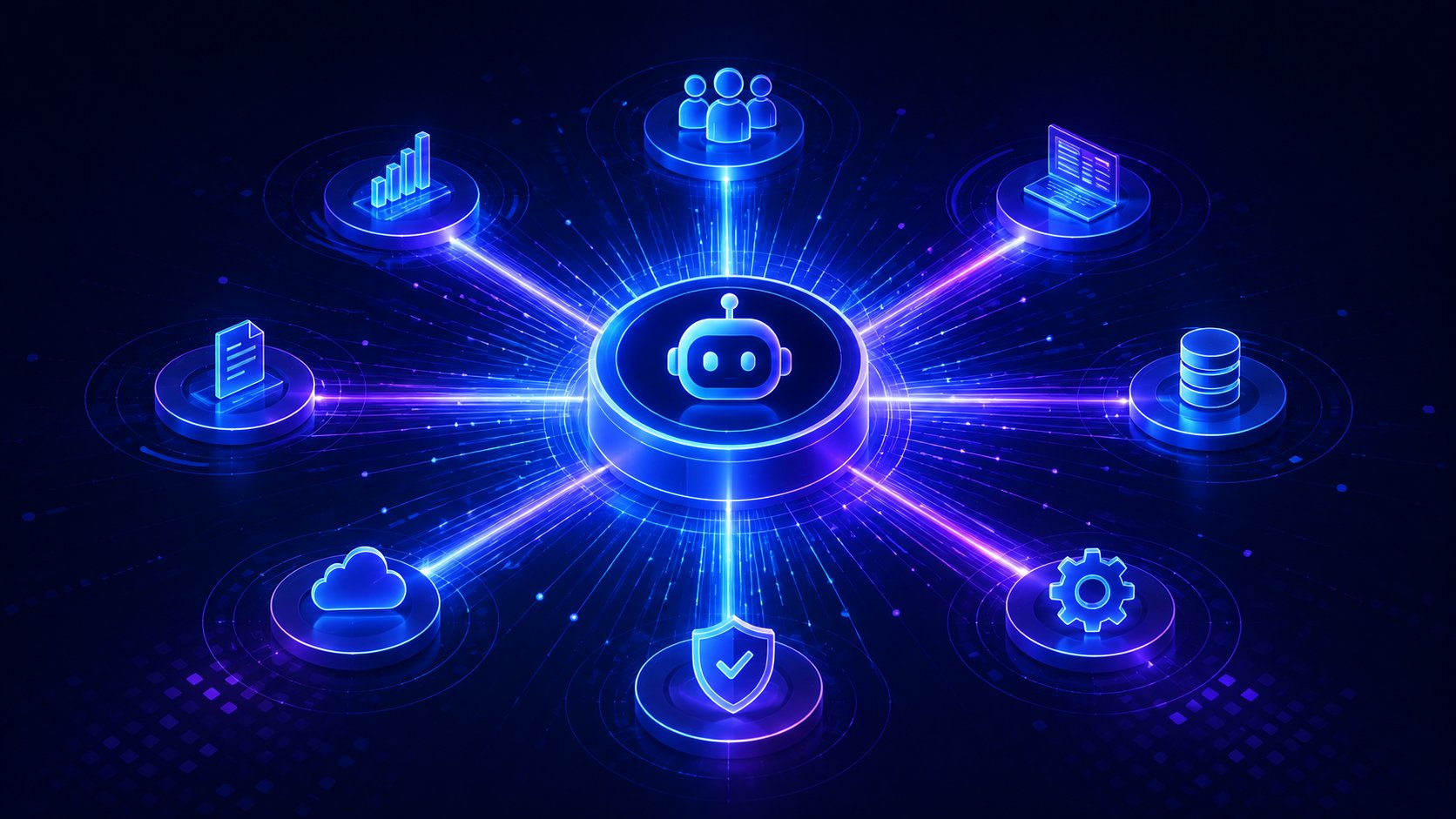
Hub-and-Spoke Architecture for AI Agents: How It Connects Enterprise
Business-to-business (B2B) customer engagement has changed significantly as buyers now expect faster responses, connected interactions, and highly personalised experiences across every stage of the customer journey. Decision-makers no longer compare B2B experiences only with competitors within the same industry. They compare them with the seamless digital experiences they receive across retail, banking, streaming platforms, and consumer applications. This shift has increased pressure on enterprises to modernise how they manage customer relationships, support operations, and lifecycle engagement.


